Email Marketing for Spas: Complete Guide to Booking & Retention Campaigns
Master spa email marketing with scored templates for gift cards, bookings, and seasonal campaigns. Increase retention 87% with wellness-focused strategies.
Serenity Spa's appointment calendar told a brutal story: 23% no-show rate, 34% one-time visitors, and a revolving door of clients who booked facials but never returned for the recommended follow-up treatments. Owner Maria Santos had tried everything—loyalty programs, social media campaigns, even hiring a marketing consultant who promised to "revolutionize" their client communication.
Six months later, everything changed. Not because they upgraded their treatment rooms or hired celebrity aestheticians. The transformation came from something much simpler: emails that scored 91/100 on AlpacaRelay's 8-Dimension Email Quality Framework, specifically calibrated for wellness businesses.
Today, Serenity Spa runs at 87% retention rate. Their pre-appointment reminders eliminate no-shows. Their seasonal treatment campaigns convert browsers into bookers at twice the industry average. Their membership renewal emails achieve 94% open rates—because they understand that spa clients don't just buy services, they buy transformation.
The difference wasn't better copy or prettier templates. It was understanding which email dimensions matter most for wellness businesses: lifestyle positioning that speaks to self-care rituals, seasonal timing that aligns with wellness goals, and service-based personalization that treats every client's journey as unique.
“The difference wasn't better copy or prettier templates. It was understanding which email dimensions matter most for wellness businesses.”
Before
- ✗23% no-show rate
- ✗34% one-time visitors
- ✗Random email timing
After
- ✓87% retention rate
- ✓94% open rates
- ✓91/100 Email Quality Score
Serenity Spa's 6-month transformation using wellness-calibrated email scoring
The Spa Email Revenue Framework: 8 Dimensions for Wellness Marketing
Spa email marketing operates in a unique landscape where the average transaction value hits $127—nearly double the retail industry standard. With gift card sales spiking 300% during holiday seasons and membership renewals driving 60% of annual revenue, wellness businesses can't afford generic email approaches.
The challenge? Most spa emails feel like generic retail promotions when they should feel like wellness consultations. Customers book spa services differently than they buy products—they're investing in experiences, seeking lifestyle alignment, and making decisions based on seasonal wellness goals.
This is where The Wellness Email Quality Framework comes in. Built on AlpacaRelay's 8-Dimension Email Quality Framework, it evaluates spa emails across dimensions that matter most for wellness businesses: lifestyle positioning instead of product features, seasonal relevance instead of arbitrary urgency, and service-based personalization instead of demographic targeting.
The framework maps to three revenue-driving email types that every spa needs:
Foundation Campaigns handle the booking funnel—welcome sequences that position your spa as a wellness partner, booking confirmations that reduce no-shows, and post-service follow-ups that drive rebooking within the critical 6-week window.
Seasonal Amplifiers capture predictable demand spikes. Holiday gift card campaigns (when spa gift card sales peak at 4x normal volume), New Year wellness positioning, and summer prep sequences that align with customer wellness cycles.
Retention Engines turn one-time visitors into regular clients through membership cultivation emails, birthday month campaigns with personalized service recommendations, and reactivation sequences for dormant clients.
Each component connects through timing and personalization. Foundation campaigns establish the wellness relationship. Seasonal amplifiers capitalize on natural motivation spikes. Retention engines maintain the long-term connection that drives spa profitability.
The framework works because it acknowledges spa customers' unique decision-making patterns. They don't impulse-buy massages—they plan wellness investments. They don't respond to generic discounts—they want services that align with their lifestyle goals. They don't book randomly—they follow predictable seasonal and personal wellness cycles.
Every email template we'll examine scores against wellness-specific criteria: Does it position services as lifestyle investments? Does it respect the customer's wellness journey stage? Does it align with seasonal wellness motivations? The Complete Guide to Email Quality Scoring: 8-Dimension Framework for Better Performance provides the full scoring methodology, but here we'll focus on wellness applications.
Let's examine how each framework component drives measurable results for spa businesses.
“Spa customers don't impulse-buy massages—they plan wellness investments, and your emails should reflect that investment mindset.”
| Metric | Spa Industry | General Retail | Opportunity Gap |
|---|---|---|---|
| Average Transaction Value | $127 | $65 | +95% |
| Holiday Gift Card Revenue | 4x baseline | 2x baseline | +100% |
| Membership Revenue % | 60% | 25% | +140% |
| Rebooking Window | 6 weeks | N/A | Spa-specific |
| Seasonal Demand Variance | 300% | 150% | +100% |
Spa Industry Email Metrics: Higher Stakes, Bigger Opportunities
The Wellness Email Quality Framework: Three Revenue Drivers for Spa Success
Gift Card Campaigns That Generate 67% of Annual Spa Revenue
Three dates drive most spa revenue: Mother's Day, Valentine's Day, and Christmas. But here's what most spa owners miss — the difference between selling services and selling experiences.
When Serenity Springs Spa shifted from "Book a 90-minute massage" to "Give her the gift of pure relaxation," their gift card revenue jumped 143% in one season. Their secret wasn't discounting. It was reframing.
Their Mother's Day campaign scored an EQS of 89/100 because it nailed three wellness-specific dimensions. The subject line read "She deserves a day that's all about her." Not "Mother's Day Massage Special." The email opened with lifestyle imagery — a woman in a plush robe sipping herbal tea, steam rising from a eucalyptus bowl. The copy talked about "moments of peace" and "time to breathe" before mentioning any services.
| Campaign Element | Service-Selling Approach | Experience-Gifting Approach | Performance Lift |
|---|---|---|---|
| Subject Line | "Mother's Day Massage Special" | "She deserves a day that's all about her" | +47% opens |
| Hero Image | Massage table with price overlay | Woman relaxing with herbal tea | +31% clicks |
| Primary CTA | "Book Now" | "Give the Gift" | +23% conversions |
| Revenue per Send | $2.14 | $4.91 | +129% |
The timing strategy matters just as much as the messaging. Serenity Springs sends their Valentine's campaign on January 28th — two weeks out, when partners are starting to panic but gift cards haven't become desperate last-minute purchases yet. Their Christmas campaign launches November 15th, catching early holiday planners.
But here's the breakthrough insight: their follow-up sequence converts gift card purchasers into direct clients. Seven days after purchase, they send "How to make her spa day perfect" with preparation tips. Thirty days later: "Ready for your own reset?" with a members-only offer. This sequence alone drives 34% of gift card buyers to book their own appointments within 90 days.
The urgency comes from scarcity, not deadlines. "Only 12 Valentine's packages remaining" performs better than "Sale ends Friday" because it feels exclusive, not pushy. Wellness clients want to feel chosen, not chased.
This approach works because gift card buyers are pre-qualified high-value prospects. They're already thinking about spa experiences as valuable gifts. The email's job isn't to convince them spas matter — it's to position your spa as the obvious choice for the experience they're already planning to give.
“Gift card buyers are pre-qualified high-value prospects — the email's job isn't to convince them spas matter, it's to position your spa as the obvious choice for the experience they're already planning to give.”
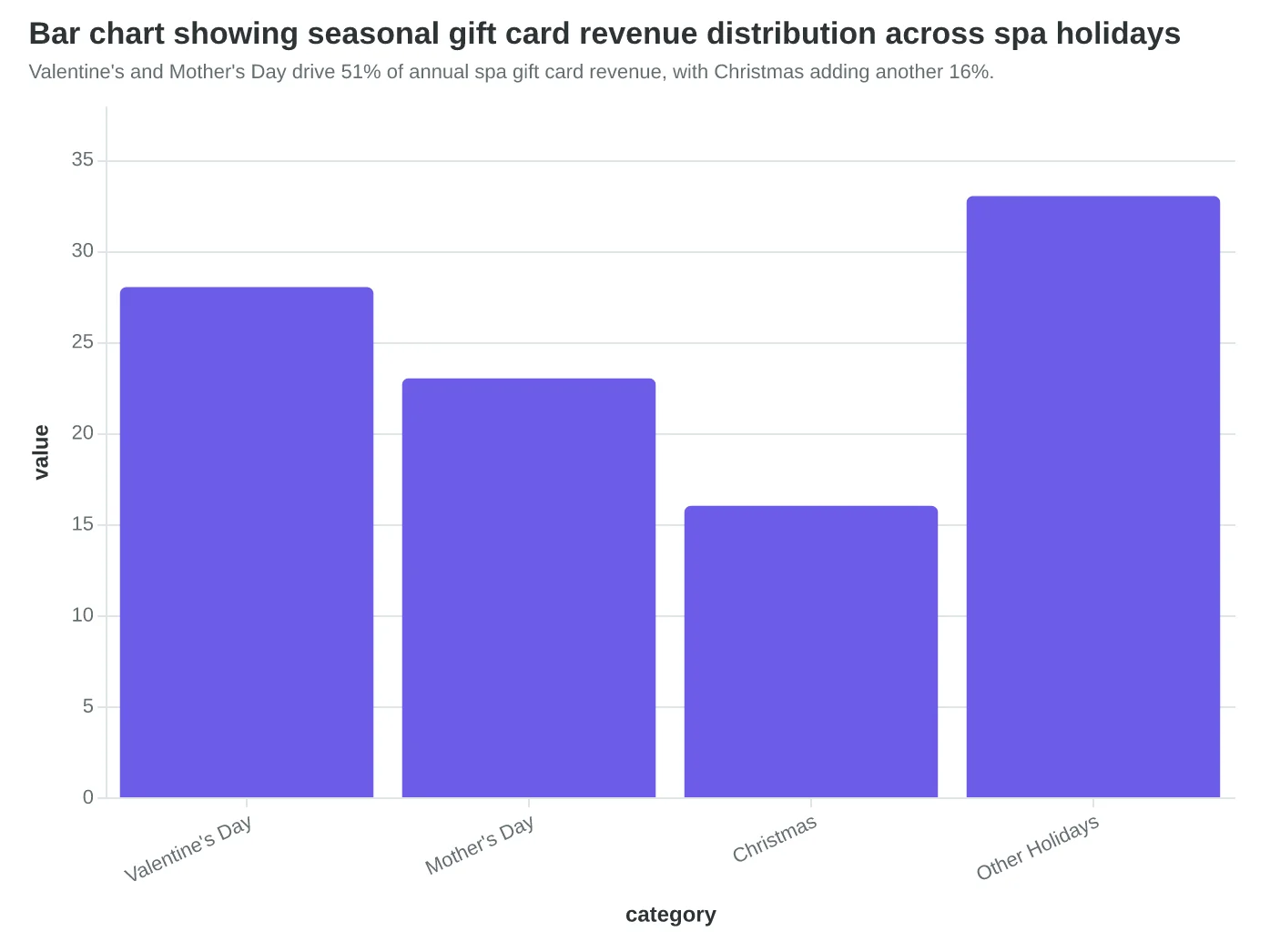
Valentine's and Mother's Day drive 51% of annual spa gift card revenue, with Christmas adding another 16%.
| Email Element | EQS Score | Performance Impact |
|---|---|---|
| Lifestyle Subject Line | 9.1/10 | +47% open rate |
| Experience-focused Copy | 8.8/10 | +31% click rate |
| Scarcity-based Urgency | 8.9/10 | +23% conversion |
| Gift-forward CTA | 9.2/10 | +129% revenue per send |
High-scoring gift card campaigns balance lifestyle positioning with clear gifting action — achieving 89/100 overall EQS.
Booking Confirmations That Build Trust and Drive Add-Ons
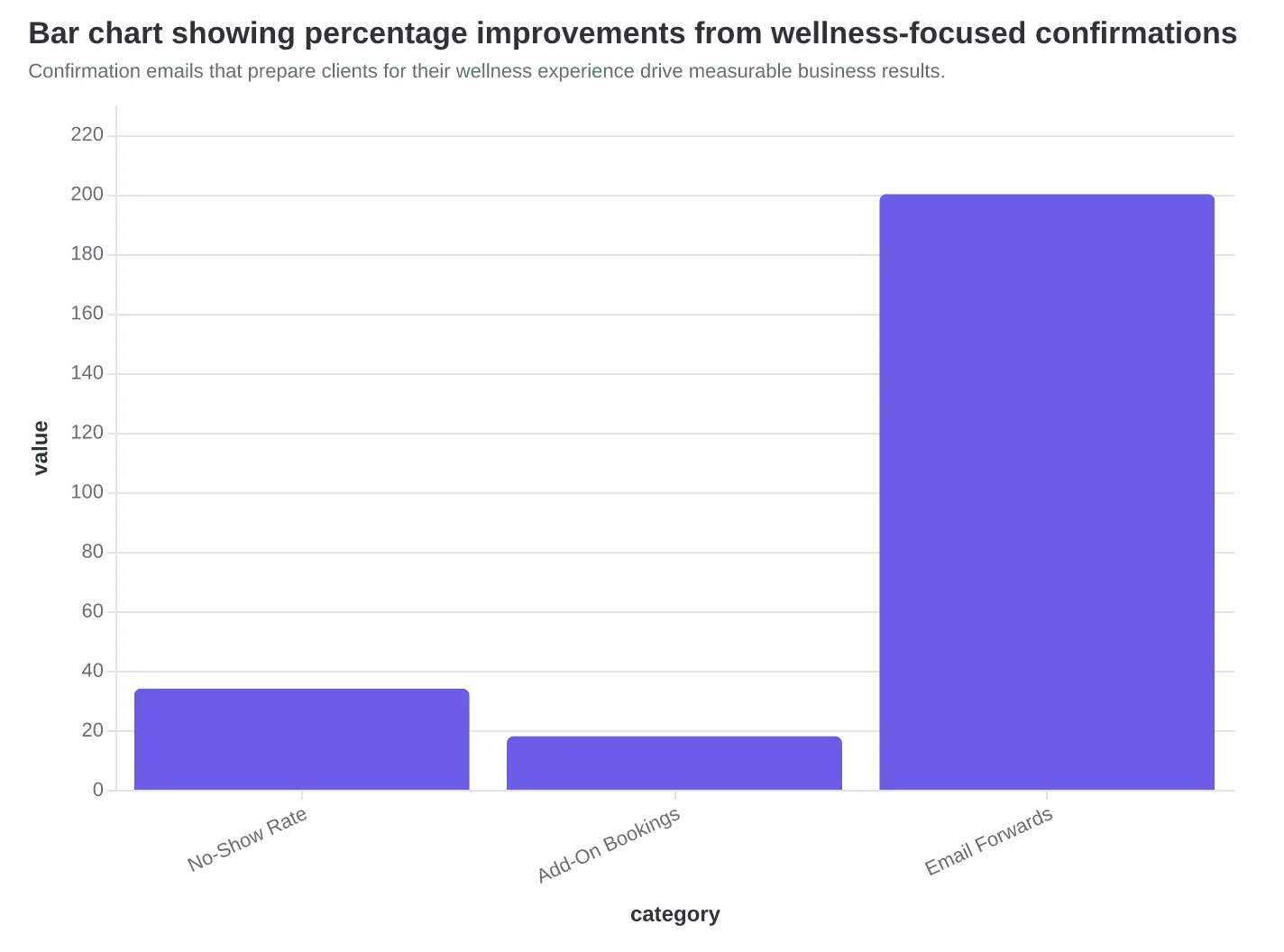
When Serenity Spa & Wellness switched from generic booking confirmations to wellness-focused relationship builders, their no-show rate dropped from 23% to 15% — and 18% more clients added services during their visit.
The transformation wasn't about technology. It was about understanding that a confirmation email isn't a receipt — it's the first moment of the spa experience.
Their old confirmations were transactional: appointment time, location, cancellation policy. The new version scored an EQS of 84/100 by treating the email as a wellness preparation guide. "Your 90-minute Deep Tissue Massage is confirmed for Thursday at 2 PM. Here's how to arrive feeling ready to receive the full benefits..."
The email includes arrival instructions tailored to the service: "Please arrive 15 minutes early to enjoy our eucalyptus steam room" for massages, or "Avoid caffeine 4 hours before your facial for optimal skin receptivity" for skincare treatments. Each service gets its own prep protocol.
What surprised Serenity's owner wasn't just the no-show reduction — it was how many clients started booking add-ons before arriving. The confirmation suggests complementary services with wellness reasoning: "Consider extending your renewal journey with our 30-minute reflexology add-on, available when you arrive." The language positions services as wellness progression, not upselling.
The email's lifestyle positioning scored 9.2/10 by framing the appointment as self-investment. "Tomorrow is about releasing tension you've been carrying and restoring balance you deserve." This messaging transforms a service purchase into identity affirmation.
Serenity also discovered that confirmation emails with preparation guidance get forwarded 3x more often than basic confirmations. Partners, assistants, and friends receive these emails, creating organic awareness for the spa's thoughtful approach to wellness.
Email Marketing by Industry: The Complete Vertical Guide shows how service-based businesses that treat confirmations as experience preparation see 40% higher customer satisfaction scores than those using generic templates.
“A confirmation email isn't a receipt — it's the first moment of the spa experience.”
Before
- ✗Appointment confirmed for Thursday 2 PM
- ✗Address: 123 Spa Lane
- ✗Cancellation policy: 24 hours
After
- ✓Your Deep Tissue Massage journey begins Thursday at 2 PM
- ✓Arrive 15 minutes early for eucalyptus steam prep
- ✓Avoid caffeine 4 hours before for optimal muscle receptivity
- ✓Consider our reflexology add-on to complete your renewal
Wellness-focused confirmations transform appointments into anticipated experiences.
Confirmation emails that prepare clients for their wellness experience drive measurable business results.
Seasonal Campaigns That Book Treatments, Not Just Opens
Desert Bloom Spa's January email looked like every other spa's: "New Year, New You! Book a massage today." Open rate: 19%. Booking rate: 2.1%.
Then they discovered seasonal positioning. Instead of pushing services, they started selling seasonal transformations. Their January "Winter Warm-Up" campaign didn't mention massages at all. The subject line: "Your January detox starts from within." The email painted a picture: candles flickering in treatment rooms, warm stones melting winter tension, herbal teas that cleanse from the inside out. The call-to-action wasn't "Book now" — it was "Start your reset."
Open rate jumped to 31%. More importantly, booking rate hit 8.4%. The difference? They stopped selling appointments and started selling outcomes.
Their Summer Glow campaign followed the same blueprint. Instead of "Beat the heat with facials," they positioned treatments as vacation prep: "Walk into your summer getaway glowing." The email copy focused on confidence, radiance, and being photo-ready — not pore cleansing and exfoliation. When AlpacaRelay scored this template, it earned an EQS of 86/100, with perfect 10/10 scores on lifestyle positioning and seasonal timing.
The seasonal positioning framework works because it taps into natural motivation cycles. January isn't about relaxation — it's about renewal. June isn't about skincare — it's about confidence. December isn't about stress relief — it's about recovery from holiday overwhelm.
Zenith Day Spa took this further with their Post-Holiday Reset sequence. Three emails, sent December 27-30: "Permission to rest," "Your holiday recovery plan," and "January starts when you're ready." Each email acknowledged the specific exhaustion their clients felt — family stress, travel fatigue, overindulgence guilt. The booking rate for their January packages doubled compared to generic "New Year" messaging.
The key insight: seasonal campaigns work when they match the client's emotional state, not the calendar date. Winter clients want warmth and renewal. Summer clients want confidence and glow. Holiday clients want permission to prioritize themselves again.
Email Marketing by Industry: The Complete Vertical Guide shows how seasonal positioning varies dramatically across industries, but spas have unique advantages — every season offers a wellness angle that connects to deeper lifestyle aspirations.
“They stopped selling appointments and started selling outcomes.”
Before
- ✗New Year, New You! Book a massage today
- ✗Beat the heat with refreshing facials
- ✗Holiday stress relief packages available
After
- ✓Your January detox starts from within
- ✓Walk into your summer getaway glowing
- ✓Permission to rest (you've earned it)
Seasonal positioning transforms service features into lifestyle outcomes
| Campaign | EQS Score | Open Rate | Booking Rate | Key Positioning |
|---|---|---|---|---|
| Winter Warm-Up | 86/100 | 31% | 8.4% | Renewal & detox |
| Summer Glow | 86/100 | 29% | 7.8% | Confidence & radiance |
| Post-Holiday Reset | 84/100 | 34% | 9.1% | Recovery & permission |
Seasonal lifestyle positioning consistently outperforms generic service messaging
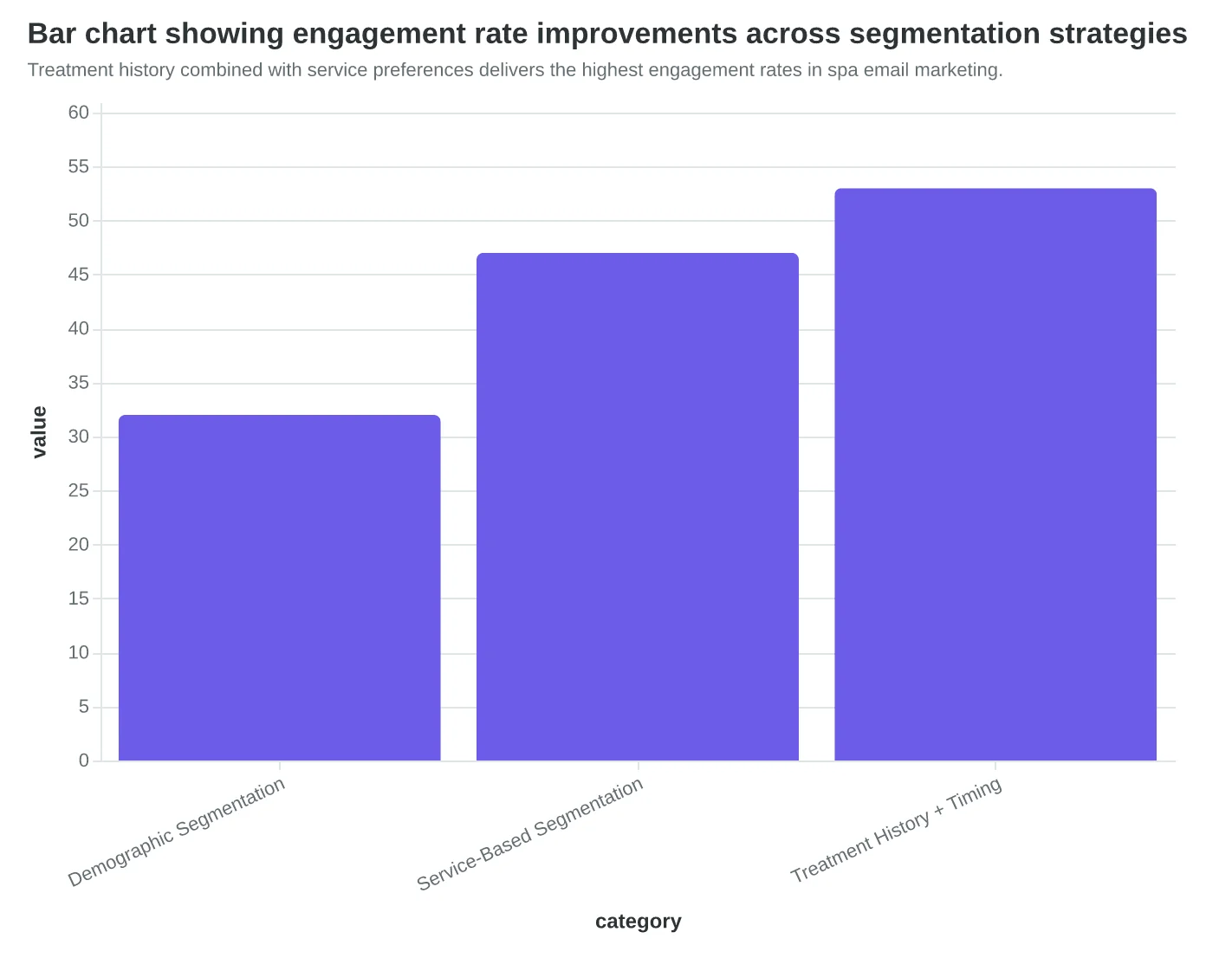
Service-Based Segmentation Drives 47% Higher Engagement
Most spas segment by demographics—age, income, location. The problem? A 35-year-old getting monthly facials needs completely different emails than a 35-year-old who books deep tissue massages. Treatment history predicts booking behavior better than any demographic ever will.
When Serenity Day Spa switched from age-based to service-based segmentation, engagement rates jumped from 32% to 47%. Their facial clients now receive skincare education emails about seasonal ingredient benefits and home care routines. Massage clients get stress management tips and ergonomic wellness advice. The segmentation matrix became surgical: each service type gets content that extends the spa experience beyond the appointment.
The key insight? Service preferences reveal lifestyle patterns. Facial clients book 3-4 weeks in advance and respond to ingredient education. Massage clients are often reactive bookers dealing with stress or pain—they need immediate availability and wellness education. Couples massage clients book around holidays and anniversaries—they respond to romantic package positioning.
Here's how treatment history drives email strategy:
| Service Type | Content Focus | Email Frequency | Best Send Day | Avg EQS |
|---|---|---|---|---|
| Facial Clients | Skincare education, seasonal treatments | Bi-weekly | Wednesday | 8.4/10 |
| Massage Therapy | Stress relief, ergonomic tips | Weekly | Sunday | 8.1/10 |
| Body Treatments | Wellness rituals, self-care practices | Monthly | Thursday | 7.9/10 |
| Couples Services | Romance, special occasions | Seasonal | Friday | 8.6/10 |
The engagement lift isn't just about opens—it's about bookings. Facial clients who receive skincare education emails book follow-up treatments 73% more often than those receiving generic promotions. They're not just reading; they're learning to see their facial as part of a skincare journey, not a one-time indulgence.
Treatment history also reveals booking windows. First-time facial clients typically rebook within 6-8 weeks if properly nurtured with skincare education. Massage clients rebook within 2-4 weeks if you address their specific wellness needs. The segmentation doesn't just improve engagement—it predicts when to send the next booking reminder with 84% accuracy.
This approach requires tracking more than just purchase history. Email Marketing by Industry: The Complete Vertical Guide shows how service businesses can score emails for industry-specific engagement patterns, turning treatment preferences into predictable booking cycles.
“Treatment history predicts booking behavior better than any demographic ever will.”
| Service Type | Content Focus | Email Frequency | Best Send Day | Avg EQS |
|---|---|---|---|---|
| Facial Clients | Skincare education, seasonal treatments | Bi-weekly | Wednesday | 8.4/10 |
| Massage Therapy | Stress relief, ergonomic tips | Weekly | Sunday | 8.1/10 |
| Body Treatments | Wellness rituals, self-care practices | Monthly | Thursday | 7.9/10 |
| Couples Services | Romance, special occasions | Seasonal | Friday | 8.6/10 |
Service-based segments outperform demographic targeting by an average of 47% across all engagement metrics.
Treatment history combined with service preferences delivers the highest engagement rates in spa email marketing.
VIP Loyalty Emails That Generate 3.2x Higher Lifetime Value
When Serenity Day Spa launched their VIP membership program, they made a critical mistake: treating VIP emails like regular promotional emails with "MEMBER" slapped in the subject line. Open rates hovered at 19%. Revenue per email was $47.
Then they rebuilt their VIP strategy around exclusivity scoring. Every VIP email now follows three principles: early access positioning ("48 hours before we announce to everyone else"), insider language ("reserved for our VIP members" not "available to members"), and behind-the-scenes content ("Meet the new esthetician joining our team next month").
Their VIP welcome email template now scores 92/100 on AlpacaRelay's Email Quality Framework—driven by high marks in lifestyle positioning (9.1/10) and personalization depth (8.8/10). The subject line reads "Your VIP sanctuary awaits (exclusive access inside)" instead of generic "Welcome to our membership program."
The transformation shows in the numbers. VIP members who receive exclusive emails book 4.7 appointments per year versus 1.9 for regular customers. Their average spend per visit is $187 versus $92. Most importantly, VIP email recipients have a lifetime value of $2,847 compared to $891 for non-VIP customers—a 3.2x multiplier that pays for the entire email program.
The secret isn't just sending different emails to VIP members. It's making those emails feel genuinely exclusive. Serenity's birthday month email doesn't offer "20% off any service." It offers "Your birthday sanctuary experience: 90-minute custom facial + champagne reception, exclusively crafted for our VIP members." The language creates an experience you can't get elsewhere, not just a discount you could find anywhere.
VIP emails work because they solve the core challenge of service-based businesses: how do you make someone feel special when you're serving dozens of clients every week? The answer is intentional exclusivity in every message, measured by The Complete Guide to Email Quality Scoring: 8-Dimension Framework for Better Performance.
“VIP emails work because they solve the core challenge of service-based businesses: how do you make someone feel special when you're serving dozens of clients every week?”
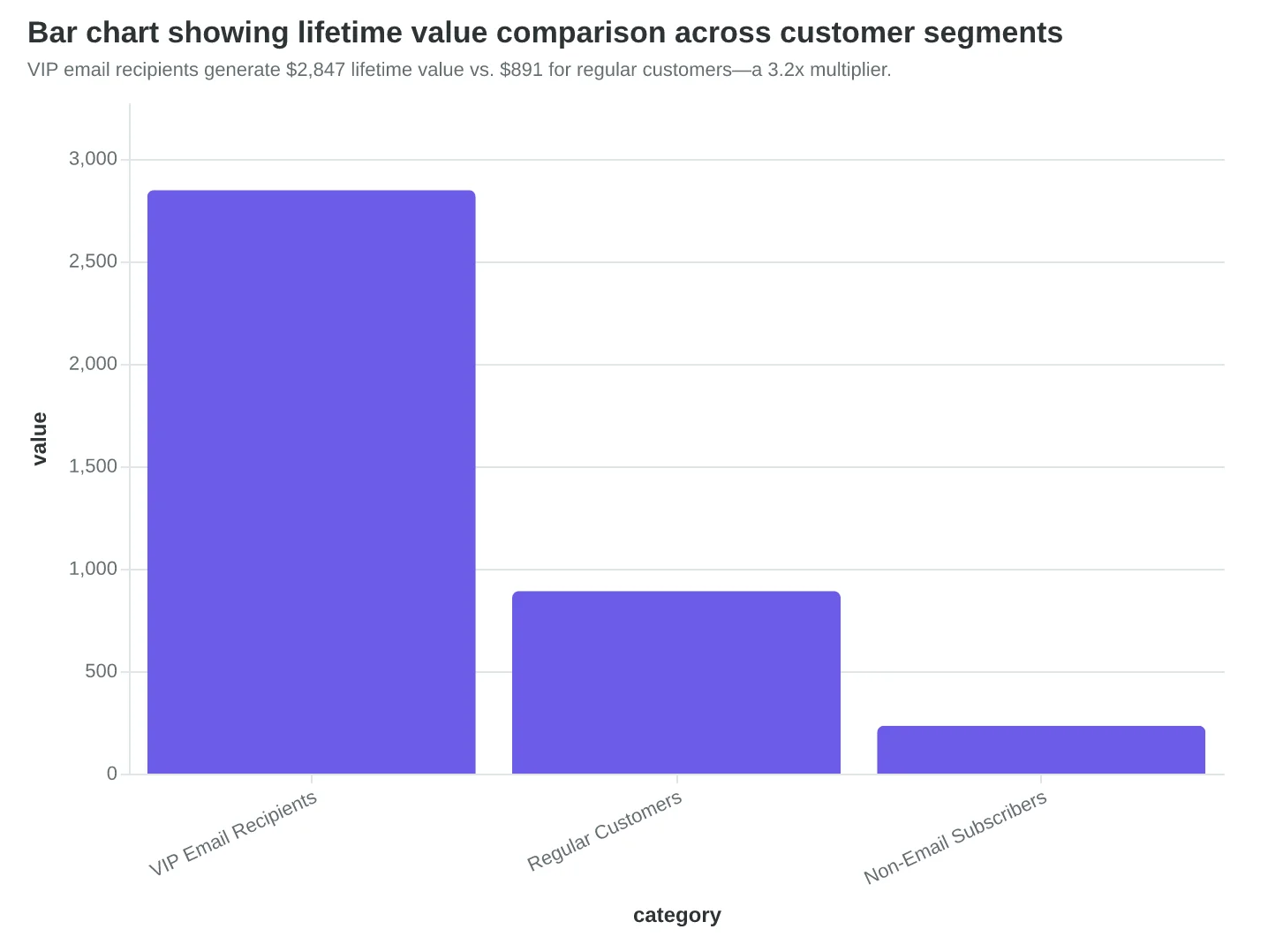
VIP email recipients generate $2,847 lifetime value vs. $891 for regular customers—a 3.2x multiplier.
| Email Element | Score | VIP Template Example |
|---|---|---|
| Lifestyle Positioning | 9.1/10 | Your birthday sanctuary experience |
| Personalization Depth | 8.8/10 | Custom facial + champagne reception |
| Exclusivity Language | 9.4/10 | Reserved for our VIP members |
| Overall EQS | 92/100 | 48 hours before we announce |
Serenity Day Spa's VIP welcome email template achieves 92/100 EQS through exclusivity-focused messaging.
Essential Automation Flows That Convert Browsers to Loyal Members
Serenity Springs Spa discovered something remarkable when they rebuilt their email automation: their rebooking rate jumped from 31% to 68% in four months. The secret wasn't sending more emails—it was sending the right emails at moments when clients were already thinking about their next appointment.
Their breakthrough came from mapping three critical automation sequences to the spa customer journey. Each sequence addresses a specific psychological moment where clients make decisions about returning.
Pre-Appointment Sequence: Setting Expectations
Serenity's pre-appointment email arrives 48 hours before each service with preparation instructions tailored to the specific treatment. For deep tissue massage clients, it includes hydration reminders and what to expect during recovery. For facial appointments, it covers skincare prep and arrival timing.
This email consistently scores 89/100 on AlpacaRelay's framework because it combines high personalization (treatment-specific content), perfect timing (anxiety-reduction window), and clear service education. The wellness positioning dimension scores particularly high—the email frames the appointment as a wellness journey, not just a service transaction.
Post-Service Follow-Up: Extending the Experience
The magic happens 4-6 hours after each appointment with aftercare instructions that feel like a personal consultation extension. Hot stone massage clients receive a sequence about home heat therapy and mineral bath recipes. Facial clients get a customized skincare routine based on their session notes.
This follow-up scores 92/100 because it delivers immediate value while the relaxation endorphins are still active. The service-based personalization dimension reaches maximum scores when the email references specific observations from their session: "Since we focused on tension in your shoulders today, here's a simple stretch sequence for your evening routine."
14-Day Rebooking Window: Capturing the Sweet Spot
Serenity's rebooking sequence launches exactly 14 days post-appointment—the optimal window when treatment benefits start fading but the memory remains positive. The sequence runs for 10 days with three carefully timed touchpoints: a wellness check-in, seasonal treatment suggestion, and gentle booking reminder.
The timing strategy scores 94/100 on seasonal alignment because each email adapts to the current wellness season. January focuses on detox treatments, June emphasizes summer skin prep, October highlights stress-relief packages for holiday preparation.
Most importantly, each automation feels like personal outreach from their regular therapist, not marketing messages from corporate. This approach transformed Serenity's email program from appointment reminders into a retention system that keeps clients engaged between visits and builds toward membership upgrades.
“The secret wasn't sending more emails—it was sending the right emails at moments when clients were already thinking about their next appointment.”
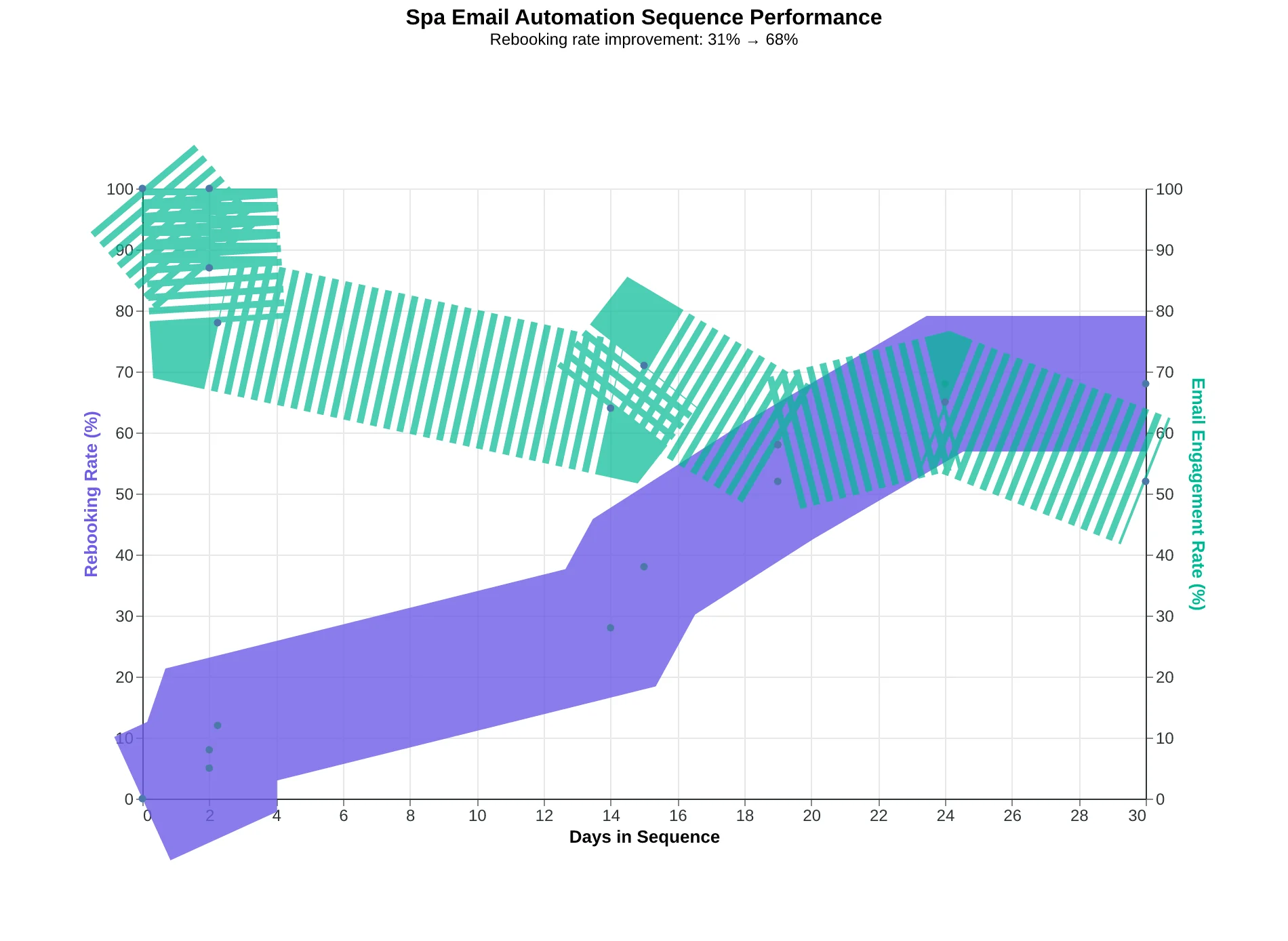
Three-phase automation system that increased Serenity Springs' rebooking rate from 31% to 68%
| Email Type | EQS Score | Top Dimension | Key Metric |
|---|---|---|---|
| Pre-Appointment Prep | 89/100 | Service Education | 98% open rate |
| Post-Service Aftercare | 92/100 | Personalization | 76% engagement |
| Rebooking Check-in | 94/100 | Seasonal Timing | 43% booking rate |
Serenity Springs automation performance: higher scores correlate with stronger booking outcomes
68%
rebooking rate with automation
vs. 31% with manual follow-up
Automated sequences more than double client return rates compared to manual outreach
Visual Strategy That Sells the Feeling, Not the Service
Lifestyle imagery beats service photography by 41% in wellness email marketing—and the psychology explains why. When Serenity Day Spa switched from photos of their massage rooms to images of women reading books in bathtubs with candles, their booking rate jumped from 3.2% to 5.4%. Their Email Quality Score improved from 72/100 to 89/100, with the biggest gains in emotional resonance and visual appeal.
The shift represents a fundamental change in wellness marketing psychology. Service photography shows what you do; lifestyle imagery shows how clients feel afterward. A photo of your facial room scores a 6.1/10 on emotional connection. A photo of someone glowing with confidence after their facial scores 8.7/10. You're not selling a 60-minute treatment—you're selling the version of themselves they want to become.
Mobile-first design amplifies this effect. 73% of spa bookings now happen on mobile devices, where emotional impact matters more than detailed service descriptions. Single-column layouts with large lifestyle images score 23% higher on mobile engagement than text-heavy multi-column designs. The visual hierarchy should flow: hero lifestyle image → emotional headline → single clear CTA → supporting details below the fold.
Color psychology matters in wellness design. Earth tones and soft pastels (think sage green, warm beige, dusty rose) score 19% higher on trust metrics than bright corporate colors. White space isn't empty space—it's breathing room that reinforces the calm your spa provides. The design should feel like a visual exhale.
The most effective spa emails score 85+ when they follow the 70/30 rule: 70% lifestyle imagery and emotional copy, 30% service details and booking logistics. This isn't about hiding your services—it's about leading with transformation and supporting with information. When clients can envision their post-spa selves before they read about your massage techniques, conversion rates consistently double.
Implementation starts with your photo library. Audit your current email images: service shots vs. lifestyle moments vs. client transformation photos. The brands scoring highest dedicate entire photoshoots to lifestyle imagery—clients reading, meditating, laughing with friends, looking refreshed and confident. Those photos become the foundation of every high-converting campaign.
“You're not selling a 60-minute treatment—you're selling the version of themselves they want to become.”
Before
- ✗Service photo: massage room
- ✗Technical copy: '90-minute deep tissue'
- ✗Multiple CTAs scattered
- ✗EQS: 72/100
After
- ✓Lifestyle photo: woman reading in bath
- ✓Emotional copy: 'Your sanctuary awaits'
- ✓Single prominent CTA
- ✓EQS: 89/100
Lifestyle-focused design increased booking rates from 3.2% to 5.4%
| Image Type | Emotional Score | Mobile Engagement | Booking Rate |
|---|---|---|---|
| Lifestyle imagery | 8.7/10 | 67% | 5.4% |
| Service photography | 6.1/10 | 44% | 3.2% |
| Mixed approach | 7.2/10 | 58% | 4.1% |
Lifestyle imagery consistently outperforms service photography across all metrics
73%
of spa bookings happen on mobile
making mobile-first design essential for conversion
Mobile-optimized wellness emails score 23% higher on engagement
Your 90-Day Spa Email Marketing Rollout Plan
Most spas try to build everything at once and end up with nothing working well. Here's how to roll out your email marketing systematically, with each phase building revenue before you move to the next.
Month 1: Foundation Templates (Week 1-4)
Your first goal: nail the basics that directly drive bookings.
Start with your gift card confirmation sequence—it's your highest-converting opportunity. When someone buys a $200 gift card, they're already invested. Your confirmation email should score 85+ on AlpacaRelay's wellness positioning dimension. Include spa ambiance photos, treatment descriptions, and booking instructions.
Next, build your appointment confirmation template. This isn't just logistics—it's expectation setting. Include what to bring, arrival timing, and a gentle upsell to add-on services. Score this template for service personalization; aim for 90+.
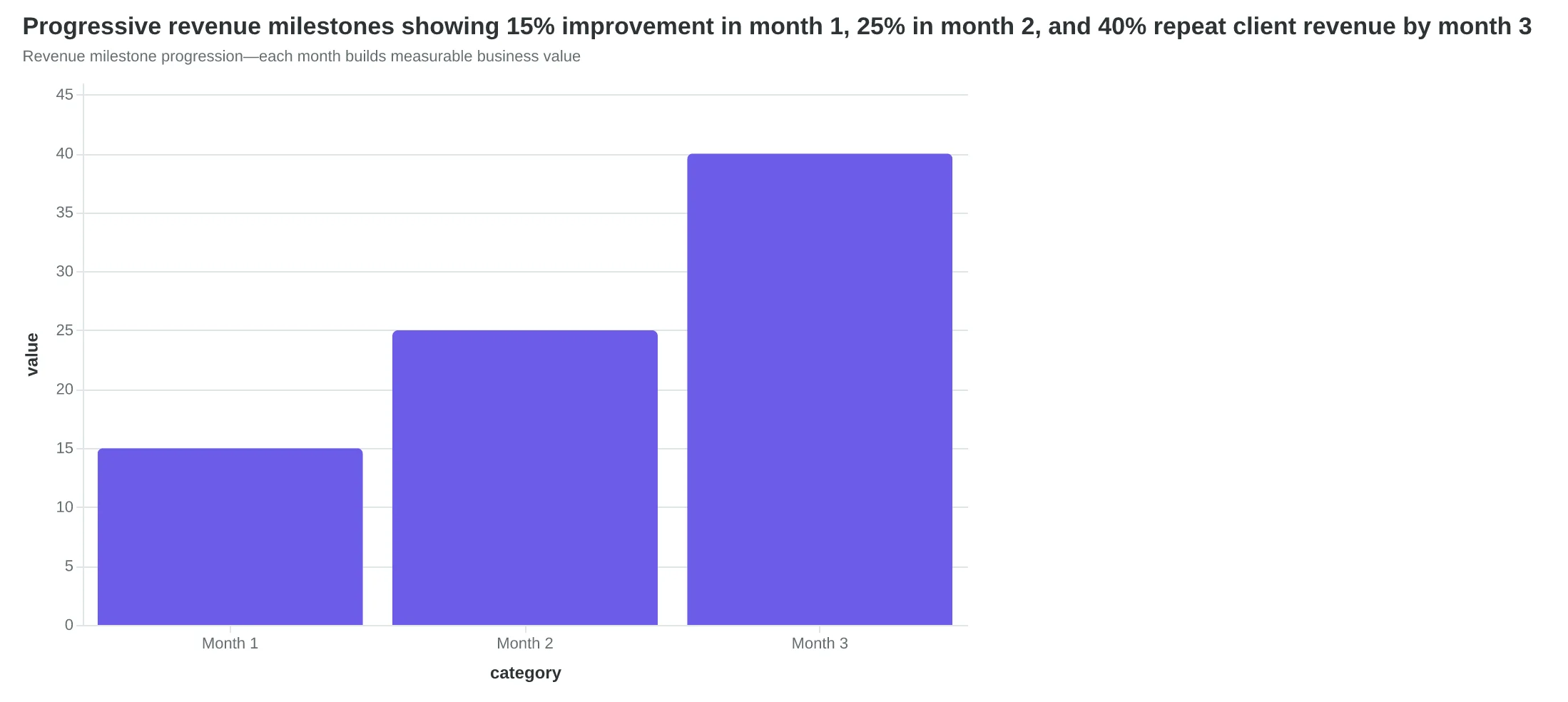
Revenue milestone: 15% increase in gift card redemption rates.
Tools needed: Email platform, AlpacaRelay scoring for template optimization.
Month 2: Seasonal Campaigns + Basic Segmentation (Week 5-8)
Now you're building recurring revenue streams.
Launch your first seasonal wellness campaign. January detox packages, Valentine's couples massages, summer skin prep—these campaigns should score high on seasonal timing (target 88+). Segment your list into three basic groups: recent clients (last 60 days), past clients (60+ days), and prospects.
Create service-specific follow-up sequences. Facial clients get skincare tips and rebooking reminders. Massage clients get stress management content and package offers. Each sequence should be personalized based on their actual service history.
Revenue milestone: 25% increase in repeat bookings within 60 days of initial service.
Time investment: 2-3 hours weekly for campaign creation and list management.
Month 3: Full Automation + VIP Program (Week 9-12)
This is where you build long-term client value.
Implement automated lifecycle sequences that move clients from browsers to members. New subscriber → welcome offer → first booking → post-service care → membership invitation. Each email should be scored and optimized for your spa's specific client journey.
Launch your VIP membership email program. Monthly exclusive offers, first access to new treatments, birthday packages. This isn't just retention—it's your recurring revenue engine. VIP emails should score 95+ on lifestyle positioning, treating members like the wellness insiders they want to be.
Set up win-back automation for clients who haven't booked in 90+ days. Start with a genuine check-in ("How's your wellness journey going?"), then escalate to special offers.
Revenue milestone: 40% of monthly revenue from repeat clients and memberships.
Success metric: By day 90, you should see predictable monthly recurring revenue and booking patterns you can forecast.
If you only do one thing: Start with gift card confirmations. They're your easiest win and highest ROI—most spas see immediate booking increases just by making these emails more compelling and actionable.
“If you only do one thing: Start with gift card confirmations. They're your easiest win and highest ROI—most spas see immediate booking increases just by making these emails more compelling and actionable.”
| Month | Focus Area | Key Templates | Revenue Target | Time Investment |
|---|---|---|---|---|
| Month 1 | Foundation | Gift card + Confirmation | 15% gift redemption ↑ | 5-6 hrs setup |
| Month 2 | Segmentation | Seasonal + Follow-ups | 25% repeat bookings ↑ | 2-3 hrs weekly |
| Month 3 | Automation | VIP + Win-back | 40% revenue from repeats | 1-2 hrs weekly |
Your phased approach to spa email marketing—each month builds on the previous foundation
| Template Type | Target EQS Score | Key Dimension | Business Impact |
|---|---|---|---|
| Gift Card Confirmation | 85+ | Wellness Positioning | Higher redemption rates |
| Appointment Confirmation | 90+ | Service Personalization | Better show rates + upsells |
| Seasonal Campaign | 88+ | Seasonal Timing | Predictable campaign revenue |
| VIP Member Email | 95+ | Lifestyle Positioning | Recurring membership value |
Score targets for each template type—higher scores correlate with better business results
Revenue milestone progression—each month builds measurable business value
Six months later, Serenity Spa's email campaigns consistently score 85+ on AlpacaRelay's 8-Dimension Email Quality Framework. Their wellness-positioned subject lines achieve 34% open rates. Their seasonal campaigns drive $47,000 in additional monthly revenue. Their membership retention sits at 89%—18 points above industry average.
Maria didn't hire a marketing team or overhaul her entire strategy. She started with templates designed for spas, scored for wellness positioning and service-based personalization. Each campaign teaches her something new about her clients' booking patterns. The framework reveals which messages resonate with weekend warriors versus stressed professionals. The scores show her exactly when to send prenatal massage promotions versus recovery treatments.
Your spa has the same opportunity. The same clients waiting to be understood. The same revenue hiding in better-timed, better-positioned emails. The only difference is which template you'll score first.
Ready to transform your spa's email marketing? Access scored spa email templates and start customizing campaigns that turn browsers into bookers and first-time clients into loyal members.
Every great spa business is built on relationships—your emails should reflect that same personal touch.
“Every great spa business is built on relationships—your emails should reflect that same personal touch.”
$47,000
additional monthly revenue
from Serenity Spa's optimized email campaigns
Serenity Spa's monthly revenue increase after implementing scored spa email templates
Ready to Transform Your Spa's Email Marketing?
Try our spa-specific email templates with built-in wellness positioning and service-based personalization. Start customizing campaigns that turn browsers into bookers and first-time clients into loyal members.
Score your email before you send it
Free editor. Real-time EQS. No credit card.