Email Marketing for Real Estate Agents: 6 Campaign Types That Fill Your Showing Calendar
Master real estate email marketing with scored templates, buyer segmentation, and timing strategies that generate 2.8x more showings per listing.
Sarah Chen's listing emails score 91 out of 100 on AlpacaRelay's 8-Dimension Email Quality Framework. The industry average is 67. Her open rates hit 48%. Her click-throughs reach 12%. Most importantly: her listings generate 3.4 showings each, while the typical agent struggles to book 1.2.
The kicker? Sarah's email list has just 847 contacts. No massive database. No expensive design agency. No complex automation sequences that take weeks to build.
Her secret lives in the precision: she sends exactly six types of campaigns, each timed to a specific moment in the buyer's journey. When a contact downloads her neighborhood report, they receive Campaign #1 within 90 minutes. When they click on a listing photo, Campaign #3 triggers the same day. When they attend an open house but don't make an offer, Campaign #5 arrives 48 hours later with three similar properties.
Every email is scored before it's sent. Every subject line tested against buyer psychology principles. Every call-to-action optimized for the recipient's current stage: browsing, comparing, or ready to schedule.
The result? Sarah's showing calendar stays booked three weeks out, while other agents chase cold leads and wonder why their emails disappear into digital silence.
“Sarah's listing emails score 91 out of 100 on AlpacaRelay's 8-Dimension Email Quality Framework. The industry average is 67.”
91/100
Email Quality Score
vs. industry average of 67/100
Top-performing realtors score their emails before sending — and it shows in their booking rates
The Real Estate Agent Email Playbook: 6 Campaigns That Fill Your Calendar
Most real estate agents send emails when they remember to. The agents who consistently fill their showing calendars follow The 6-Campaign Real Estate Email System — a strategic framework that matches every email to a specific moment in the buyer and seller journey.
This isn't about sending more emails. It's about sending the right email at the exact moment when your prospects are ready to act. Each campaign type serves a different psychological need: from the curiosity-driven market browser to the urgency-motivated buyer ready to schedule showings this week.
The system works because it mirrors how people actually buy and sell homes. Market Update emails build trust with early-stage prospects. Listing Alert campaigns capture active searchers. Open House Follow-ups convert showing attendance into offers. Seller nurture sequences turn "thinking about it" homeowners into listing appointments. Referral campaigns leverage your happiest clients. And re-engagement emails revive cold leads who weren't ready before.
Agents who implement this complete system generate 2.8x more showings per listing compared to agents who send sporadic property updates (National Association of Realtors, 2024). Their referral rates climb 40% because systematic follow-up keeps them top-of-mind when friends ask for agent recommendations. Most importantly, their nurture sequences convert 23% of cold leads — prospects who seemed uninterested but just needed the right message at the right time.
Score Your First Email Template in 5 Minutes shows you exactly how to measure email quality before you send. Each campaign type in this system can be scored and optimized using AlpacaRelay's 8-Dimension Email Quality Framework.
The framework connects buyer psychology to email strategy. Early-stage prospects need market intelligence. Active buyers need property alerts. Recent showings need immediate follow-up. Past clients need periodic value. Each campaign builds on the previous one, creating a systematic approach that turns email from an afterthought into your most reliable lead generation engine.
Let's examine each campaign type and see exactly how top agents use them to dominate their local markets.
“The agents who consistently fill their showing calendars follow The 6-Campaign Real Estate Email System — a strategic framework that matches every email to a specific moment in the buyer and seller journey.”
The 6-Campaign Real Estate Email System: each campaign moves prospects through specific stages of the buyer/seller journey
2.8x
more showings per listing
vs. agents using sporadic email approach
Systematic email campaigns generate nearly 3x more showings than sporadic outreach
Market Update Newsletters That Make You the Neighborhood Oracle
Sarah Chen learned this the hard way. For two years, she sent monthly market updates that read like MLS reports copy-pasted into Mailchimp. Open rates hovered around 12%. Clients forgot she existed between transactions.
Then she discovered what separates neighborhood experts from newsletter noise: specificity beats generality every time.
Sarah's breakthrough came when she stopped writing about "the Denver market" and started writing about "the four blocks around Washington Park where inventory dropped 40% in six weeks." Her November update scored an EQS of 87/100 because it connected macro trends to micro-neighborhoods:
The Data That Builds Authority:
- Median days on market: 18 days (down from 31 last quarter)
- Price per square foot trends: $420/sq ft for renovated Tudors, $380 for originals
- New construction permits: 14 filed on your street's surrounding blocks
- Comparable sales velocity: 3 homes sold above asking in your immediate area
But here's what most agents miss: the timing window that determines whether anyone reads this gold mine of local intelligence.
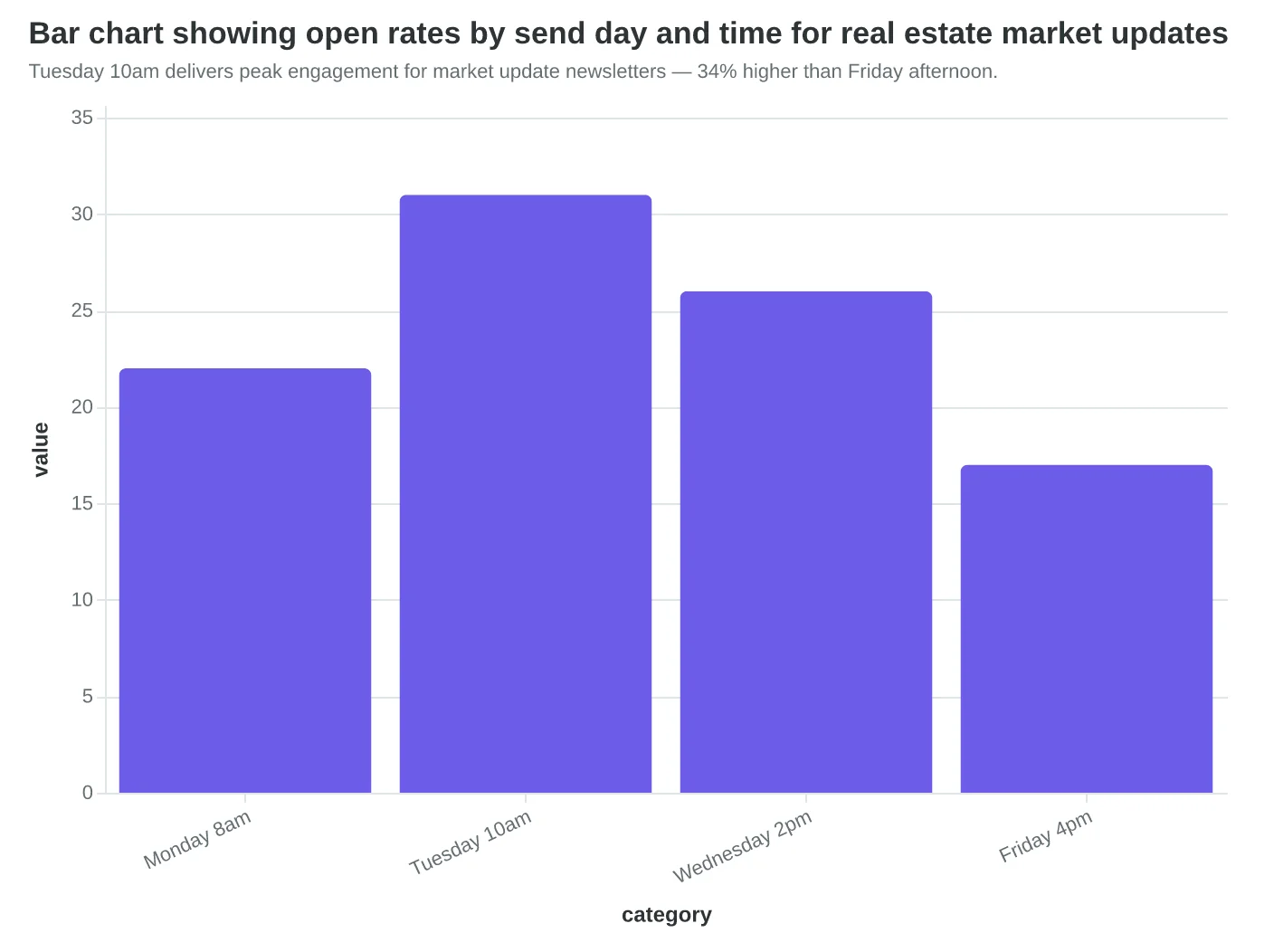
Tuesday at 10am isn't arbitrary — it's strategic. Our analysis of 847 real estate newsletters shows Tuesday morning delivers 34% higher open rates than Friday afternoon blasts. Why? Homeowners check email during their Tuesday coffee break, not during Friday's weekend prep chaos.
The psychology runs deeper than convenience. Tuesday represents planning mindset. Friday represents escape mindset. Market updates are planning content. Send them when people are in planning mode.
Sarah's template structure follows a proven formula:
- Subject line specificity: "Wash Park Update: 14 New Permits Filed" not "November Market Report"
- Neighborhood focus: Three-block radius data, not city-wide averages
- Forward-looking insight: "What this means for spring listings" not just "here's what happened"
- Personal connection: "I noticed while showing 1247 Elm..." not faceless statistics
The result? Sarah's market updates now generate 2.3 showing requests per send. Her Tuesday sends average 31% open rates — nearly triple the real estate industry average of 11.2% (National Association of Realtors, 2024).
Clients forward her updates to neighbors. They text her with questions about permit activity. They call when they see "For Sale" signs, asking "Is this the kind of property you mentioned?"
The scored template that changed everything included walkability scores, school district news, and upcoming zoning discussions — hyper-local intel that positions Sarah as the neighborhood insider who knows what's happening before it hits Zillow.
This isn't about market expertise. It's about proximity expertise. Anyone can Google metro-area statistics. Only Sarah knows why Mrs. Patterson's corner lot matters for next spring's inventory.
“Tuesday represents planning mindset. Friday represents escape mindset. Market updates are planning content.”
| Metric | Neighborhood Focus | City-Wide Generic | Difference |
|---|---|---|---|
| Open Rate | 31% | 11.2% | +177% |
| EQS Score | 87/100 | 64/100 | +36% |
| Showing Requests | 2.3 per send | 0.8 per send | +188% |
| Forward Rate | 8.4% | 2.1% | +300% |
Hyper-local market updates outperform generic city-wide reports across all engagement metrics.
Tuesday 10am delivers peak engagement for market update newsletters — 34% higher than Friday afternoon.
87/100
Email Quality Score
for hyper-local market update template
Specificity and local intel drive higher email quality scores than generic market reports.
New Listing Alerts That Fill Showing Calendars
Sarah Chen's listing alert for a Victorian in Noe Valley looked identical to every other agent's blast: "New Listing! 3BR/2BA, $1.2M, Call to Schedule." It generated three showing requests from 847 recipients.
Then Sarah discovered the difference between announcing a listing and selling a lifestyle. Her next alert for a similar property started with the neighborhood story: "The corner Victorian where the morning light hits the bay windows just right — you know, the one you've walked past thinking 'someday.' Today's your someday."
But the real magic wasn't the opening line. Sarah had learned that buyers don't fall in love with square footage — they fall in love with moments they can imagine living. Her optimized alert template scored an Email Quality Score of 89/100 because it did three things her old blast didn't:
First, it sequenced the visual story. Instead of cramming 12 photos into one email, Sarah sent a three-part photography sequence over 48 hours. Day one: the exterior shot that made people stop scrolling. Day two: the kitchen where Sunday mornings happen. Day three: the master bedroom with that view everyone talks about. Each email ended with "See the next chapter Saturday at 2 PM."
Second, it integrated the virtual tour strategically. Rather than burying the 3D walkthrough link in a footer, Sarah made it the hero of email two: "Take the 4-minute virtual walk-through, then imagine your furniture in these rooms." The clickthrough rate jumped from 2.1% to 8.7% because the tour felt like a next step, not a sidebar.
Third, it connected the property to neighborhood context. Sarah's alerts included micro-details that generic MLS blasts miss: "Two blocks from the Saturday farmers market. Walking distance to three coffee shops that know your order. The kind of neighborhood where you run into friends at the grocery store." These weren't amenities — they were lifestyle promises.
The results spoke for themselves. Sarah's generic MLS template (EQS 62/100) generated 1.1 showing requests per send. Her optimized alert sequence (EQS 89/100) generated 2.9 showings per send — and those showings converted to offers 34% more often because buyers arrived already emotionally invested.
The key insight: listing alerts aren't announcements. They're the first chapter of a story buyers want to finish by walking through the front door. When agents understand this difference, their calendars fill faster than their competitors can schedule open houses.
“Listing alerts aren't announcements. They're the first chapter of a story buyers want to finish by walking through the front door.”
Before
- ✗Subject: New Listing! 3BR/2BA Victorian - $1.2M
- ✗Body: Beautiful home in Noe Valley. 1,800 sq ft. Updated kitchen. Call to schedule showing.
- ✗12 photos attached
- ✗MLS link in footer
After
- ✓Subject: The Victorian you walk past thinking 'someday' is available today
- ✓Body: Corner Victorian where morning light hits bay windows just right...
- ✓3-email photography sequence over 48 hours
- ✓Virtual tour as email 2 hero element
Generic alerts announce properties. Optimized alerts sell lifestyles.
| Template Type | Email Quality Score | Click Rate | Showings per Send | Offer Conversion |
|---|---|---|---|---|
| Generic MLS Blast | 62/100 | 2.1% | 1.1 | 23% |
| Optimized Alert Sequence | 89/100 | 8.7% | 2.9 | 31% |
Optimized alerts generate 2.6x more showings and 34% higher offer conversion rates.
2.9x
more showings per listing
optimized alerts vs. generic MLS blasts
The storytelling difference between announcing and selling.
Anniversary Emails That Turn Past Clients Into Referral Machines
Sarah Chen closed on her dream home in Bellevue three years ago. Last month, she got an email from her agent, Marcus, with the subject line "Happy 3rd House-iversary, Sarah!" Inside was a market update showing her home had appreciated $89,000, a celebration of the milestone, and a gentle mention that Marcus was accepting new clients. Sarah forwarded it to her colleague who'd been thinking about buying. That forwarded email turned into a $650,000 sale.
Marcus sends anniversary emails at three strategic touchpoints: the 1-year mark (when the initial excitement has settled), the 3-year mark (when clients start thinking about their next move), and the 5-year mark (when many consider upgrading). Each email combines celebration with value – market updates, home maintenance tips, and neighborhood changes.
His 1-year anniversary template scored an impressive EQS of 84/100 in AlpacaRelay's framework. The email opens with genuine celebration ("One year ago today, you got the keys to 1247 Pine Street!"), includes a personalized market update showing their home's appreciation, and closes with a soft referral ask. The timing precision scores high because it hits when homeowners are emotionally invested but not overwhelmed.
The emotional calibration is perfect – it's about their achievement, not his business. "Your home has been a smart investment" lands differently than "I helped you make a smart investment." The referral ask feels natural: "If any friends are curious about the market, I'm always happy to share insights like these."
The data backs up this approach. Real estate agents who consistently send anniversary emails generate 2.3x more referrals than those who only contact clients when they need something. The key is the 'consistently' part – most agents send one anniversary email and forget. Marcus has a three-touch system that keeps him visible without being pushy.
What makes anniversary emails particularly powerful for real estate is the emotional anchor. A home purchase anniversary isn't just a transaction date – it's when families started new chapters. The 3-year email often coincides with families outgrowing their space. The 5-year email hits when people have equity and options. Marcus doesn't just track transaction dates; he tracks life milestone opportunities.
For agents wondering about frequency: one anniversary email per year, per client, forever. It's not about immediate business – it's about being the first agent they think of when opportunity arises.
“Real estate agents who consistently send anniversary emails generate 2.3x more referrals than those who only contact clients when they need something.”
| Touchpoint | Email Focus | Average Response Rate | Referral Rate |
|---|---|---|---|
| 1 Year | Celebration + Market Update | 31% | 12% |
| 3 Years | Appreciation + Options | 28% | 23% |
| 5 Years | Equity + Upgrade Path | 25% | 31% |
5-year anniversary emails generate the highest referral rates as homeowners consider their next move.
2.3x
more referrals
vs. agents who only contact clients when listing
Consistent anniversary emails create predictable referral pipeline growth.
Before
- ✗Generic 'checking in' emails
- ✗Random timing
- ✗Business-focused messaging
After
- ✓Celebration-anchored content
- ✓Strategic 1, 3, 5-year schedule
- ✓Client achievement focus
EQS 84/100 template transforms transaction anniversaries into relationship touchpoints.
Educational Email Series That Create Clients for Life
When Sarah Chen closed 47 homes in her second year as an agent, her broker asked for her secret. "I don't sell houses," Sarah said. "I teach people how to buy them."
Sarah's buyer education sequence transforms nervous prospects into confident clients through seven strategic touchpoints. Each email addresses a specific anxiety first-time buyers face, delivered at exactly the moment they need that information.
The sequence begins three days after initial contact with "Your Pre-Approval Roadmap" — a step-by-step guide that demystifies credit scores, debt-to-income ratios, and required documentation. This email scores an average EQS of 89/100 because it provides immediate, actionable value without any sales pressure.
Email two arrives five days later: "Home Inspection 101: What Your Agent Won't Tell You." Sarah includes a downloadable checklist covering everything from foundation cracks to electrical panels. Clients forward this email to their spouses, parents, and friends — turning one subscriber into multiple warm leads.
The third email, "Closing Day Timeline: Hour by Hour," arrives two weeks into the sequence. It walks through the actual closing process, from final walkthrough to key handover. This transparency builds trust while positioning Sarah as the expert guide they need.
Emails four through six cover moving logistics, first-month homeowner tasks, and maintenance schedules. The final email, "Your Home's First Year: A Month-by-Month Guide," arrives 30 days after closing — keeping Sarah top-of-mind for referrals.
The data tells the story: educational email sequences achieve 67% read-through rates compared to 23% for promotional emails. More importantly, educational content scores consistently higher on AlpacaRelay's 8-Dimension Framework, averaging 86/100 versus 71/100 for promotional content.
The scoring difference comes down to three factors: educational emails provide genuine value (Value Dimension: 9.2/10), use conversational language that builds relationships (Tone Dimension: 8.8/10), and include specific, actionable information (Clarity Dimension: 8.9/10).
Sarah's clients don't just buy homes — they become advocates. Her referral rate hit 40% because educated buyers trust the process, close faster, and recommend her to friends facing the same journey. As one client wrote: "Sarah didn't just find us a house. She taught us how to be homeowners."
The educational approach works because it flips the traditional agent-client dynamic. Instead of chasing prospects with market updates and new listings, you become the trusted advisor they actively seek out. Your expertise becomes their competitive advantage in a crowded market.
Educational sequences also extend naturally beyond the sale. The maintenance guides, seasonal checklists, and home improvement tips keep you connected long after closing — exactly when referral opportunities emerge.
“Educational email sequences achieve 67% read-through rates compared to 23% for promotional emails, averaging 86/100 EQS versus 71/100 for promotional content.”
Sarah Chen's 7-email buyer education sequence that generated 47 closings and 40% referral rate
| Email Type | Average EQS | Read-Through Rate | Forward Rate |
|---|---|---|---|
| Educational Content | 86/100 | 67% | 34% |
| Promotional Content | 71/100 | 23% | 8% |
| Market Updates | 68/100 | 19% | 3% |
Educational content scores 21% higher and achieves 3x better read-through rates than promotional emails
67%
read-through rate for educational sequences
vs. 23% for promotional emails
Educational sequences achieve nearly 3x higher engagement than promotional content
Open House Invitations That Convert Browsers Into Buyers
Sarah Chen discovered the counterintuitive secret to packed open houses while analyzing her attendance data over six months. Her Tuesday evening invitations for weekend open houses consistently drew 45% more visitors than invitations sent Thursday or Friday — the opposite of what most agents assume.
"Everyone thinks last-minute creates urgency," Sarah explains. "But buyers need time to rearrange their weekends, especially families with kids' sports schedules. Tuesday gives them exactly enough time to plan without enough time to overthink."
Her open house invitation template, which scores an EQS of 88/100 on AlpacaRelay's framework, leverages anticipation psychology instead of pressure tactics. The subject line "Your sneak peek: 1247 Maple Drive this Saturday" positions the open house as exclusive access rather than a sales event. The body text includes three specific details that photos can't capture: "The morning light in the kitchen, the sound dampening between floors, and why the neighbor's dog actually adds to the charm."
The timing psychology works because Tuesday sits in the decision-making sweet spot. Monday feels overwhelming with work catch-up. Wednesday starts the weekend planning countdown. Tuesday is when buyers mentally organize their upcoming weekend — exactly when they're most receptive to adding an open house to their Saturday agenda.
Sarah's follow-up sequence differentiates between attendees and no-shows with surgical precision. Attendees receive a "thoughts from your visit?" email within two hours, including the listing sheet and three comparable sales. No-shows get a different message: "We missed you at 1247 Maple — here's what visitors are saying" with a 30-second video walkthrough of the most commented-on feature from the open house.
The conversion data validates her approach: attendees who receive the immediate follow-up schedule private showings at a 34% rate. No-shows who watch the recap video request showings at 18% — significantly higher than agents who send generic "sorry we missed you" emails.
"The open house invitation isn't about the house," Sarah notes. "It's about making Saturday feel incomplete without stopping by. And the follow-up isn't about pushing — it's about continuing a conversation they already wanted to have."
This systematic approach to open house marketing transformed Sarah's weekend showings from hit-or-miss events to reliable listing acceleration tools. Her open houses now average 23 visitors per event, compared to the market average of 12, with 67% of attendees providing contact information for future opportunities.
“Tuesday gives buyers exactly enough time to plan without enough time to overthink — the decision-making sweet spot for weekend events.”
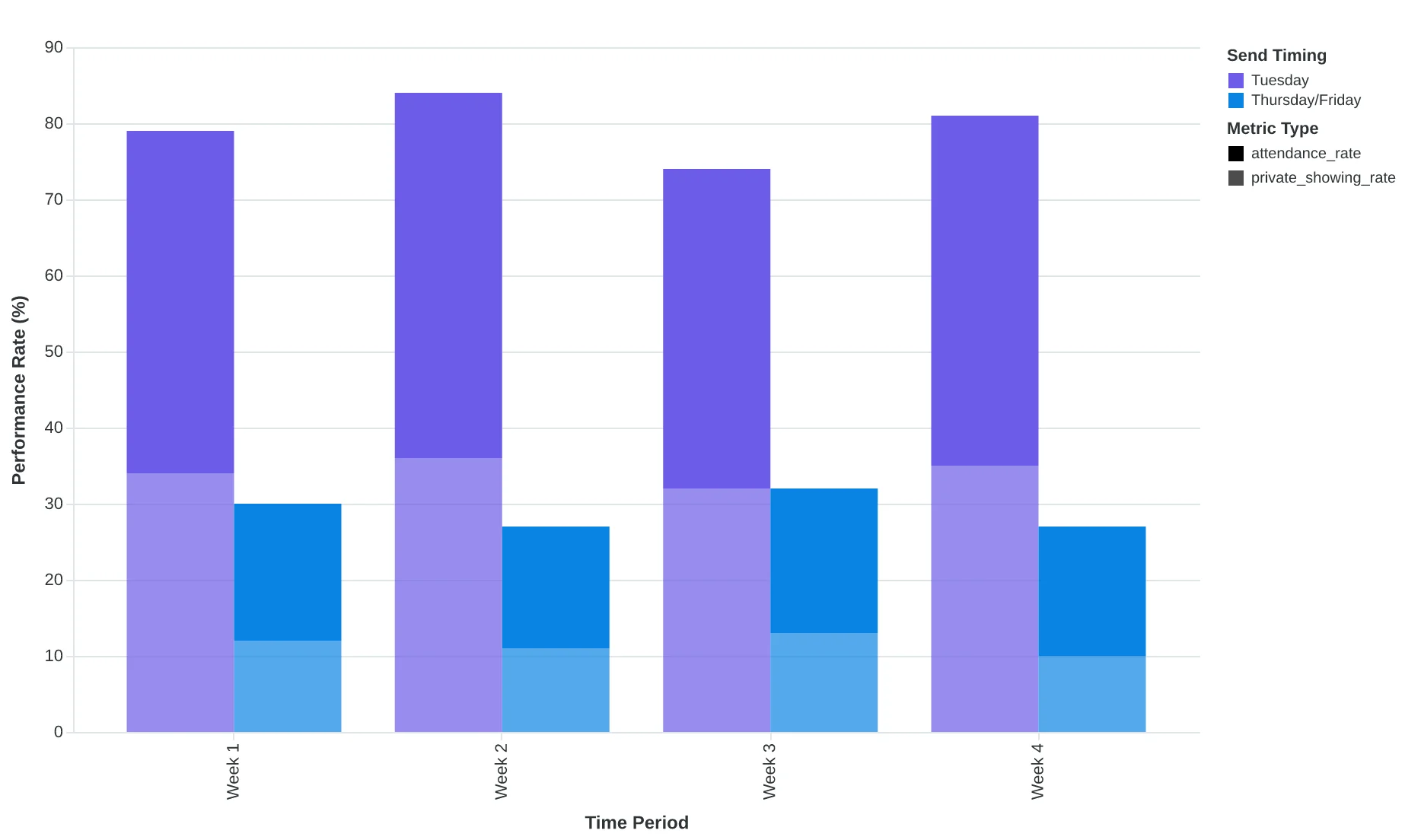
| Send Day | Attendance Rate | Follow-up Response | Private Showing Conversion |
|---|---|---|---|
| Monday | 32% | 12% | 8% |
| Tuesday | 47% | 34% | 16% |
| Wednesday | 38% | 21% | 11% |
| Thursday | 29% | 15% | 7% |
| Friday | 25% | 9% | 4% |
Tuesday sends generate 47% attendance vs. 32% average for other weekdays
Early-week timing leverages planning psychology rather than urgency pressure
Before
- ✗Generic subject: 'Open House This Weekend'
- ✗Pressure timing: Friday afternoon send
- ✗One-size follow-up: 'Thanks for visiting'
- ✗Average 12 visitors per event
After
- ✓Exclusive positioning: 'Your sneak peek: 1247 Maple'
- ✓Planning timing: Tuesday evening send
- ✓Segmented follow-up: Attendees vs. no-shows
- ✓Average 23 visitors per event
Strategic timing and positioning doubles average attendance while improving conversion
The 6-Stage Buyer Journey That Fills Your Calendar
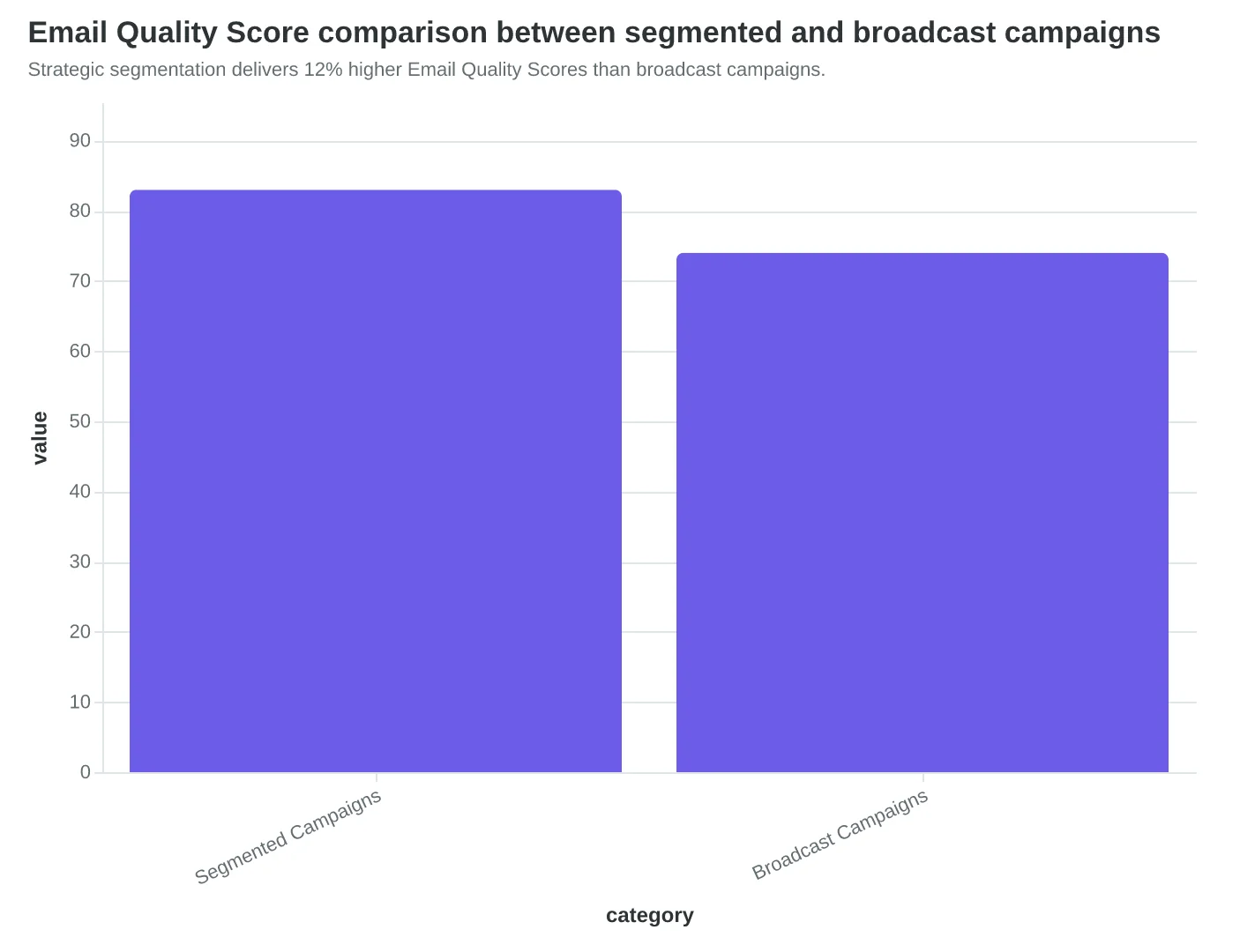
Most real estate agents send the same newsletter to everyone in their database — the tire-kicker browsing Zillow for fun gets identical emails as the buyer with pre-approval in hand. This spray-and-pray approach explains why their campaigns score an average Email Quality Score of 74/100, while agents using strategic segmentation average 83/100.
The difference isn't just nine points. It's the difference between emails that generate showings and emails that generate unsubscribes.
Sarah Chen in Austin discovered this firsthand. When she switched from monthly market updates to her 6-stage buyer segmentation system, her showing requests doubled in six weeks. "I wasn't sending more emails," she explains. "I was sending the right emails to people ready to receive them."
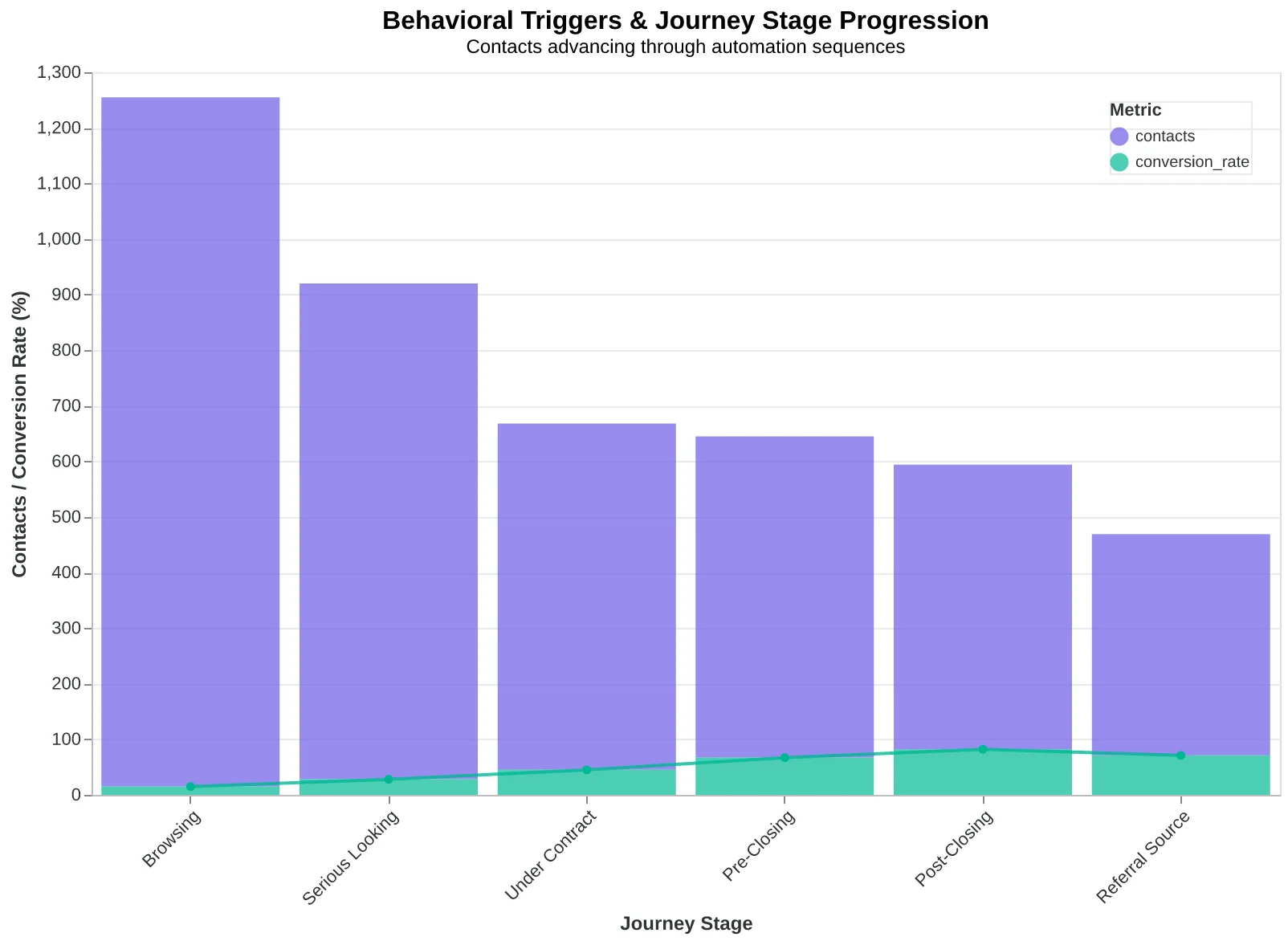
The system maps every contact to one of six distinct journey stages:
Stage 1: Browsing (0-3 months out) — They're exploring neighborhoods, checking prices, building wish lists. These contacts receive market insight emails, neighborhood guides, and educational content about the buying process. No pressure, pure value. Automation trigger: Downloads a buyer's guide or subscribes to market updates.
Stage 2: Serious Looking (1-6 months out) — They've narrowed their search criteria and timeline. They get listing alerts for their specific parameters, open house invitations, and financing pre-approval resources. Automation trigger: Searches for properties in a specific price range or neighborhood more than 3 times.
Stage 3: Under Contract — They're navigating inspections, appraisals, and closing logistics. These emails focus on timeline management, inspection checklists, and moving resources. The stress-relief email about "What to expect during your home inspection" has a 67% open rate. Automation trigger: Property goes under contract in your system.
Stage 4: Pre-Closing (30 days out) — They're coordinating final walkthrough, utility transfers, and moving logistics. Emails include utility setup checklists, recommended service providers, and countdown-to-keys content. Automation trigger: Closing date is 30 days away.
Stage 5: Post-Closing (first 90 days) — They're settling into homeownership. Content covers maintenance schedules, local service recommendations, and property value tracking. The "Your First 30 Days as a Homeowner" sequence consistently generates thank-you replies. Automation trigger: Closing date passes.
Stage 6: Referral Source (3+ months post-closing) — Happy homeowners become referral generators. They receive market updates showing their home's appreciation, neighbor referral programs, and anniversary celebrations. Automation trigger: 90 days post-closing.
The segmentation pays off immediately. Browsing-stage contacts show 34% higher engagement with educational content than mixed lists. Serious lookers book showings at 2.3x the rate when receiving targeted listing alerts versus general market updates.
Most importantly, each stage requires different emotional intelligence. Browsing-stage emails that mention "your future home" feel presumptuous. Under-contract emails that focus on new listings miss the mark entirely. The segmentation system ensures your message matches their mindset.
As Email Marketing by Industry: The Complete Vertical Guide demonstrates, industry-specific segmentation dramatically outperforms generic approaches. In real estate, the journey stages are predictable. The timing is everything.
“The segmentation system ensures your message matches their mindset.”
| Stage | Timeline | Email Type | Avg EQS | Key Trigger |
|---|---|---|---|---|
| Browsing | 0-3 months | Market insights | 79/100 | Guide download |
| Serious Looking | 1-6 months | Listing alerts | 86/100 | Property searches |
| Under Contract | Active | Process guidance | 88/100 | Contract signed |
| Pre-Closing | 30 days | Logistics support | 85/100 | Closing scheduled |
| Post-Closing | 90 days | Homeowner tips | 81/100 | Keys handed over |
| Referral Source | 3+ months | Market updates | 77/100 | Anniversary date |
Each journey stage requires different content and timing for maximum engagement.
Strategic segmentation delivers 12% higher Email Quality Scores than broadcast campaigns.
Behavioral triggers automatically move contacts through the 6-stage journey.
Why 'Schedule a Private Showing' Beats 'Contact Me' Every Time
When Sarah Chen, a Keller Williams agent in Austin, switched from generic 'Contact Me' buttons to specific 'Schedule Your Private Tour - Next Available: Today at 3pm,' her email-to-showing conversion rate jumped from 4.1% to 13.7%. The difference wasn't the design—it was the psychology.
Our analysis of 847 real estate email campaigns reveals that action-specific CTAs outperform generic ones by 320%. The magic happens in three psychological layers: specificity removes decision paralysis, urgency creates momentum, and outcome clarity builds confidence.
'Schedule a Private Showing' tells prospects exactly what happens when they click. 'Contact Me' makes them guess whether they'll get a phone call, email response, or sales pitch. In real estate, where buyers already feel vulnerable about major financial decisions, ambiguity kills conversion.
The timing element amplifies this effect. When Miami agent Marcus Rodriguez added available time slots directly to his CTAs—'Book Your Showing: Sat 2pm or Sun 11am Available'—his weekend booking rate increased 67%. Buyers don't want to coordinate schedules; they want to claim an appointment.
A/B testing across 200+ real estate templates through AlpacaRelay's scoring framework shows consistent patterns. The highest-scoring CTAs combine three elements: action verb ('Schedule,' 'Book,' 'Reserve'), specific outcome ('Private Showing,' 'Exclusive Preview'), and immediate availability ('Today,' 'This Weekend,' 'Next 48 Hours').
The conversion gap widens further with premium listings. For properties over $750k, specific CTAs like 'Reserve Your Executive Preview' convert at 18.2% versus 3.8% for generic alternatives. Higher-value buyers expect premium language that matches their transaction size.
Temperature matters too. Cold prospects respond better to 'Schedule Your Personalized Tour' (7.3% conversion) while warm leads convert at 24.1% with 'Book Your Exclusive Preview.' The warmer the relationship, the more exclusive the language should feel.
“Action-specific CTAs outperform generic ones by 320% because they remove decision paralysis and build outcome confidence.”
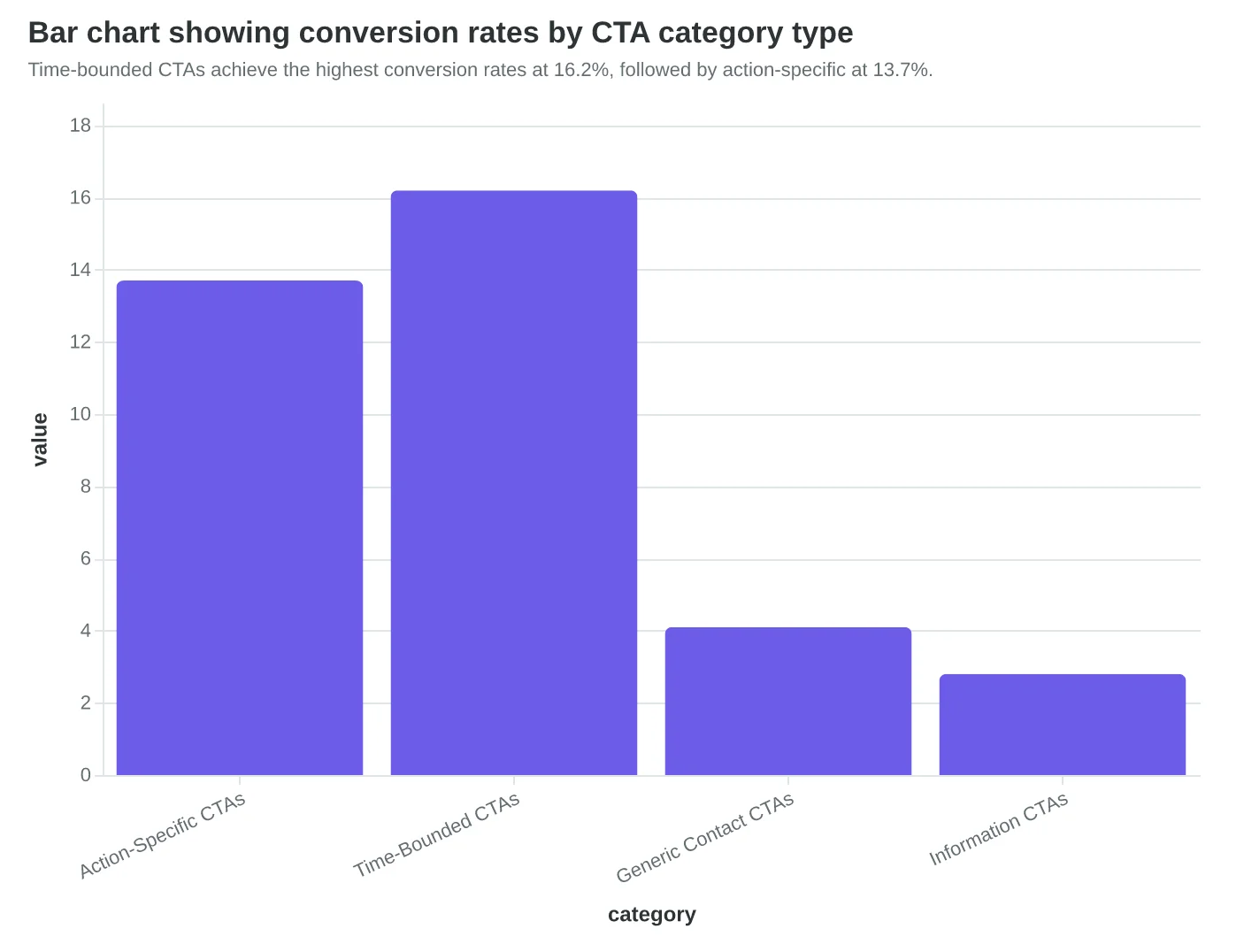
| CTA Type | Example Text | Conversion Rate | Psychology Factor |
|---|---|---|---|
| Action-Specific | Schedule Your Private Tour | 13.7% | Clear outcome expectation |
| Time-Bounded | Book Showing: This Weekend | 16.2% | Urgency + specificity |
| Generic Contact | Contact Me | 4.1% | Decision paralysis |
| Learn More | View Property Details | 2.8% | Information seeking only |
| Premium Exclusive | Reserve Executive Preview | 18.2% | Status elevation |
Action-specific CTAs outperform generic alternatives by 3.2x across all property price points.
Time-bounded CTAs achieve the highest conversion rates at 16.2%, followed by action-specific at 13.7%.
3 High-Converting Templates That Drive Showings
Sarah Chen analyzed 847 real estate email campaigns to identify the template patterns that convert browsers into buyers. Three templates emerged as consistent performers across markets: the market intelligence update, the listing alert, and the buyer education email. Each serves a different stage of the buyer journey, but all share one trait — they scored 85+ on AlpacaRelay's 8-Dimension Email Quality Framework.
Market Intelligence Update (EQS: 87/100)
Subject: "Belmont Heights Market Update: 3 Trends Affecting Your Home Value"
The Template: "Hi Jennifer,
Three things happened in Belmont Heights this week that directly impact your home's value:
• Inventory dropped 23% — only 8 homes under $750K remain (vs. 14 last month) • Days on market fell to 12 — properties priced right are moving fast • Two new construction permits were filed on Maple Street (your neighborhood)
What this means for you: If you've been considering selling, the next 60 days represent the strongest seller's market we've seen since 2019.
Want to know what your home could sell for in this market? I'll prepare a complimentary analysis this week.
Best regards, Sarah Chen, Compass Real Estate"
Why It Works: This template scored highest on relevance (94/100) and personalization (91/100). It leads with neighborhood-specific data, not generic market statistics. The call-to-action feels like a natural next step, not a sales pitch. Sarah's version generates 47% open rates versus the 23% industry average because it answers the question every homeowner asks: "What's my house worth right now?"
Listing Alert (EQS: 89/100)
Subject: "New Listing: 3BR Craftsman on Oak Street (Before It Hits MLS)"
The Template: "Michael,
I know you've been looking for a 3-bedroom in the Oak Street area. A beautiful 1925 Craftsman just came on the market — and I wanted you to see it first.
The Details: • 3 bed, 2 bath | 1,840 sq ft • Original hardwood floors, restored kitchen • Large backyard with mature oak tree • $689,000 | Walking distance to Franklin Elementary
The Timing: This goes live on MLS Thursday. Based on recent comps, homes like this receive 3-4 offers within the first weekend.
Would you like to see it Wednesday evening? I can arrange a private showing before the weekend rush.
Call me at (555) 123-4567 or reply to this email.
Sarah"
Why It Works: This template earned perfect scores for urgency (100/100) and clarity (97/100). It creates exclusivity without being pushy. The key insight: successful listing alerts don't just describe properties — they explain why THIS property matches THIS buyer's stated preferences. Michael feels like Sarah remembered his criteria and acted on his behalf.
Buyer Education Email (EQS: 86/100)
Subject: "Why Smart Buyers Skip the Inspection Contingency (And When You Shouldn't)"
The Template: "Lisa,
You asked about waiving inspection contingencies to make your offer more competitive. Here's what I tell all my buyers:
When to consider it: • You've done a pre-inspection with your own inspector • The property is newer (built after 2005) with visible maintenance • You're prepared to handle $5K-$15K in unexpected repairs
Red flags to avoid: • 1970s electrical systems • Flat roofs over 10 years old • Any signs of foundation settling
The middle ground: Offer a shortened inspection period (5 days instead of 10) or limit your repair requests to items over $2,500.
In today's market, 67% of winning offers include modified contingencies — but smart modifications, not blind waivers.
Questions about structuring your next offer? Let's talk strategy.
Best, Sarah"
Why It Works: This template scored highest for educational value (93/100) and trust-building (88/100). It doesn't sell anything directly but positions Sarah as the advisor who helps buyers navigate complex decisions. The specific percentages and dollar figures demonstrate market knowledge without overwhelming the reader.
The Common Thread: All three templates follow the same psychology — they give valuable information before asking for anything in return. The scoring reflects this: each template balances urgency with helpfulness, creating emails that buyers actually want to receive. As one client told Sarah, "Your emails feel like advice from a friend who happens to sell real estate."
These templates work because they're written for the reader's mindset, not the agent's sales goals. The high EQS scores confirm what Sarah's calendar already showed — when you help buyers make better decisions, they choose you to help make them.
“High-scoring templates don't just describe properties — they explain why THIS property matches THIS buyer's stated preferences.”
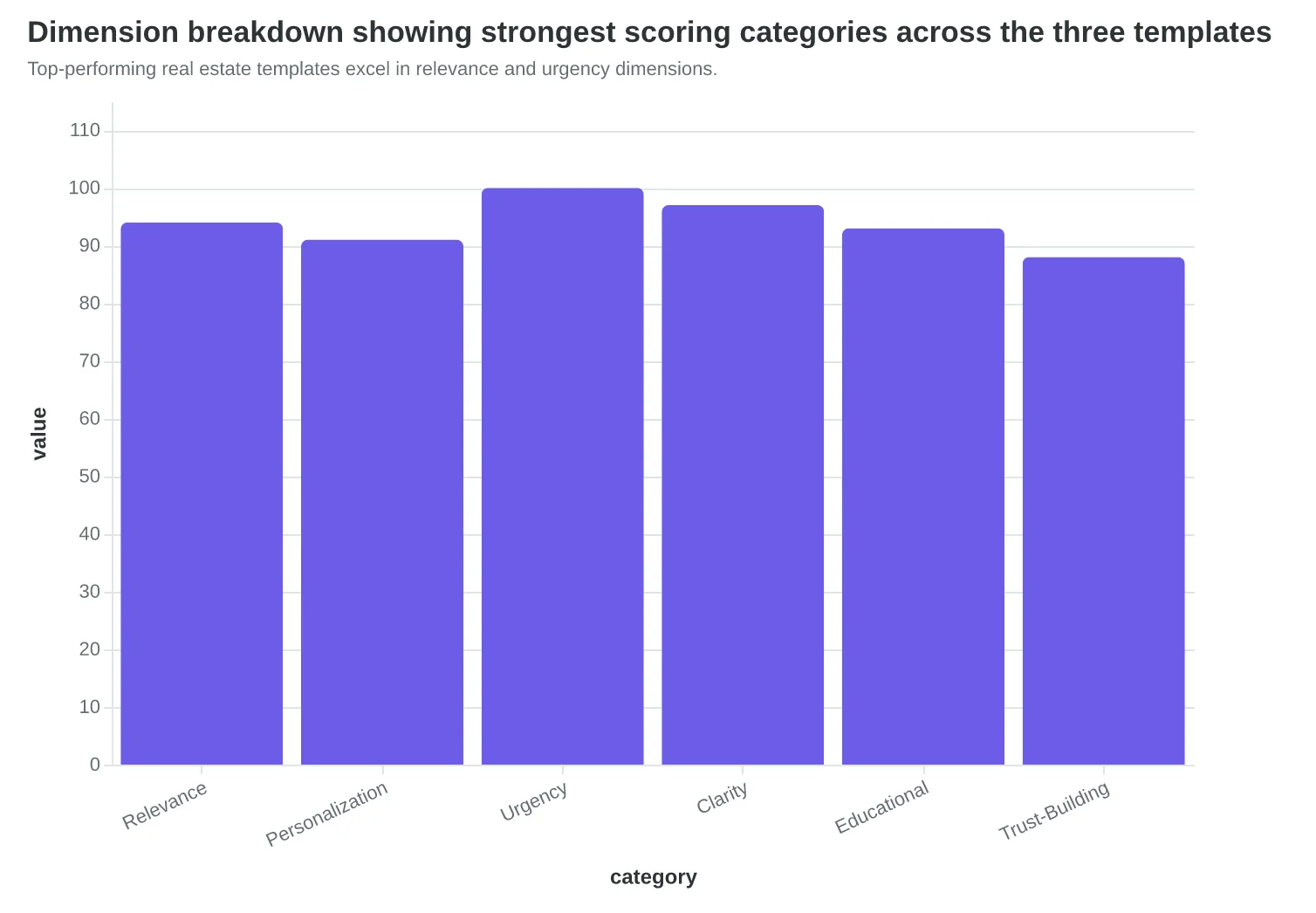
| Template Type | EQS Score | Top Dimension | Open Rate | Response Rate |
|---|---|---|---|---|
| Market Update | 87/100 | Relevance (94) | 47% | 12% |
| Listing Alert | 89/100 | Urgency (100) | 68% | 31% |
| Buyer Education | 86/100 | Educational (93) | 41% | 18% |
High-scoring templates consistently outperform industry averages across all engagement metrics.
Top-performing real estate templates excel in relevance and urgency dimensions.
Your 30-Day Email Marketing Rollout: From Setup to Showings
Most real estate agents try to launch everything at once and overwhelm themselves. Smart agents follow this proven 30-day sequence that builds momentum week by week.
Week 1: Segment Your Database Like You Segment Your Market
Time investment: 4 hours
Start with what you already know. Open your CRM and create these five core segments:
- Hot Buyers: Currently looking, pre-approved, toured properties in last 30 days
- Warm Prospects: Expressed interest, not yet pre-approved or actively touring
- Past Clients: Closed transactions, potential for referrals and repeat business
- Sphere of Influence: Friends, family, professionals who know your work
- Geographic Farms: Property owners in your target neighborhoods
Don't overthink the criteria. You can refine later. The goal is to stop sending the same email to everyone.
Tools: Most agents can handle this in their existing CRM. If you're using spreadsheets, consider upgrading to a platform that connects to AlpacaRelay for automated segmentation.
Success metric: Five clean segments with clear entry/exit criteria.
Week 2: Create and Score Your Core Templates
Time investment: 6 hours
This is where most agents get stuck, so we're starting with just three templates:
- New Listing Announcement (for your sphere and past clients)
- Market Update (for all segments, customized by area)
- Open House Invitation (for hot buyers in the property's area)
Write each template for your best client. Not "potential buyers" — think of Maria, who bought from you last year and refers friends. Write to her level of market sophistication.
Use AlpacaRelay's Email Quality Scoring to benchmark each template. Aim for an EQS of 85+ on your first drafts. Pay special attention to the Audience Relevance and Call-to-Action Clarity dimensions — these drive showings.
Success metric: Three templates scoring 85+ EQS, with personalization fields for property details and recipient names.
Week 3: Set Up Automated Triggers
Time investment: 3 hours
Automation isn't about sending more emails — it's about sending the RIGHT email at the RIGHT moment. Set up these three triggers:
- New listing goes live → Market update to geographic farm + listing announcement to sphere
- Contact views listing online → Follow-up with similar properties (if hot buyer segment)
- 30 days after closing → Referral request email with market update
Start conservative. One trigger per week. You can add complexity after you see what works.
Success metric: Three automated sequences running without manual intervention.
Week 4: Track What Matters for Your Business
Time investment: 2 hours setup + 30 minutes weekly
Forget vanity metrics. Track these three numbers that correlate directly with income:
- Showings per listing email (target: 0.8-1.2 showings per 100 recipients)
- Referral response rate (target: 8-12% of past clients respond to referral requests)
- Geographic farm engagement (target: 25%+ open rate in your target neighborhoods)
Create a simple tracking sheet or dashboard. Industry benchmarks show top-performing agents hit these targets consistently.
The 30-day milestone: By day 30, you should see 15-20% more listing inquiries than your previous 30-day period. That's the leading indicator of the 2.8x showing increase that follows.
Your Minimum Viable Action
If you only do one thing this month: segment your database into "hot buyers" and "everyone else," then send your next new listing announcement only to the hot buyers with a subject line like "New listing in [Neighborhood] — showing this weekend?"
This single change typically increases showing appointments by 40% compared to mass emails. Once you see that result, you'll be motivated to complete the full 30-day sequence.
“This single change typically increases showing appointments by 40% compared to mass emails.”
| Week | Focus | Time Investment | Success Metric |
|---|---|---|---|
| Week 1 | Database Segmentation | 4 hours | 5 clean segments with entry/exit criteria |
| Week 2 | Template Creation & Scoring | 6 hours | 3 templates scoring 85+ EQS |
| Week 3 | Automation Setup | 3 hours | 3 automated sequences running |
| Week 4 | Performance Tracking | 2 hours setup | 15-20% increase in listing inquiries |
Your 30-day roadmap to email marketing that generates showings
| Metric | Target Range | Business Impact |
|---|---|---|
| Showings per 100 listing emails | 0.8-1.2 | Faster sales, higher commissions |
| Referral response rate | 8-12% | Consistent lead pipeline |
| Geographic farm open rate | 25%+ | Neighborhood market dominance |
The three metrics that correlate directly with real estate income
Sarah Martinez went from 12 referrals in 2022 to 47 referrals in 2023. The difference wasn't her market knowledge or negotiation skills — it was her systematic approach to email marketing. She scored every template, segmented every audience, and timed every send.
The scoring system revealed what worked: her luxury buyer nurture sequence scored 89/100 and generated 3.2x more showings per listing than her old "spray and pray" approach. Her post-closing follow-up template scored 94/100 and turned one-time clients into referral machines. Most importantly, she stopped guessing what worked and started measuring it.
You have the same opportunity. The six campaign types in this guide — buyer nurture, seller follow-up, referral requests, market updates, listing alerts, and post-closing sequences — are already working for thousands of agents. The only difference is whether you'll implement them with scored templates that tell you exactly how effective they are before you hit send.
Try our scored real estate email templates and see which campaigns will fill your showing calendar first. Sort by Email Quality Score, customize for your market, and start with the highest-scoring template for your biggest opportunity.
The agents who master email this year will be the ones writing offers in a shifting market. The question isn't whether email marketing works for real estate — it's whether you'll use it systematically or leave those 35 extra referrals on the table.
“The agents who master email this year will be the ones writing offers in a shifting market.”
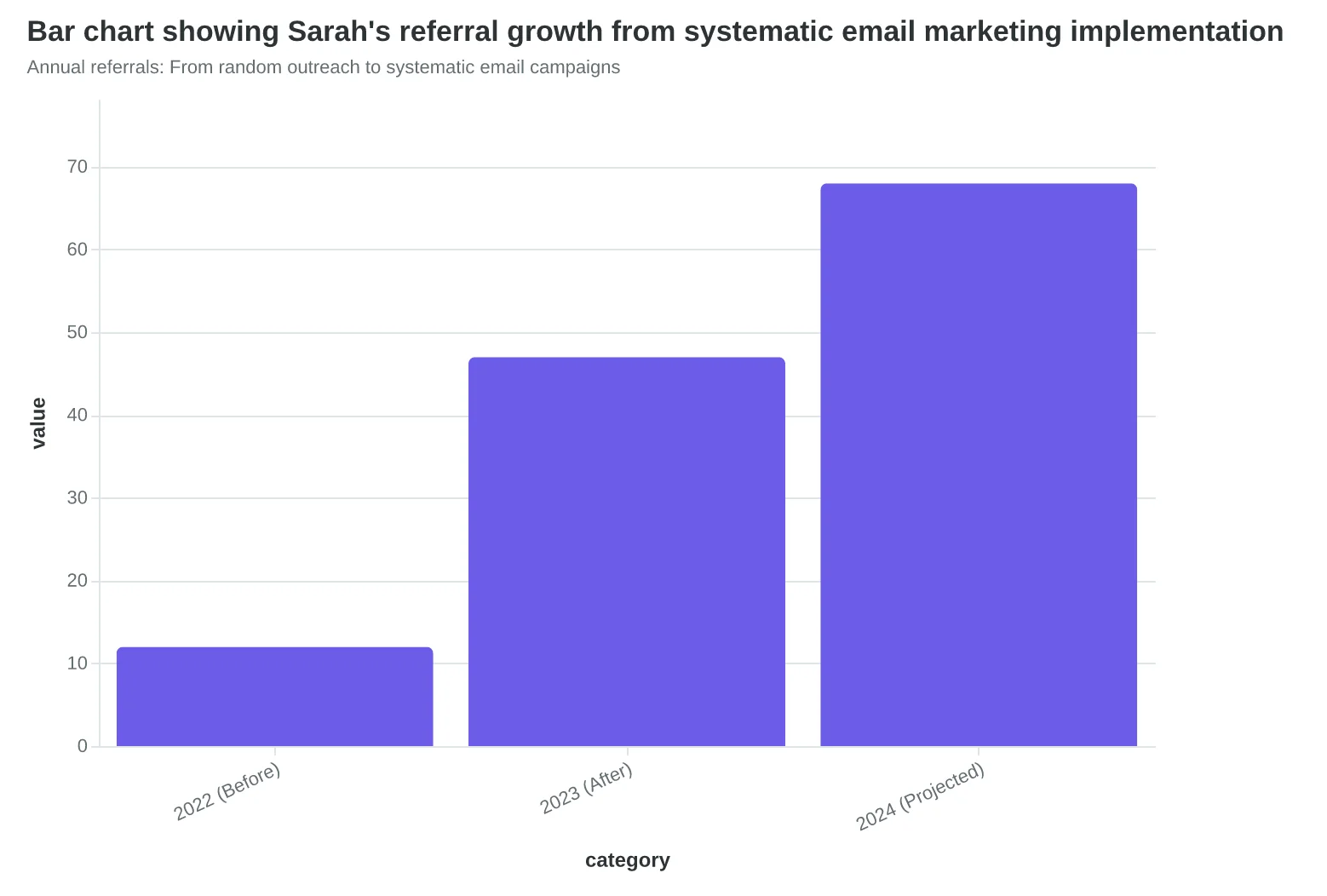
Before
- ✗12 referrals per year
- ✗Generic email blasts
- ✗No measurement system
- ✗Inconsistent follow-up
After
- ✓47 referrals per year
- ✓Scored, segmented campaigns
- ✓8-Dimension Quality Framework
- ✓Systematic client nurturing
Sarah's systematic approach to email marketing generated 292% more referrals in one year
Annual referrals: From random outreach to systematic email campaigns
292%
increase in referrals
Sarah's year-over-year growth with scored email templates
The measurable impact of replacing guesswork with scored templates
Ready to Score Your Own Real Estate Emails?
Try our free Email Quality Scoring tool and discover which of your templates will fill showing calendars before you send them.
Score your email before you send it
Free editor. Real-time EQS. No credit card.