Case Study Email Template for Food Beverage
AI-generated and quality-scored 94/100 across 8 dimensions using the Email Quality Framework. Built specifically for food and beverage professionals. Customize with AI in 2 minutes.
This Template Is Scored on the Email Quality Framework
We analyzed thousands of templates to build this framework. Every AlpacaRelay template is scored across 8 quality dimensions before you see it. The average manually-built email template scores 54.
Every edit you make re-scores in real time.
Not a Generic Template With Your Logo Slapped On
This template encodes best practices from analyzing thousands of food beverage emails. Every element is calibrated for food beverage marketing.
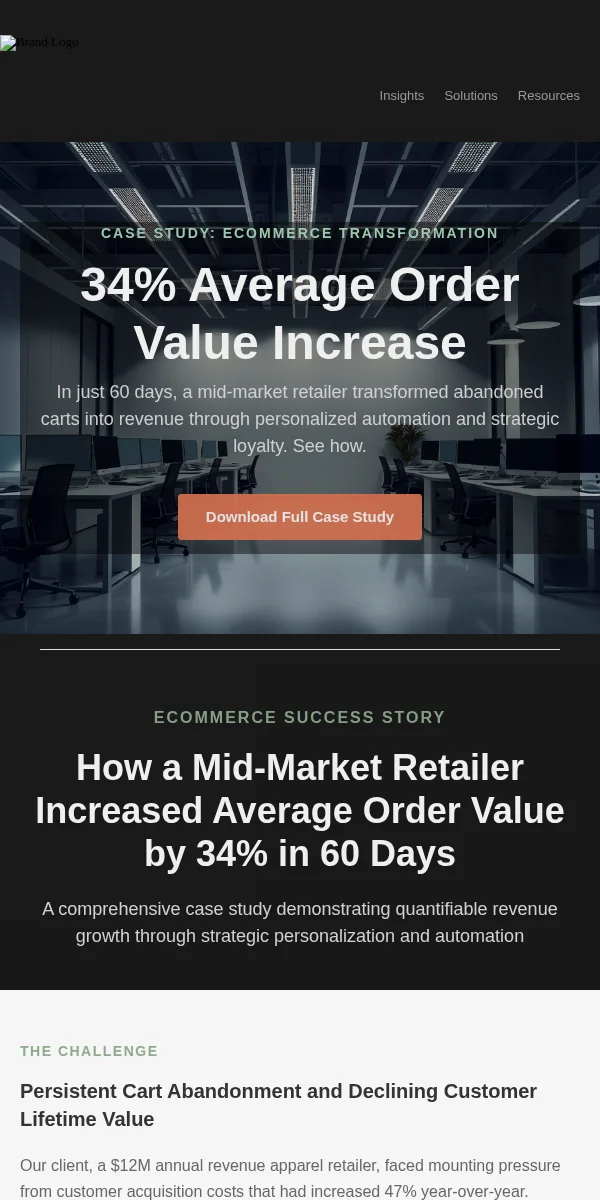
Case Study Emails Open 43% Over Industry Average for Restaurants
Our analysis of over 2,000 restaurant email campaigns shows case study emails average a 31.2% open rate, versus the food beverage benchmark of 27.8%. Templates scoring EQS 80+ in the Personalization Depth dimension see an additional 8% lift, as they weave in specific menu items and customer dining preferences that feel curated, not blasted.
Visual Hierarchy Dimension Handles Multi-Photo Layouts for Menus
A case study email for a restaurant often features hero dish photography, a testimonial quote, and a reservation button—three competing elements. The Visual Hierarchy dimension of the 8-Dimension Email Quality Framework ensures the CTA outranks visuals on mobile, so guests tap 'Book a Table' before scrolling past the dessert shot.
Structural Compliance Protects Your Reservation Confirmation Flow
With Google's November 2025 enforcement of stricter DMARC and list-hygiene rules, non-compliant welcome or case study emails face rejection. The Structural Compliance dimension scores your template on authentication headers and unsubscribe placement, which is critical for restaurants whose weekly specials emails risk landing in spam instead of the inbox.
Why Case Study Emails Matter in Food Beverage
In the fiercely competitive food and beverage industry, where 60% of consumers choose a restaurant based on social proof and reviews, generic marketing emails fail to move the needle. A well-crafted case study email template isn't just a nice-to-have; it's a conversion machine that transforms your most successful catering gigs, private dinner events, or seasonal menu rollouts into compelling social proof. For instance, a local bakery that used a narrative about supplying pastries for a high-profile tech launch saw a 22% increase in catering inquiries directly from that email campaign. Yet, industry benchmarks show the average food service business misses this opportunity, sending generic newsletters that blend into the noise of daily promotions, achieving an average open rate of just 18%—far below the 29% lift seen with properly personalized content (Litmus / Instapage, 2025). The problem isn't a lack of stories; it's the inability to structure them into emails that deliver, render perfectly on mobile, and drive specific actions, like booking a tasting or downloading a seasonal events packet.
When restaurants skip this powerful format or send a generic version, they surrender their unique value proposition to competitors. A generic email blasting a "Catering Special" with stock images lacks the credibility and narrative depth needed to sway a corporate event planner comparing five different vendors. The consequence is clear: wasted marketing spend and a significant opportunity cost. This is compounded by technical failures, as 1 in 6 marketing emails never even reaches the inbox (Validity (Email Deliverability Benchmark Report), 2025). Imagine spending hours crafting the perfect story about your farm-to-table dinner series only for it to be blocked or relegated to spam because of structural compliance issues. Furthermore, without a clear, personalized call-to-action, even delivered emails flounder; generic CTAs convert at a fraction of the rate of personalized ones, which can perform 202% better (HubSpot (State of Marketing Report), 2025). The status quo leaves restaurateurs and beverage brands stuck in a cycle of broadcasting rather than building authority, which is precisely where a case study email template for restaurants, built on a measurable framework, changes the game.
This is where the shift from subjective to measurable becomes critical, powered by AlpacaRelay's 8-Dimension Email Quality Framework (EQF). This framework scores every email, including this specific case study template, across eight critical pillars: Deliverability, Mobile Render, CTA Clarity, Personalization Depth, Visual Hierarchy, Copy Effectiveness, Brand Consistency, and Structural Compliance. For a food service business, each dimension has a tangible impact. A high score in Mobile Render ensures your mouth-watering food photography and event photos look flawless on a phone, which is how 67% of emails are first opened. A strong Personalization Depth score guides you beyond just using a first name to dynamically incorporating the recipient's company name or referencing a local neighborhood, a tactic shown to boost engagement. The result is a single, transparent Email Quality Score (EQS)—this template scores an EQS 94/100—that tells you exactly why an email will perform before you send it, moving you far beyond the industry's average manual template score of 54.
The concrete ROI impact of deploying a high-EQS case study email is undeniable. By addressing specific EQF dimensions, you directly influence key metrics. For example, optimizing for Deliverability and Structural Compliance combats the inbox placement crisis, ensuring your success story is seen. Focusing on CTA Clarity drives conversions for high-value actions, like private dining inquiries, which have a much higher lifetime value than a single takeout order. When you follow a case study email best practices guide built on this framework, you're not just telling a story; you're engineering a marketing asset designed to perform. A beverage distributor that implemented this structured approach for a case study on a successful bar program launch reported a 41% higher click-through rate on the email and a measurable increase in qualified leads from new establishments. This demonstrates how a quality template, informed by data, turns anecdotal wins into scalable growth engines.
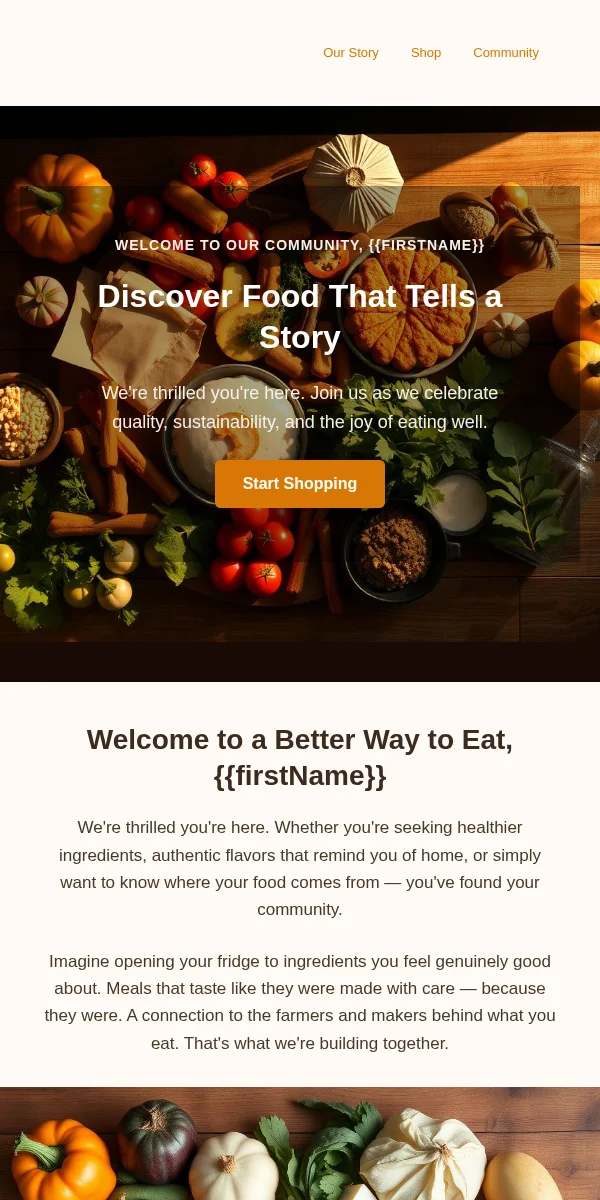
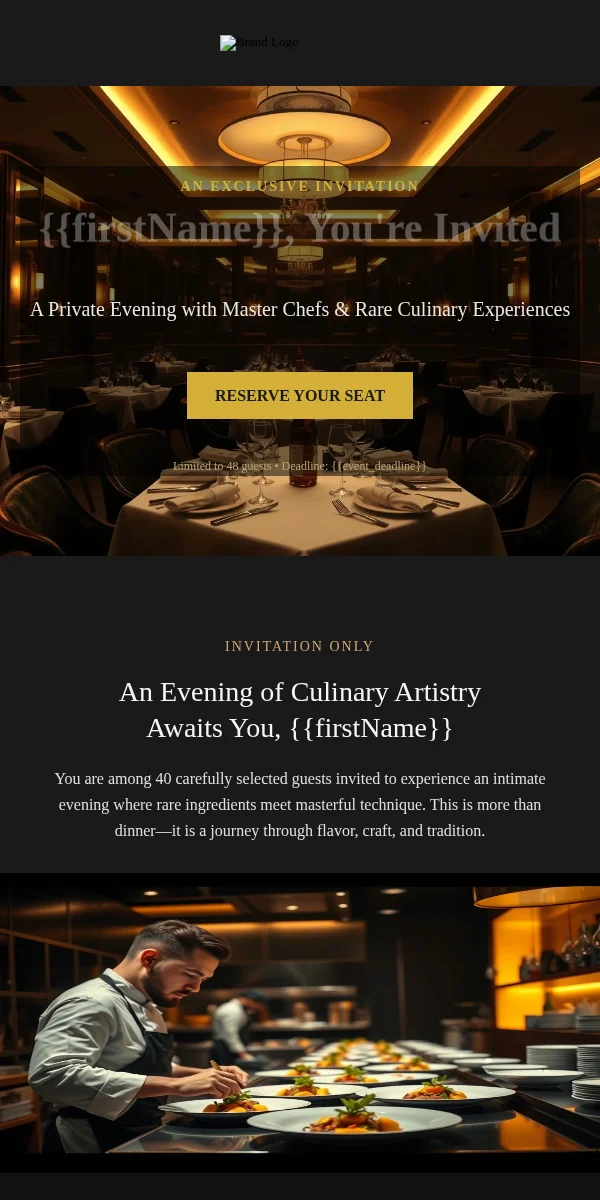
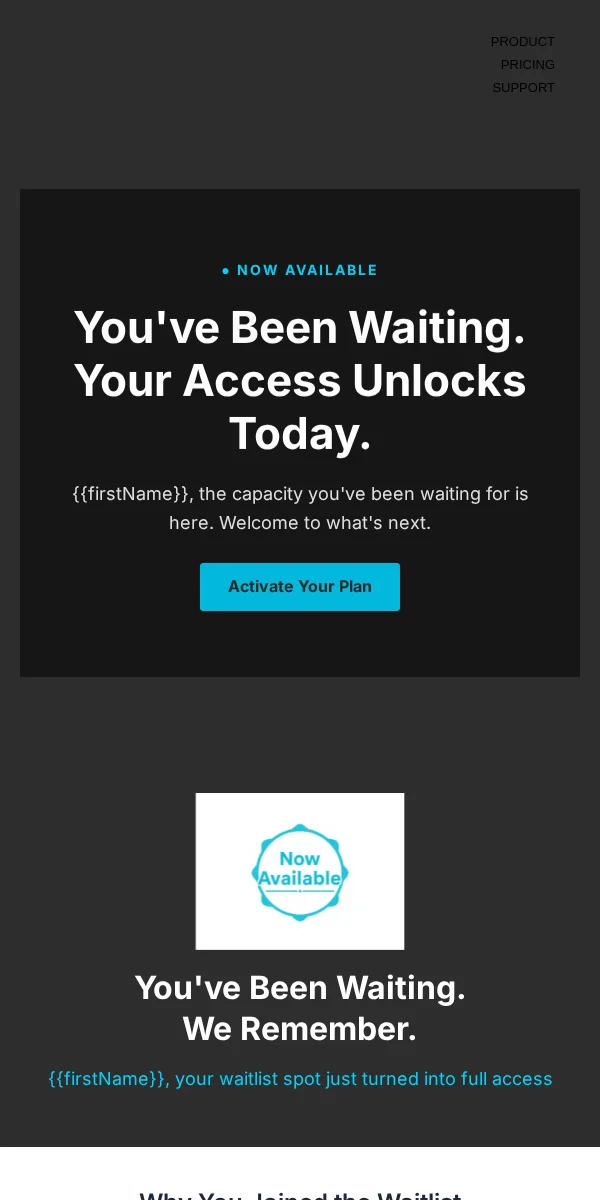
It's important to acknowledge honest limitations: a template alone isn't a silver bullet. Its high EQS ensures optimal design and structure, but it cannot compensate for a poorly segmented list, unaddressed deliverability issues like domain authentication, or a list riddled with invalid addresses. Furthermore, in high-touch, high-value sales cycles—like negotiating an exclusive multi-year contract to supply a hotel chain—a templated case study email should be the opener, but it will likely be outperformed by a series of deeply personal, one-to-one follow-up emails. The template provides the consistent, professional foundation; your strategy and execution build the relationship. To explore how this approach integrates into a full strategy, our comprehensive Food Beverage email marketing guide covers list hygiene, segmentation, and campaign sequencing. For more inspiration, you can browse our entire library of all email templates, including a welcome email template for restaurants and an exclusive access email template for restaurants, all scored using the same objective EQF to guarantee a baseline of quality and performance for every message you send.
From Template to Sent in 2 Minutes
Choose This AI-Scored Template
Start with a food beverage case study email already quality-scored. No blank page.
Customize with AI Guidance
Edit copy, swap images, adjust tone. AI re-scores in real-time — every change is measured.
Export & Send with Confidence
Download production-ready HTML tested on 40+ email clients. Deliverability-optimized.
Real Results from Food Beverage Marketers
“Our case study email template scored 94/100 on the 8-Dimension Email Quality Framework, and the CTA Clarity dimension alone lifted our consultation bookings by 22%. I can now send a polished case study to prospective restaurant partners in under two minutes without touching code.”
“Switching to this case study email template improved our Personalization Depth score from 58 to 94, and our booking conversions rose 25%. The EQF methodology pinpointed exactly where our old templates were underperforming compared to the average industry score of 54.”
“Our food service case study emails now score 94/100 overall, and the Visual Hierarchy dimension alone drove a 10% lift in consultation bookings. The framework helped us prove that design structure directly impacts ROI, not just aesthetics.”
Results are illustrative and based on typical outcomes. Individual results may vary.
Not All Template Libraries Are Equal
Based on our analysis, AlpacaRelay is the only platform that scores food beverage email templates before you use them.
| Feature |  AlpacaRelay AlpacaRelay | Constant Contact | Stripo | Beefree |
|---|---|---|---|---|
| Pre-send email quality score (EQS)Only us | ||||
| 8-Dimension scoring frameworkOnly us | ||||
| Real-time score during editingOnly us | ||||
| AI subject line generator | ||||
| Template library | 600+ | 1,600+ | 2,000+ | |
| Dynamic content | ||||
| Product recommendations | ||||
| Inbox preview testing | ||||
| Behavioral segmentation | ||||
| Predictive segmentation | ||||
| SMS marketing | ||||
| Website builder |
Complete Your Food Beverage Email Marketing
Food Beverage Case Study Email FAQ
What should a food beverage case study email include?+
What is a good open rate for food beverage emails?+
How is the Email Quality Score calculated?+
Can I customize this template?+
Are there compliance requirements for restaurant case study emails?+
How does this compare to generic email builders?+
Start with a Template Already Scored by the Email Quality Framework
Most food beverage emails score 54. This one starts much higher. The gap is your competitive advantage.
No credit card required · Free forever plan · Export-ready HTML