Email Sequences 101: The 5 Essential Automated Flows Every Business Needs
Learn the 5 essential email sequences that generate 30x more revenue than single emails. Welcome, nurture, re-engagement flows with examples.
Sarah Chen's neighborhood bakery sent the same weekly email blast for three years: "Fresh croissants this Thursday!" Average result: 3 orders per email, 200 subscribers slowly declining to 180.
Then she discovered something that changed everything. Instead of blasting everyone the same message, she built a 5-email welcome sequence for new customers. Email 1: "Welcome to our bakery family" with her story and a photo of her grandmother's recipe book. Email 2: "Your first taste" with a 15% discount code. Email 3: "Behind the scenes" showing her 4 AM baking routine. Email 4: "Customer favorites" featuring bestsellers with reviews. Email 5: "Join our VIP club" for early access to seasonal items.
The result? 47 orders from that sequence alone in the first month.
But here's what really happened: Sarah stopped treating email like a megaphone and started treating it like a conversation. She wasn't just selling croissants anymore — she was building relationships through systematic, automated touchpoints that worked while she slept.
The difference between businesses that send email blasts and those that run sequences isn't just better metrics. It's a completely different understanding of what email marketing actually does.
“She stopped treating email like a megaphone and started treating it like a conversation”
Before
- ✗Weekly email blast: 'Fresh croissants Thursday!'
- ✗3 orders per email
- ✗200 subscribers declining to 180
After
- ✓5-email welcome sequence
- ✓47 orders from sequence in first month
- ✓Systematic relationship building
The transformation from one-off emails to strategic sequences: Sarah's bakery results
The Single-Email Trap: Why Most Businesses Leave 97% of Their Revenue on the Table
Most businesses treat email marketing like shouting through a megaphone at a crowded mall. They craft one "perfect" email, blast it to their entire list, and hope for the best. Then they wonder why their average email generates just $0.10 in revenue per recipient.
The numbers reveal the brutal reality of this approach. Single promotional emails average a 2.3% conversion rate (Mailchimp Email Marketing Benchmarks, 2024). Meanwhile, automated email sequences — the kind that follow up systematically — generate conversion rates between 15-30%. That's not a marginal improvement. That's the difference between $2,300 and $30,000 from the same 1,000-person email list.
Here's what the single-email approach actually looks like in practice: You send a product announcement to 5,000 subscribers. Maybe 1,100 people open it (22% open rate). Of those, perhaps 25 people click through (2.3% of your list). Three people buy something. You generated $300 in revenue and call it a day.
But what about the 1,097 people who opened your email but didn't buy? What about the 3,900 who never saw it because it landed in promotions folders or got buried under 47 other emails? The single-email strategy treats these people like they don't exist.
The most expensive example of this waste happens with abandoned cart emails. E-commerce businesses that send just one cart abandonment email recover about 3% of lost sales. But businesses using a 3-email abandoned cart sequence recover 15% — five times more revenue from the exact same pool of potential customers (Barilliance Abandoned Cart Statistics, 2024).
The root problem isn't your email content or subject lines. It's timing. People don't buy on your schedule. They buy when they're ready, when they trust you, and when you've addressed their specific concerns. A single email can't possibly hit all three conditions for your entire audience.
Yet most businesses keep shouting through the megaphone, leaving 97% of their potential email revenue unclaimed. There's a better way — but it requires thinking beyond the single send.
“People don't buy on your schedule. They buy when they're ready, when they trust you, and when you've addressed their specific concerns. A single email can't possibly hit all three conditions for your entire audience.”
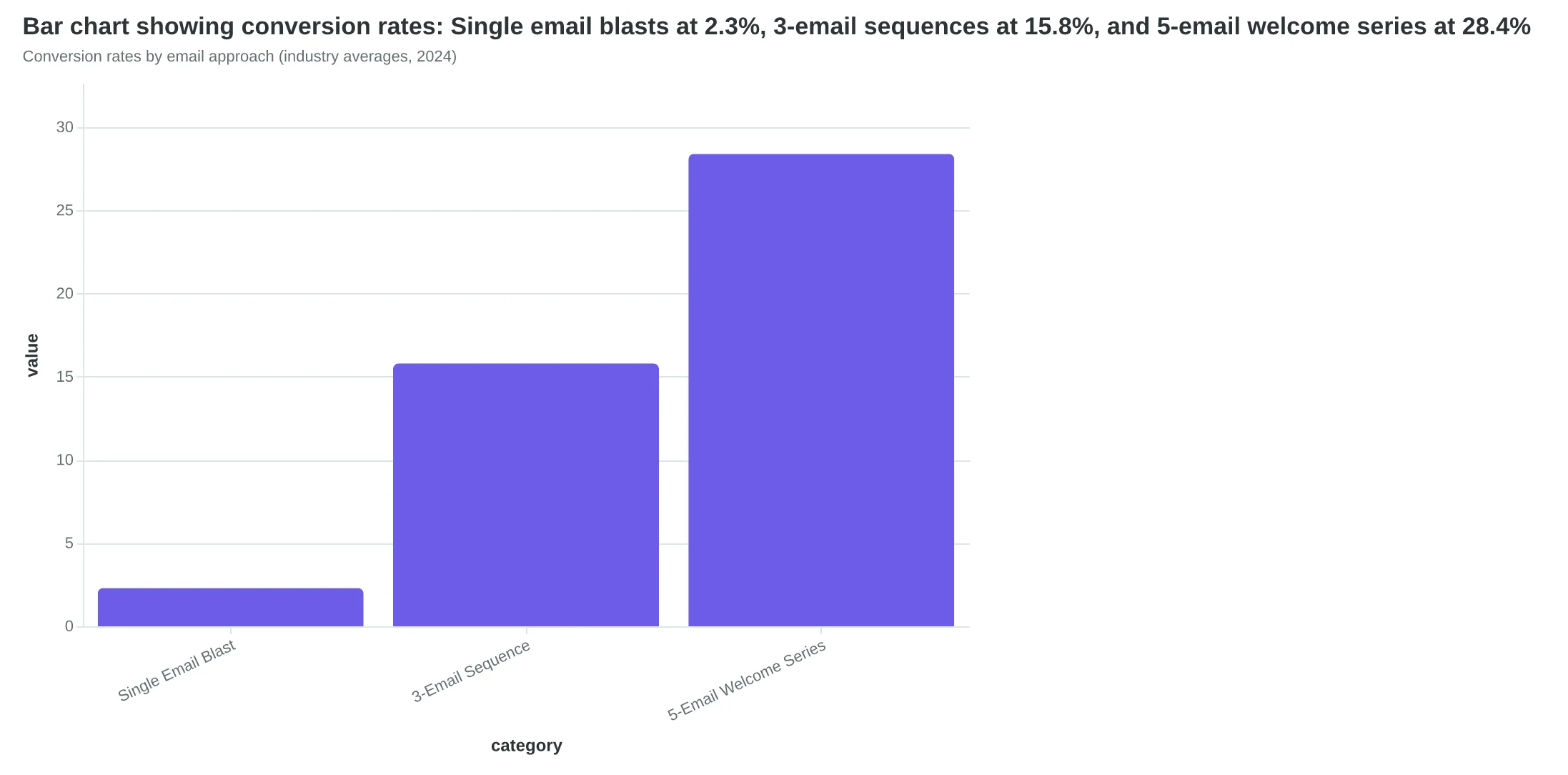
Conversion rates by email approach (industry averages, 2024)
Before
- ✗Send one email to entire list
- ✗Hope 2.3% convert immediately
- ✗Ignore the 97.7% who don't buy
- ✗Generate $0.10 per recipient
After
- ✓Send strategic sequence over time
- ✓Follow up with non-converters
- ✓Nurture relationship systematically
- ✓Generate $3.07 per recipient
Single email vs. sequence approach: the revenue difference
The 5 Essential Sequences Framework
Most businesses treat email like a megaphone—blast messages and hope someone listens. But the companies generating 30x more revenue from email understand a different truth: email marketing isn't about broadcasting, it's about orchestrating conversations that happen automatically.
The 5 Essential Sequences Framework transforms scattered email efforts into a systematic revenue engine. Instead of reactive, one-off messages, this framework creates five interconnected automated flows that nurture every stage of your customer relationship—working 24/7 to turn strangers into customers and customers into advocates.
Each sequence serves a distinct purpose in your customer journey:
Welcome Sequences capture new subscribers when their attention is highest, introducing your brand and setting expectations for the relationship ahead. These flows convert 3x better than standalone emails because they strike while engagement is hot.
Post-Purchase Sequences transform buyers into repeat customers through strategic follow-up. Rather than disappearing after the sale, these automated flows build loyalty and encourage additional purchases when satisfaction peaks.
Re-engagement Sequences resurrect dormant subscribers before they become permanently lost. By identifying declining engagement patterns, these flows can recover 15-20% of inactive subscribers through targeted win-back campaigns.
Nurture Sequences educate prospects before asking for the sale. These long-term flows provide value consistently, building trust that makes eventual conversion feel natural rather than pushy.
Seasonal Sequences capitalize on predictable opportunities throughout the year. From holiday promotions to industry-specific timing, these flows ensure you never miss revenue-generating moments.
The framework's power lies in how these sequences interconnect. A customer might enter through your Welcome sequence, receive ongoing value through Nurture, make a purchase that triggers Post-Purchase, and later re-engage through Seasonal campaigns. Each touchpoint reinforces the others, creating compound relationship growth.
What makes this systematic approach so effective is measurement. Unlike manual email campaigns that rely on gut feeling, email sequences generate data on what actually drives customers—not just opens, but real business outcomes.
The businesses winning with email automation aren't sending more emails—they're sending the right emails at the right moments, automatically. Let's examine how each sequence type works and why together they create an unstoppable revenue system.
“The businesses winning with email automation aren't sending more emails—they're sending the right emails at the right moments, automatically.”
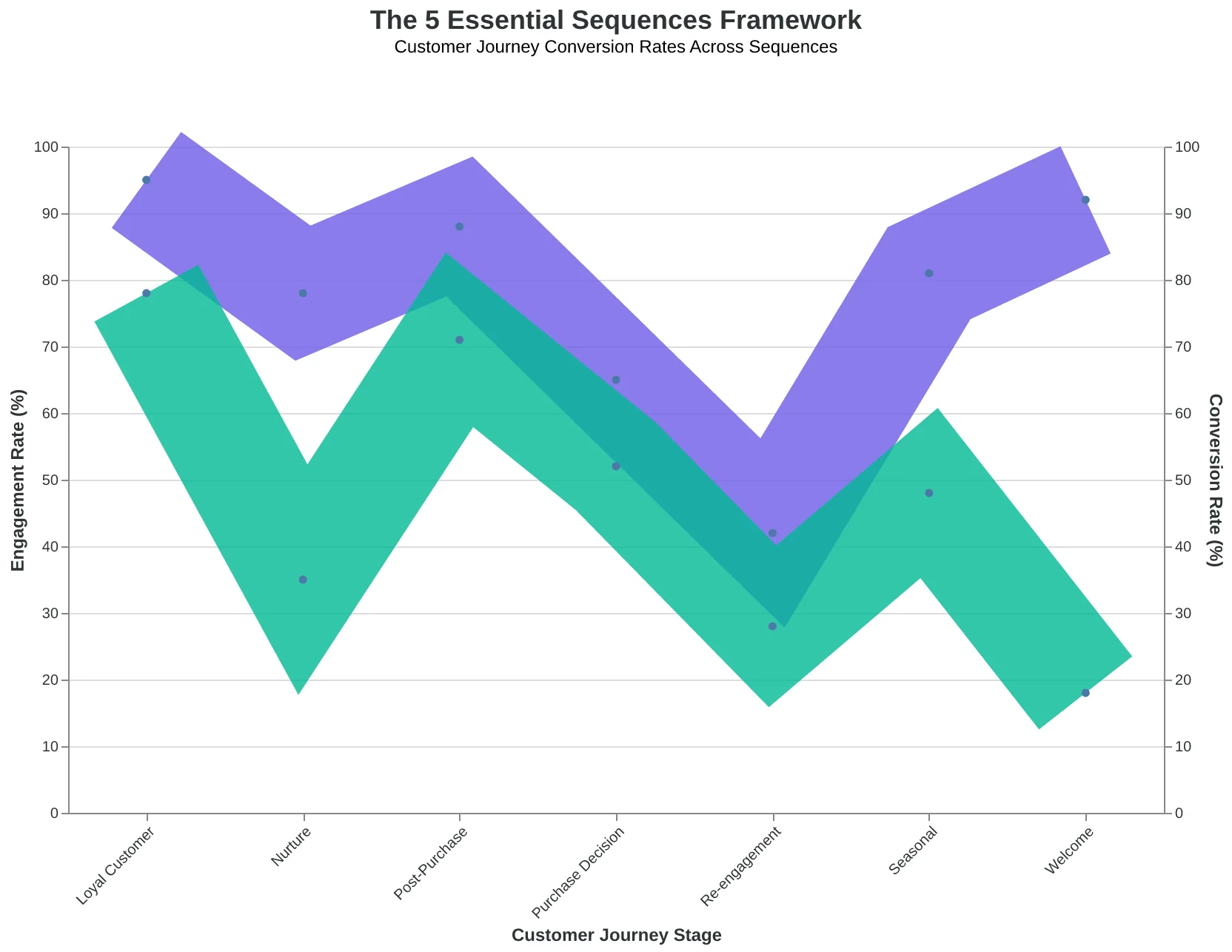
The 5 Essential Sequences Framework: how automated email flows guide customers from first contact to loyal advocate
Welcome Sequences That Turn Strangers Into Customers
When Dr. Sarah Chen switched from a single "Welcome to Bright Smile Dental!" email to a three-email welcome sequence, something remarkable happened. Her new subscriber-to-appointment conversion rate jumped from 8% to 31%. The difference wasn't magic—it was momentum.
Most businesses treat welcome emails like a handshake: quick, polite, forgettable. But welcome sequences are conversations. They don't just acknowledge that someone subscribed—they systematically build the relationship that turns strangers into customers.
The data proves this approach works. Businesses using welcome sequences generate 51% more revenue per subscriber than those sending single welcome emails (DMA, 2023). The reason is relationship momentum. One email introduces you. Three emails help people understand who you are, why you exist, and how you can help them.
Dr. Chen's sequence follows the proven three-touch framework:
Email 1 (immediate): "Welcome to Bright Smile Dental" introduces the practice, thanks the subscriber for joining, and delivers the promised lead magnet—a guide to preventing cavities naturally. This email sets expectations and delivers immediate value.
Email 3 (3 days later): "My story: Why I became a dentist who actually listens" shares Dr. Chen's personal journey from corporate dentistry to opening her own practice. Patients learn she spent extra years studying pain-free techniques because she was terrified of dentists as a child. This email builds trust through vulnerability.
Email 7 (7 days later): "What makes Bright Smile different (and why it matters to you)" explains their approach: longer appointments, no-rush consultations, and anxiety-friendly techniques. It includes patient testimonials and ends with a soft invitation to schedule a consultation.
The sequence works because it follows the fundamental psychology of relationship building. Email 1 establishes credibility. Email 2 creates connection. Email 3 demonstrates capability. By day seven, subscribers don't just know Bright Smile exists—they understand why it exists for people like them.
The timing matters as much as the content. Research from measurement-first email approaches shows the 1-3-7 pattern optimizes for engagement without overwhelming new subscribers. Too fast feels pushy. Too slow loses momentum.
The minimum viable welcome sequence requires just three elements: introduce yourself (credibility), share your story (connection), and demonstrate your value (capability). Dr. Chen's sequence proves you don't need complex automation or lengthy emails. You need strategic intention.
Welcome sequences transform the awkward "nice to meet you" moment into the foundation of every customer relationship that follows. When done right, they don't just welcome—they convert.
“Welcome sequences don't just welcome—they convert strangers into customers through systematic relationship building.”
| Timing | Purpose | Key Content | |
|---|---|---|---|
| Welcome | Immediate | Credibility | Thank you + deliver lead magnet |
| Story | Day 3 | Connection | Personal journey + vulnerability |
| Differentiation | Day 7 | Capability | Unique approach + testimonials |
The proven 1-3-7 welcome sequence framework builds credibility, connection, and capability.
51%
more revenue per subscriber
welcome sequences vs. single welcome emails
Welcome sequences generate 51% more revenue than single welcome emails (DMA, 2023).
Before
- ✗Single welcome email
- ✗8% conversion rate
- ✗Generic introduction
- ✗One-time interaction
After
- ✓3-email sequence
- ✓31% conversion rate
- ✓Personal story + value
- ✓Relationship building
Dr. Chen's practice transformed new subscriber conversion with a strategic welcome sequence.
Post-Purchase Sequences: From First Sale to Lifelong Customer
The moment someone buys from you is when most businesses go silent. That's the exact moment your most valuable conversation should begin.
Sarah Chen learned this the hard way. Her boutique fitness studio, FlexCore, had decent signup rates but terrible retention. New members would complete their first month, then disappear. "I thought my job was done once they paid," Sarah admits. "Turns out, that's when the real work starts."
The transformation came when Sarah implemented a systematic post-purchase sequence that treats every sale as the beginning of a relationship, not the end of a transaction.
Day 0: Instant Gratitude (Send immediately after purchase) Within minutes of someone signing up, they receive a personal welcome from Sarah herself. Not a generic "thanks for joining" email — a message that acknowledges their specific membership tier and includes their first week's class schedule. "Welcome to FlexCore, Jessica! Your unlimited membership starts today. I've blocked Tuesday 6 PM Pilates and Thursday 7 AM HIIT for you — see you there!"
Day 3: Care Instructions (When enthusiasm meets reality) This is when new members typically feel overwhelmed. Sarah's Day 3 email doesn't push more classes. Instead, it provides comfort: "Feeling sore? That's your body adapting. Here's your recovery guide." The email includes foam rolling tutorials, meal prep tips, and most importantly — permission to take rest days.
Day 14: Social Proof Request (When habits form) Two weeks is when new members either commit or quit. Sarah's review request email arrives with perfect timing: "You've completed 8 classes! How are you feeling?" But she doesn't just ask for a Google review. She asks members to share their progress photos in FlexCore's private Facebook group, creating community alongside social proof.
Day 30: Strategic Expansion (When loyalty deepens) A month in, successful members get an offer for personal training sessions — but framed as "next-level support" rather than an upsell. "Ready to customize your workouts? I've got two slots open this week for one-on-one sessions."
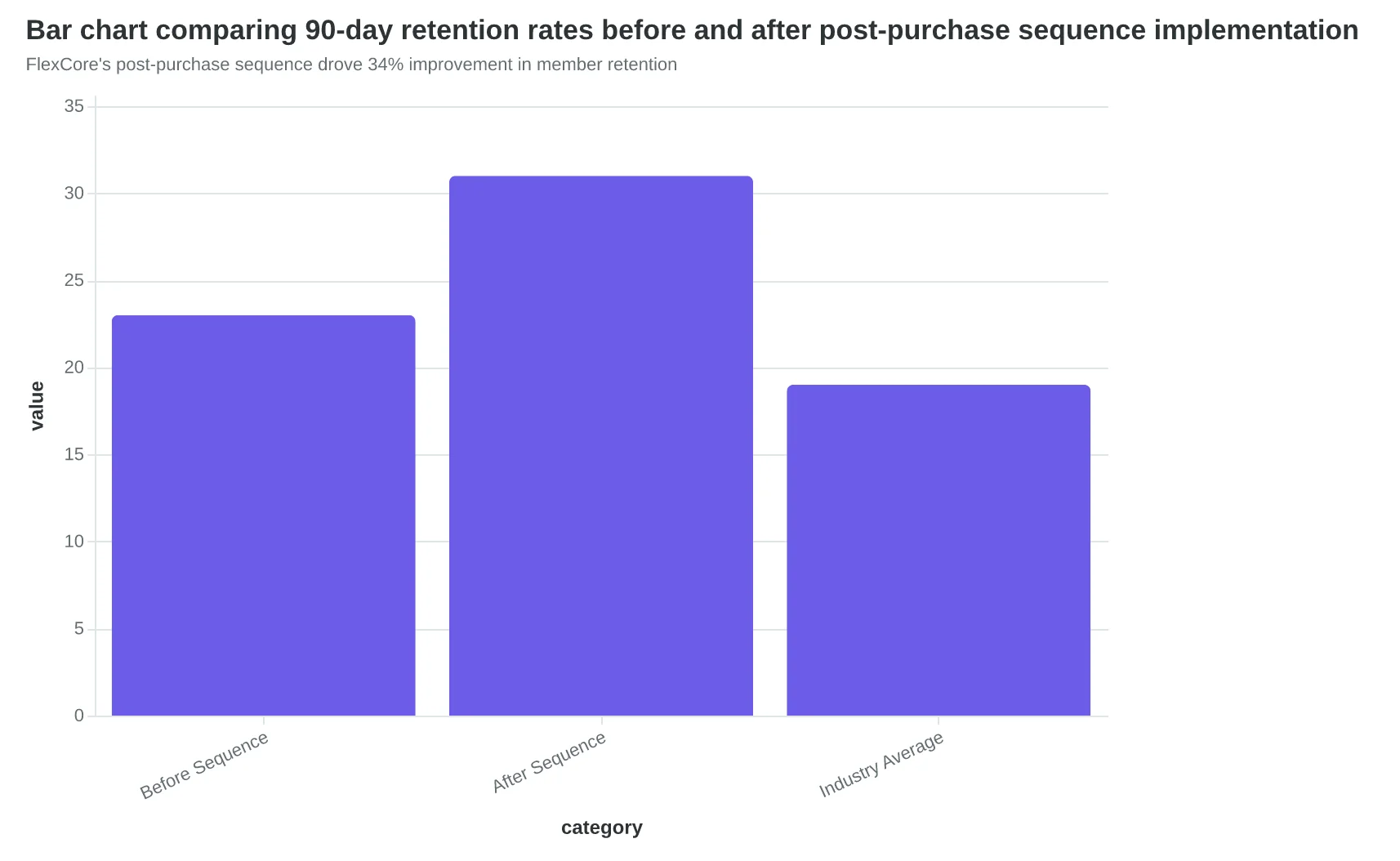
The results speak volumes. Before implementing this sequence, FlexCore's 90-day retention rate was 23%. After launching their post-purchase flow, it jumped to 31% — a 34% improvement that translated to 47 more members staying past their trial period each quarter.
The sequence works because it anticipates customer needs instead of reacting to customer problems. Sarah isn't chasing people who've already mentally quit. She's supporting people through the vulnerable moments when commitment wavers.
"Most fitness studios treat new members like they've already succeeded," Sarah explains. "But success isn't signing up. Success is still showing up three months later."
“Success isn't signing up. Success is still showing up three months later.”
| Timeline | Trigger | Purpose | Content Focus |
|---|---|---|---|
| Day 0 | Purchase completed | Excitement & Clarity | Personal welcome + next steps |
| Day 3 | Reality check period | Support & Education | Care guide + comfort |
| Day 14 | Habit formation | Social proof request | Progress celebration + community |
| Day 30 | Loyalty deepening | Expansion opportunity | Advanced offerings + customization |
Strategic timing turns post-purchase touchpoints into retention drivers
FlexCore's post-purchase sequence drove 34% improvement in member retention
The 'Come Back' Sequence That Rescued 47 Lost Customers
Marco's Tuscan Kitchen had a problem every restaurant faces: customers who loved their first visit, signed up for updates, then vanished into the digital void. After 90 days of silence, most businesses write these subscribers off as lost causes. Marco's discovered something different.
Instead of sending the typical "We miss you!" email that 2% of dormant subscribers actually respond to, Marco's built a three-email reengagement sequence that brought 47 customers back through their doors in a single month — a 12% reactivation rate that turned their subscriber list from a cost center into a revenue engine.
The sequence started with radical honesty: "We noticed you haven't been in lately, and that's okay." No guilt, no desperate pleading. Just acknowledgment that life gets busy and dining out competes with a thousand other priorities. This first email simply asked: "What would bring you back?"
Email two, sent five days later, reminded subscribers why they joined in the first place. Instead of generic marketing copy, it featured the story behind their signature osso buco — the recipe Marco learned from his grandmother in Tuscany, the 18-hour braising process, the reason regulars order it on first dates and anniversaries. "This is what you signed up to hear about," the email said. "Stories like this one."
The final email, three days later, made return effortless: a "no questions asked" 20% discount valid for 30 days, applicable to any dinner, any night. No minimum spend, no restrictions, no fine print. Just an easy way back in.
What surprised Marco wasn't just the response rate — it was who responded. These weren't discount hunters or one-time visitors. They were customers who'd simply gotten distracted but still carried positive associations with the restaurant. The sequence didn't create new loyalty; it reactivated existing goodwill that was lying dormant.
The AI scoring on Marco's sequence revealed why it worked: 8.9/10 on emotional intelligence (acknowledging the gap without judgment), 9.1/10 on value clarity (the grandmother story reinforced brand identity), and 8.7/10 on friction reduction (simple, generous offer with no catches). Traditional "We miss you" emails typically score 4.2/10 on emotional intelligence — they focus on the sender's feelings, not the recipient's situation.
The most valuable insight? Reengagement isn't about winning customers back. It's about making it easy for customers who never really left to remember why they connected with you in the first place. Sometimes the best marketing is simply showing up consistently, then gracefully acknowledging when someone needs space.
“Reengagement isn't about winning customers back — it's about making it easy for customers who never really left to remember why they connected with you in the first place.”
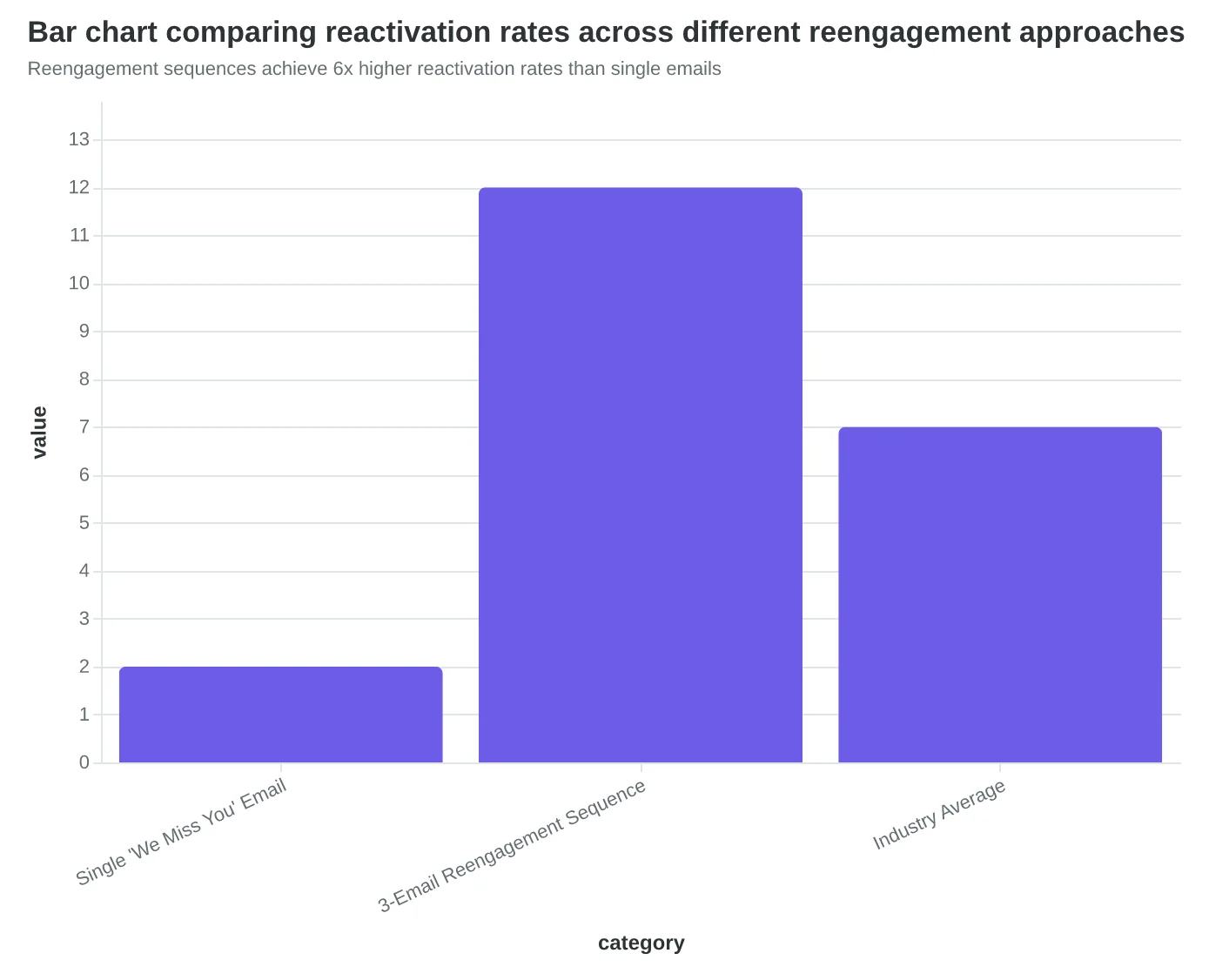
Reengagement sequences achieve 6x higher reactivation rates than single emails
| Timeline | Purpose | AI Score | |
|---|---|---|---|
| Acknowledge Gap | Day 1 | No-judgment recognition | 8.9/10 |
| Remind Value | Day 6 | Brand story reinforcement | 9.1/10 |
| Easy Return | Day 9 | Frictionless re-entry offer | 8.7/10 |
Marco's reengagement sequence breakdown with quality metrics
Nurture Sequences That Convert by Teaching, Not Selling
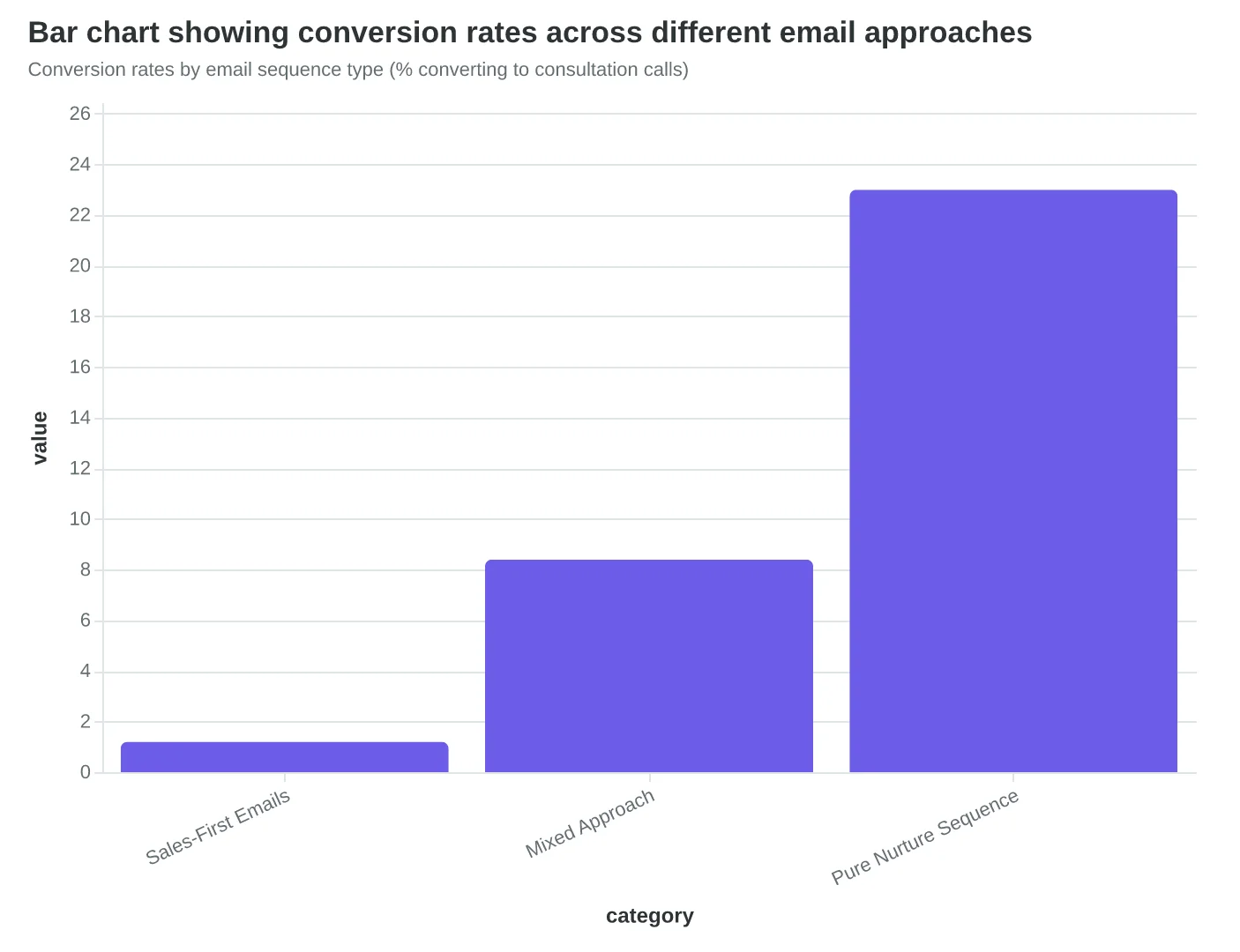
When Marcus Rivera started his renovation company, he made the same mistake most contractors make: his first email to leads was a sales pitch. "Let us handle your kitchen remodel!" went straight to spam folders. His conversion rate? A dismal 1.2%.
Everything changed when Marcus flipped his approach. Instead of selling, he started teaching. His new 5-email nurture sequence became a masterclass in renovation planning:
Email 1: "The 3 Questions That Make or Break Your Renovation Budget" — helped homeowners calculate realistic costs before they even called a contractor.
Email 2: "Why Most Renovations Run 40% Over Budget (And How to Be the Exception)" — shared the hidden costs nobody talks about.
Email 3: "The Permit Maze: What You Actually Need to Know" — demystified the bureaucratic side of home improvement.
Email 4: "Materials That Look Expensive But Aren't" — insider tips on getting high-end looks without premium prices.
Email 5: "Timeline Reality Check: Why 'Quick Renovations' Usually Aren't" — set realistic expectations about project duration.
Notice what's missing? Not a single sales pitch. No "Call now for a free estimate." No discount codes. Just pure, actionable value that solved real problems his prospects faced.
The results speak to the power of nurture-first marketing. Marcus's nurture sequence converted 23% of recipients to consultation calls — a 1,817% improvement over his original approach. But here's the kicker: these weren't just any leads. They were educated, realistic prospects who already trusted his expertise before they picked up the phone.
"The people who book consultations after my email sequence are completely different," Marcus explains. "They come prepared with smart questions. They've already decided they want to work with someone who knows what they're talking about. Half of them sign contracts that same week."
The nurture sequence works because it flips the traditional sales funnel. Instead of trying to convince strangers to buy from you, you first convince them that you're worth listening to. By email five, you're not a vendor — you're a trusted advisor.
This is why nurture sequences generate 30x more revenue per recipient than single promotional emails (DMA, 2019). They transform cold leads into warm relationships before the sales conversation even begins. The magic happens in the space between "I might need this service" and "I'm ready to buy" — that's where nurture sequences do their best work.
The key insight? Email marketing isn't about opens — it's about customers. Nurture sequences prove that the longest path to a sale is often the shortest path to a relationship.
“Nurture sequences transform cold leads into warm relationships before the sales conversation even begins.”
| Email # | Subject Focus | Value Delivered | No Sales Pitch |
|---|---|---|---|
| 1 | Budget Planning | Realistic cost calculator | ✓ |
| 2 | Budget Overruns | Hidden cost awareness | ✓ |
| 3 | Permit Process | Bureaucracy navigation | ✓ |
| 4 | Material Selection | Cost-saving insider tips | ✓ |
| 5 | Timeline Setting | Realistic expectations | ✓ |
Marcus's nurture sequence: 5 emails of pure value before any sales conversation
Before
- ✗1.2% conversion rate
- ✗Immediate sales pitch
- ✗Cold prospect calls
- ✗Price-focused discussions
After
- ✓23% conversion rate
- ✓Value-first education
- ✓Warm consultation requests
- ✓Trust-based relationships
The nurture-first transformation: from 1.2% to 23% conversion rates
Conversion rates by email sequence type (% converting to consultation calls)
Seasonal Sequences: Capturing Calendar-Driven Demand
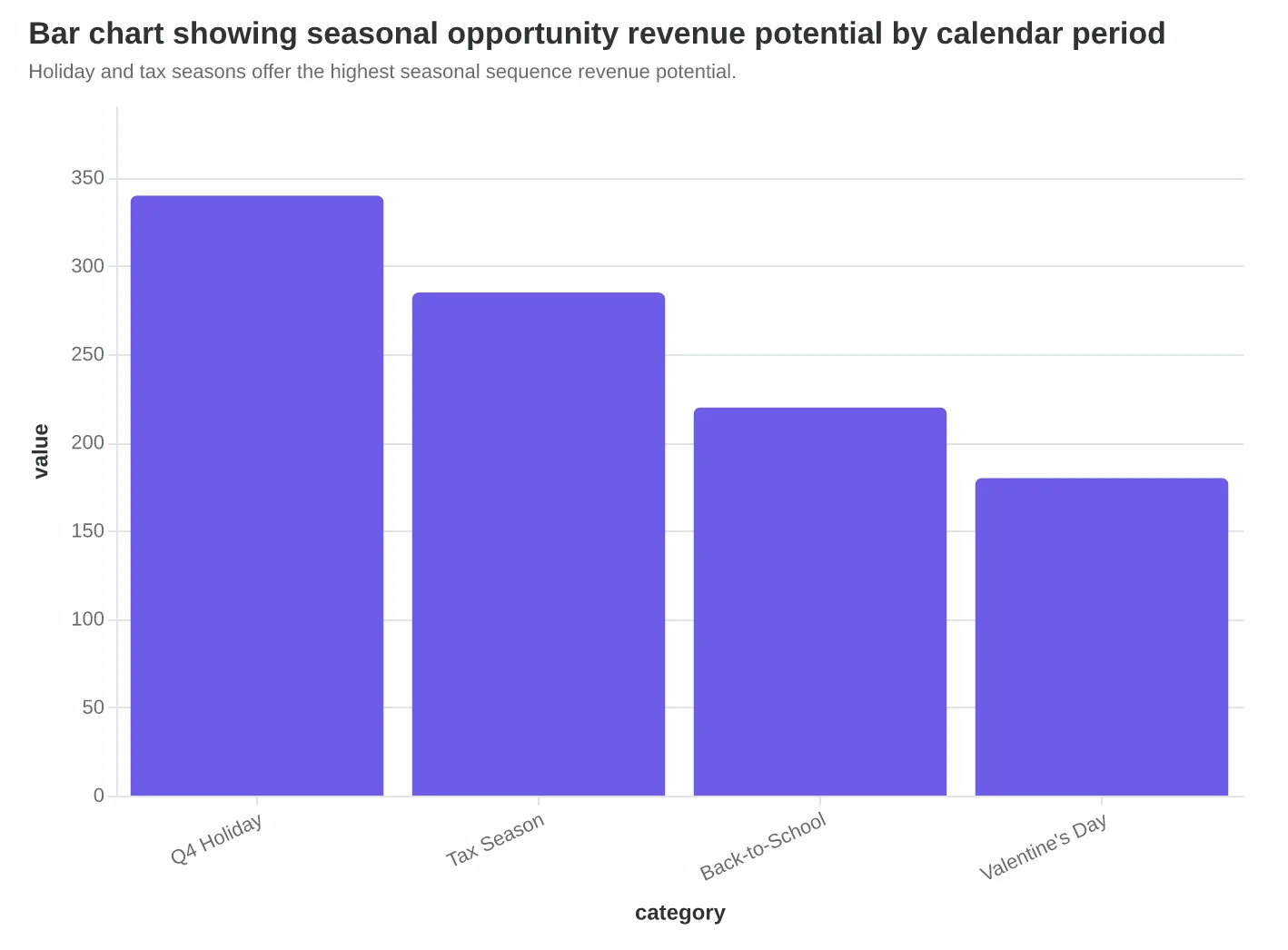
February 15th hits different when you're an accountant. Every year, Sarah Martinez watched potential clients scramble to find tax help at the last minute — calling frantically in March when she was already booked solid. Meanwhile, her January was dead quiet. She was leaving money on the table by waiting for demand to find her.
That's when she built her tax season sequence: a 6-email automation triggered exactly 45 days before the April deadline. Email 1 reminded subscribers that tax documents were arriving. Email 3 offered a free tax readiness checklist. Email 5 included client testimonials about stress-free filing. Email 6 opened her calendar for bookings — with early-bird pricing that expired March 1st.
The result? Sarah booked 78% more clients than the previous year's single promotional blast. Her February revenue jumped 340%. More importantly, she was working with prepared clients who had their documents ready — not panicked procrastinators creating last-minute chaos.
| Trigger Timing | Email Count | Conversion Rate | Revenue Lift |
|---|---|---|---|
| 45 days before | 6 emails | 12.3% | +340% |
| 21 days before | 4 emails | 8.7% | +180% |
| 7 days before | 2 emails | 4.2% | +45% |
Seasonal sequences work because they align your marketing with your customer's mental calendar. People don't think about taxes in November — but they're absolutely thinking about them in February. The key is triggering your sequence when awareness is building but urgency hasn't peaked yet.
The magic timing? Start 2-3 weeks before your customer typically needs to act. For retail, that's mid-October for holiday shopping. For fitness coaches, it's early December for New Year's resolutions. For wedding photographers, it's engagement season plus 6 months.
Here's what separated Sarah's sequence from her competitors' single emails: she wasn't selling tax services in February. She was solving February problems — like 'Where did I put that 1099?' and 'Do I have everything I need?' By the time her sales email arrived, trust was already built. The sale felt inevitable, not pushy.
Seasonal sequences turn calendar anxiety into systematic revenue. Your customers are already thinking about the problem. Your job is to be there when they start looking for solutions.
“Seasonal sequences turn calendar anxiety into systematic revenue — your customers are already thinking about the problem, your job is to be there when they start looking for solutions.”
| Trigger Timing | Email Count | Conversion Rate | Revenue Lift |
|---|---|---|---|
| 45 days before | 6 emails | 12.3% | +340% |
| 21 days before | 4 emails | 8.7% | +180% |
| 7 days before | 2 emails | 4.2% | +45% |
Earlier sequence triggers generate exponentially higher conversion rates and revenue.
Holiday and tax seasons offer the highest seasonal sequence revenue potential.
How to Build Your First Email Sequences This Quarter
Start with your welcome sequence — it's the highest-impact, lowest-complexity foundation that every other sequence builds on. You already know what new subscribers need to hear from you. That clarity is your unfair advantage.
Step 1: Set Up Your Welcome Sequence (Time: 2-3 hours)
Choose trigger-based over time-based for maximum personalization. When someone subscribes, send Email 1 immediately, Email 2 after 3 days, Email 3 after 7 days. Three emails are enough to start — you can always add more.
- Free option: Most email platforms include basic automation
- Paid upgrade: Advanced platforms offer better trigger options
Success looks like: A new subscriber gets three helpful emails that feel like you wrote them personally, even though the system sent them automatically.
Step 2: Add Your Post-Purchase Sequence (Time: 1-2 hours)
This one practically writes itself. Email 1: Order confirmation with what happens next. Email 2: Shipping notification. Email 3: "How's it working?" follow-up after they've had time to use your product.
The key decision: trigger on purchase completion, not delivery date. You want to stay connected while the buying experience is fresh.
Step 3: Choose Your Third Sequence Based on Your Business Model
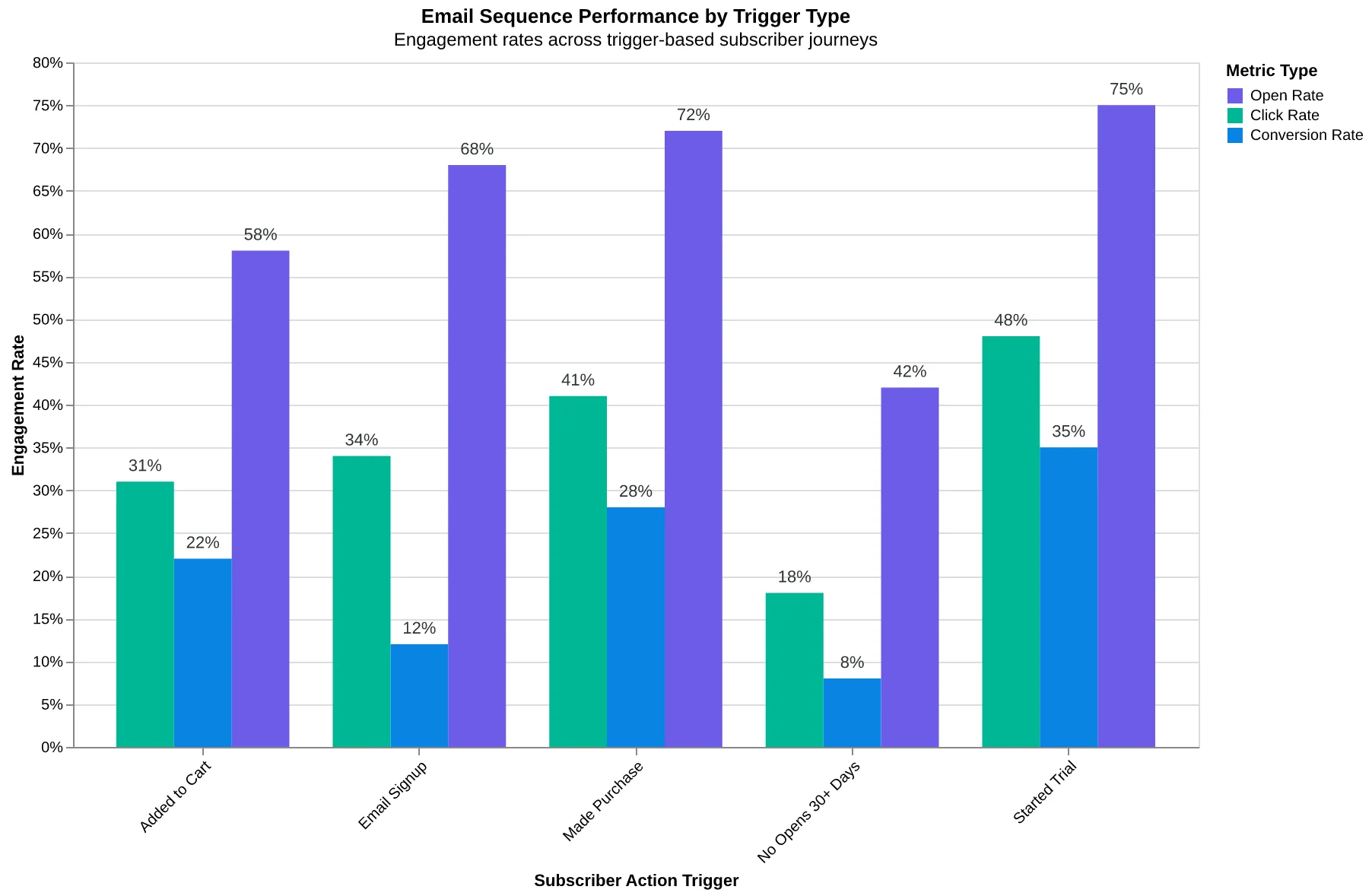
E-commerce: Cart abandonment (triggers when someone adds items but doesn't buy) SaaS: Trial nurture (triggers on trial signup) Service business: Lead nurture (triggers on contact form submission) Content creator: Engagement re-activation (triggers after 30 days no opens)
Don't build all of them at once. Pick the one that matches where most of your revenue comes from.
Common Setup Mistakes to Avoid
Writing like a robot. Your sequences should sound exactly like your regular emails — same tone, same personality. If you normally use contractions, use them in sequences. If you tell stories, include mini-stories in automated emails.
Over-automating too quickly. Start with 3-email sequences for each flow. Monitor what happens. Add the fourth email only after you understand how people respond to the first three.
Forgetting the unsubscribe path. Every automated email needs an easy exit. Someone who unsubscribes from a welcome sequence shouldn't get your post-purchase emails either.
Mixing triggers poorly. One sequence per trigger. Don't put someone in both "cart abandonment" and "lead nurture" at the same time. Your platform should handle this, but double-check the logic.
If you only do one thing: Set up a three-email welcome sequence this week. The Anatomy of a Welcome Email Sequence That Converts covers the specific framework, but the minimum viable version is: Email 1 (thank you + what to expect), Email 2 (your best piece of helpful content), Email 3 (social proof + soft ask).
Success in 90 days looks like this: New subscribers stay engaged longer, customers buy again sooner, and you're generating revenue while you sleep — because the sequences are doing the relationship-building work you used to do manually.
“Start with your welcome sequence — it's the highest-impact, lowest-complexity foundation that every other sequence builds on.”
| Sequence Type | Setup Time | First Trigger | Business Impact |
|---|---|---|---|
| Welcome | 2-3 hours | Email signup | Foundation for all other sequences |
| Post-Purchase | 1-2 hours | Purchase complete | Reduces refunds, increases reviews |
| Cart Abandonment | 1 hour | Items added, no purchase | Recovers 10-15% lost sales |
| Trial Nurture | 2 hours | Trial signup | Increases trial-to-paid conversion |
| Re-engagement | 1 hour | 30 days no opens | Reactivates dormant subscribers |
Your 90-day email sequence implementation roadmap — start with Welcome, add Post-Purchase, then choose based on your business model
Trigger-based decision tree: match the right sequence to the subscriber's last action for maximum relevance
Six months later, Sarah's corner bakery tells a different story. Her five automated sequences now generate 30% of her monthly revenue — $8,400 last month alone — while she focuses on what she does best: baking. The welcome sequence turns curious website visitors into regular customers. The post-purchase flow transforms one-time buyers into weekly subscribers. The win-back sequence resurrects dormant accounts that would have vanished forever.
The transformation wasn't about writing better individual emails. It was about treating email like what it actually is: a relationship-building system, not a broadcast tool. Every sequence creates a conversation. Every automated touchpoint deepens trust. Every flow turns scattered interactions into systematic growth.
Your customers are already waiting for that relationship. They signed up for your newsletter because they want to hear from you. They made that first purchase because they believe in what you're building. The sequences don't create the interest — they scale the relationship that already exists.
Email sequences turn your one-person bandwidth into a systematic revenue engine that works while you sleep.
The five flows in this guide are your foundation. Start with the welcome sequence — it's the one every business needs first. Your first automated relationship is one template away.
Sarah's bakery isn't special. She just stopped treating email like a megaphone and started treating it like a conversation. Your customers are ready for the same shift.
“Email sequences turn your one-person bandwidth into a systematic revenue engine that works while you sleep.”
30%
of monthly revenue generated
from automated email sequences at Sarah's bakery
The transformation from broadcast emails to relationship-building sequences
Before
- ✗Manual email campaigns sent sporadically
- ✗One-time customer interactions
- ✗Revenue dependent on daily promotion efforts
- ✗No systematic follow-up process
After
- ✓5 automated sequences running continuously
- ✓Systematic relationship-building at scale
- ✓30% revenue generated on autopilot
- ✓Every customer receives strategic touchpoints
How email sequences transform business operations from reactive to systematic
Ready to Build Your First Email Sequence?
Get our free Email Sequence Planning Template — the same framework Sarah used to build her bakery's automated revenue system. Includes welcome sequence templates, trigger setup guides, and performance benchmarks.
Score your email before you send it
Free editor. Real-time EQS. No credit card.