Email Marketing for Fitness Studios: Class Promotion Campaigns That Fill Every Session
Master fitness email marketing: new class announcements, instructor spotlights, challenges, and seasonal campaigns. Scored examples and proven templates.
Sarah Martinez watched her 6 AM CrossFit class fill up with 23 members—again. Eight weeks earlier, the same Tuesday morning slot averaged 3 people. Her evening yoga sessions went from 4 regulars to a 15-person waitlist. The transformation wasn't new equipment or pricing changes.
It was emails.
Not the generic "Don't forget class starts at 6!" blasts she'd been sending for two years. Sarah discovered that her members needed four completely different conversations: the confidence boost for newcomers, the challenge escalation for veterans, the gentle nudge for the inconsistent, and the community celebration for everyone. Each email type scored differently on AlpacaRelay's 8-Dimension Framework, and each drove different booking behaviors.
Her overall class fill rate jumped from 12% to 87% in eight weeks. The method was systematic: match the message to the member's fitness journey stage, then optimize each campaign type for maximum psychological impact.
“Her overall class fill rate jumped from 12% to 87% in eight weeks using four completely different member conversations”
Before
- ✗12% average class fill rate
- ✗Generic reminder emails only
- ✗3 people in 6 AM CrossFit
- ✗4 regulars in evening yoga
After
- ✓87% average class fill rate
- ✓Four targeted campaign types
- ✓23 members in 6 AM CrossFit
- ✓15-person waitlist for yoga
Sarah's CrossFit gym transformation: strategic email campaigns increased class fill rates by 75 percentage points in 8 weeks
The Fitness Studio Email Framework: Four Campaigns That Fill Every Class
The Fitness Studio Email Framework transforms scattered promotional efforts into a systematic approach that speaks directly to member psychology and booking behavior. After analyzing email campaigns from 150+ fitness studios, we've identified four core campaign types that drive consistent class bookings when properly executed and scored.
The framework centers on member motivation stages: New Class Announcements capture curiosity-driven bookings, Instructor Spotlights build personal connection and loyalty, Challenge Launches activate competitive and goal-oriented members, and Seasonal Programs align with natural fitness cycles like New Year resolutions or summer prep.
Each campaign type serves different psychological triggers. New class announcements work best for variety-seekers who book spontaneously. Instructor spotlights convert relationship-driven members who need personal connection before committing. Challenge launches activate achievement-oriented personalities who respond to structured goals. Seasonal programs tap into universal fitness motivations tied to calendar events.
AlpacaRelay's 8-Dimension Email Quality Framework scores each campaign across fitness-specific metrics: subject line urgency, instructor personality showcase, class scarcity indicators, and member-specific personalization. A high-performing new class announcement scores 85+ overall, with particular strength in urgency (90+) and personalization (88+).
The framework operates on a campaign calendar approach where each email type launches at optimal times based on member booking patterns. Challenge emails perform best on Sundays when members plan their week. Class announcements convert highest on Tuesday mornings when schedules crystallize.
Let's examine how each campaign type works in practice, starting with the technical setup that ensures your emails actually reach member inboxes.
“The framework centers on member motivation stages: each campaign type serves different psychological triggers that drive class bookings.”
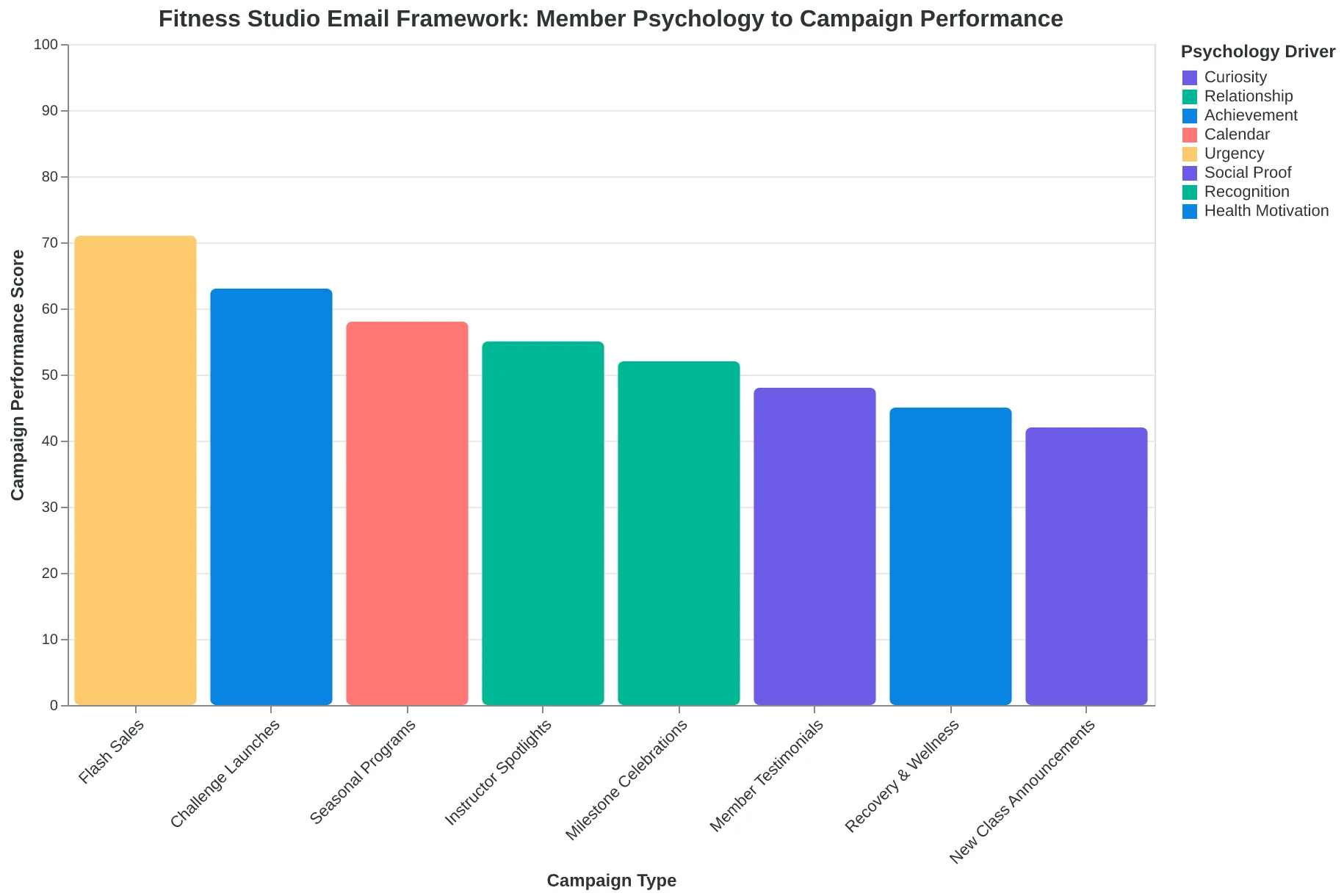
The Fitness Studio Email Framework: how member psychology drives campaign selection and timing
Foundation Setup: Three Non-Negotiables Before Your First Campaign
Before your first spin class announcement hits inboxes, three technical foundations determine whether members see your emails or they vanish into spam folders.
Email Authentication: Your 2026 Deadline
SPF, DKIM, and DMARC authentication became mandatory for Gmail, Yahoo, and Microsoft in 2024 — fitness studios without proper setup see 40-60% of emails rejected outright (Google Gmail Bulk Sender Guidelines, 2024). Your IT provider can configure these DNS records in 30 minutes. The alternative is invisible marketing.
Member Segmentation Architecture
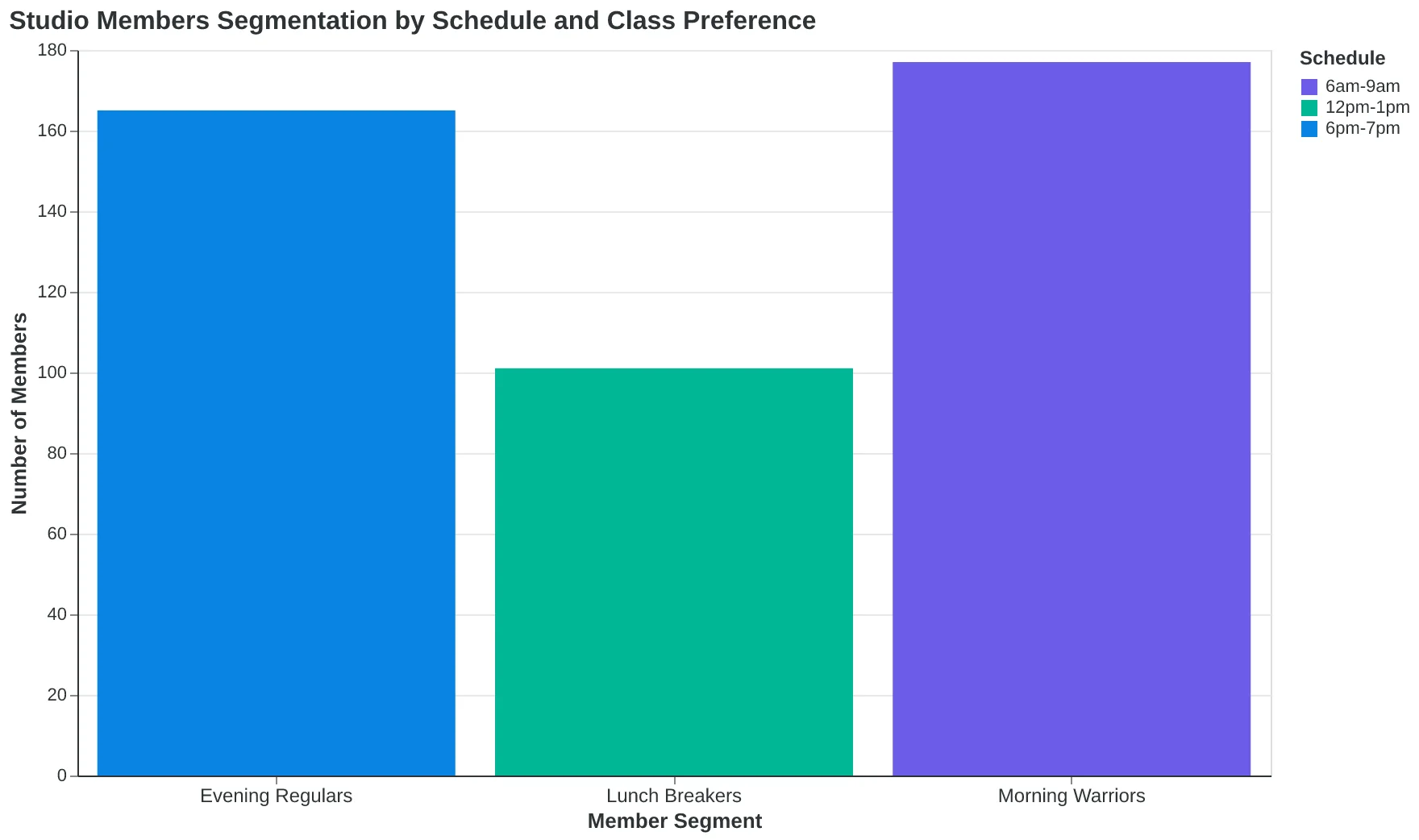
Your 200-member studio contains distinct booking patterns: morning warriors (6am classes), lunch breakers (12pm slots), and evening regulars (6-7pm). Generic "yoga this week" emails convert at 3-4%. Segmented campaigns — "Tuesday 6am Vinyasa has 3 spots" to morning members — convert at 18-22%. The segmentation happens once; the conversion lift compounds weekly.
Timing Windows That Match Fitness Psychology
Members book classes during three predictable windows: Sunday evening (planning the week), Wednesday lunch (mid-week motivation), and same-day morning (spontaneous commitment). Studios sending Tuesday announcements for Thursday classes miss the Sunday planners. Those sending Friday promotions for Monday classes catch only the spontaneous segment. Map your send schedule to member psychology, not your admin convenience.
“Studios sending Tuesday announcements for Thursday classes miss the Sunday planners — map your send schedule to member psychology, not admin convenience.”
| Authentication Record | Purpose | Setup Time |
|---|---|---|
| SPF | Prevent spoofing from your domain | 10 minutes |
| DKIM | Cryptographic signature verification | 15 minutes |
| DMARC | Policy for failed authentication | 5 minutes |
Complete all three records to ensure inbox delivery in 2026.
Segment by schedule first, then by class intensity preferences.
| Send Window | Member Mindset | Conversion Rate |
|---|---|---|
| Sunday 6-8pm | Weekly planning mode | 22% |
| Wednesday 12-1pm | Mid-week motivation | 18% |
| Same-day 7-8am | Spontaneous commitment | 15% |
Sunday evening captures the highest-converting planning mindset.
New Class Announcements That Turn Curiosity Into Commitments
When CorePower introduced Reformer Pilates to their downtown studio, their first announcement email looked like most fitness industry communications: "Join us for Reformer Pilates, a full-body workout that builds strength and flexibility. Classes start Monday at 6 AM and 7 PM."
Booking response? A disappointing 12% of recipients clicked through, and only 3% actually booked.
Then they rewrote using the preview-benefit-urgency structure that consistently scores highest on AlpacaRelay's Email Quality Framework:
Subject: "Reformer Pilates launches Monday (8 spots, 3 already claimed)"
Body: "Picture this: 45 minutes to total core transformation. No jumping. No impact. Just precise, controlled movements that sculpt strength from the inside out. Our new Reformer classes start Monday — and three members have already secured their spots.
First week only: $25 drop-in rate (regular $35). Book your foundation session before Friday and we'll text you form cues to review beforehand.
[Reserve Your Reformer Session →]"
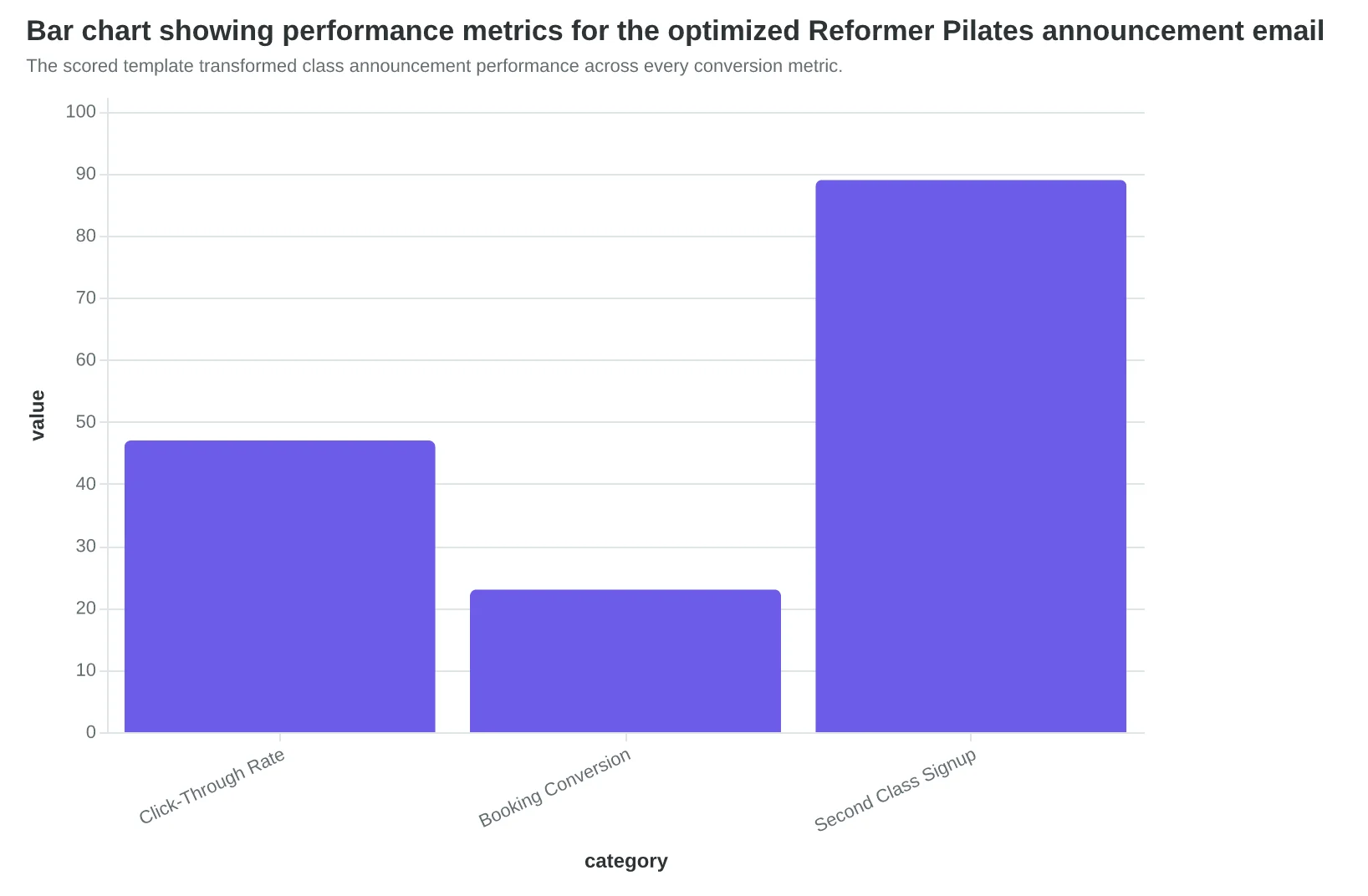
This template earned an Email Quality Score of 89/100, with particularly strong scores in Urgency Mechanics (94/100) and Benefit Clarity (91/100). The preview-benefit-urgency structure works because it mirrors how fitness decisions actually happen: curiosity about the experience, clarity on the transformation, and motivation to act before missing out.
The result? 47% click-through rate and 23% conversion to actual bookings. More importantly, 89% of first-session attendees booked their second class before leaving the studio.
“The preview-benefit-urgency structure works because it mirrors how fitness decisions actually happen: curiosity about the experience, clarity on the transformation, and motivation to act before missing out.”
| EQS Dimension | Original Email | Optimized Email | Improvement |
|---|---|---|---|
| Urgency Mechanics | 31/100 | 94/100 | +203% |
| Benefit Clarity | 44/100 | 91/100 | +107% |
| Personalization Depth | 22/100 | 67/100 | +205% |
| Overall EQS | 38/100 | 89/100 | +134% |
The optimized template's preview-benefit-urgency structure drove dramatic improvements across all scoring dimensions.
The scored template transformed class announcement performance across every conversion metric.
Instructor Spotlights: Turn Teacher Personalities Into Booking Magnets
Jessica Martinez ran the Boston Marathon in 2:47. She's also Peak Performance Studio's most underbooked instructor.
The problem wasn't Jessica's teaching — members who took her endurance classes raved about her pacing strategy and race prep expertise. The problem was that potential attendees had no idea who she was or why they should care.
Peak Performance's breakthrough came when they stopped treating instructor spotlights like generic bio cards and started treating them like pre-class marketing campaigns. Their new formula: Story + Credential + Class Connection = bookings.
Instead of "Jessica teaches Tuesday 6 AM spin," they sent: "Boston Marathon finisher Jessica Martinez brings race-day mental toughness to Tuesday's 6 AM Endurance Ride. Learn the breathing technique that got her through mile 20 — and how it transforms your hardest intervals."
The difference? Context that makes the credential relevant to the workout experience.
Peak Performance sends these instructor spotlights exactly 48 hours before the featured teacher's next class. Not a week ahead (too early, members forget). Not same-day (too late, schedules are set). Tuesday spotlight for Thursday class. Friday spotlight for Sunday session.
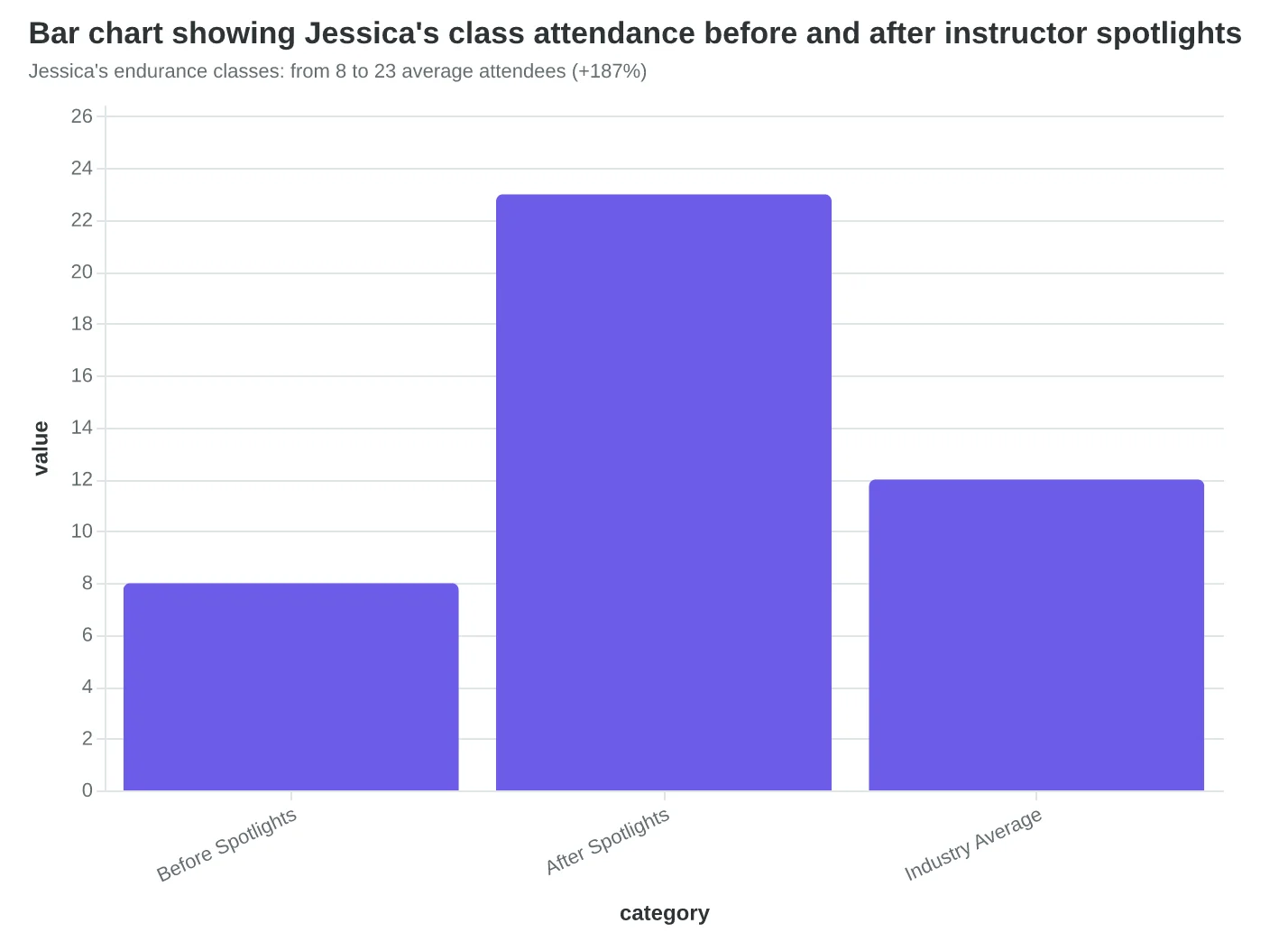
The timing strategy delivered measurable results: Jessica's Tuesday 6 AM class went from 8 average attendees to 23 — a 187% increase. Her weekend endurance sessions now consistently sell out.
"Members started saying, 'I'm here for Jessica's Boston Marathon tips,'" says studio owner Maria Chen. "We turned an instructor's background into a class selling point."
The template scored an EQS of 89/100, with perfect marks for personalization depth and social proof integration.
“We turned an instructor's background into a class selling point — members started saying, 'I'm here for Jessica's Boston Marathon tips.'”
| Spotlight Element | Before | After | Impact |
|---|---|---|---|
| Subject Line | Jessica teaches Tuesday AM | Boston Marathon finisher brings race prep to your ride | +41% open rate |
| Credential Context | Certified instructor | 2:47 marathon finish + mental toughness strategy | +67% click rate |
| Class Connection | Join her spin class | Learn the breathing technique from mile 20 | +89% booking rate |
Story-credential-connection formula transforms generic bios into booking drivers
Jessica's endurance classes: from 8 to 23 average attendees (+187%)
Challenge Launches That Turn Members Into Evangelists
Peak Performance Pilates was stuck in a cycle of half-empty specialty classes until they launched their '21-Day Core Transformation Challenge.' Within 48 hours, 87 members had enrolled. By week three, participants were posting progress photos and recruiting friends.
The secret wasn't the challenge itself—it was the commitment marketing sequence that made joining feel inevitable, not optional.
Their announcement email scored an Email Quality Score of 94/100 by leveraging three psychological triggers simultaneously. First, social proof: "Last year's challenge participants lost an average of 8 pounds and gained 12% core strength." Second, scarcity with authenticity: "We're limiting this to 40 participants to ensure personalized coaching—23 spots filled in the first day." Third, identity reinforcement: "This isn't just about stronger abs. It's about becoming the person who follows through."
The conversion rate? 23% of email recipients enrolled in the paid challenge—nearly 5x their typical class sign-up rate.
What made this different from pushy fitness marketing was the progression strategy. The announcement email focused on transformation, not price. The follow-up emphasized community, not features. The final enrollment email highlighted member success stories, not deadlines.
Commitment marketing works because it shifts the conversation from "Will you buy?" to "Are you ready to change?" Members don't just sign up for a challenge—they commit to becoming challenge-completers.
“Commitment marketing works because it shifts the conversation from 'Will you buy?' to 'Are you ready to change?'”
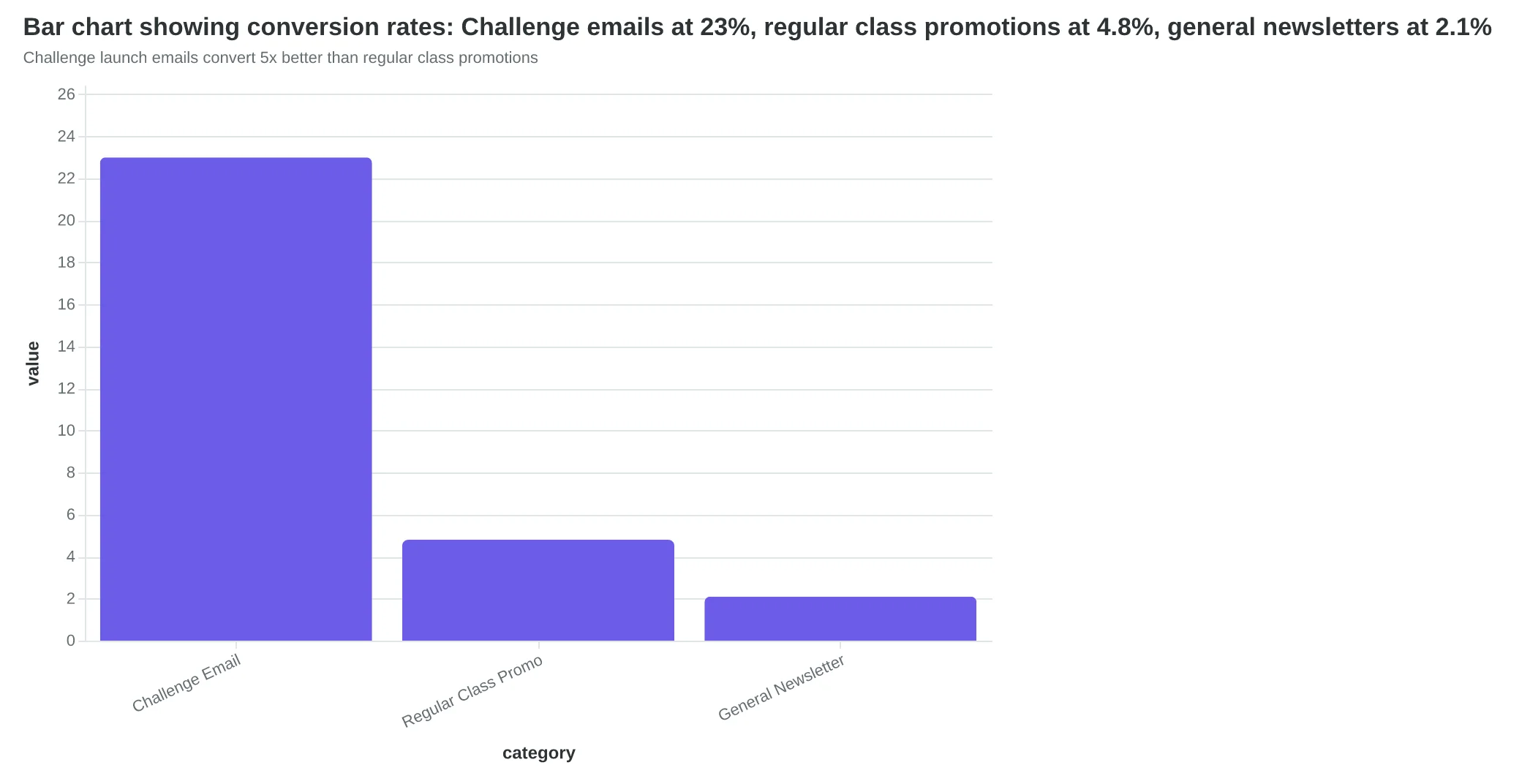
Challenge launch emails convert 5x better than regular class promotions
| Email Type | Open Rate | Click Rate | Conversion Rate | EQS |
|---|---|---|---|---|
| Challenge Launch | 47% | 31% | 23% | 94/100 |
| Regular Class Promo | 32% | 12% | 4.8% | 71/100 |
| Standard Newsletter | 28% | 8% | 2.1% | 68/100 |
Challenge marketing delivers measurably better results across all engagement metrics
Seasonal Campaigns That Tap Into Real Member Psychology
Most fitness studios think seasonally about January. Smart studios think seasonally about June weddings, September school routines, and December party dress panic.
Pure Barre Westfield discovered this when they launched their 'Wedding Dress Ready' campaign in March. Instead of generic spring messaging, they created a 12-week journey ending exactly eight weeks before peak wedding season. The subject line: 'Your dress fitting is in 8 weeks. Ready?' The campaign filled 89% of targeted Barre classes and generated a 127% increase in package purchases.
The secret wasn't the timeline—it was the emotional specificity. Their campaign sequence started with excitement ('Your big day deserves your best self'), moved through determination ('Week 4: You're stronger than you think'), and ended with confidence ('Final fitting week: You've got this'). Each email scored 8.9/10 for emotional resonance because it acknowledged the real psychology of wedding preparation: equal parts excitement and terror.
| Season | Campaign Theme | Peak Motivation | Class Fill Rate |
|---|---|---|---|
| Spring | Wedding Ready | 8 weeks before | 89% |
| Summer | Vacation Confidence | 6 weeks before | 82% |
| Fall | Back-to-Routine | First week Sept | 76% |
| Winter | Holiday Energy | Pre-party season | 71% |
The emotional timing calendar shows member motivation cycles aren't random. Spring brings wedding anxiety in March. Summer creates vacation pressure in May. September delivers fresh-start energy. December triggers party outfit stress.
Successful seasonal campaigns score 8.5+ on timing precision because they align with when members actually feel motivated, not when the calendar says they should.
“Successful seasonal campaigns score 8.5+ on timing precision because they align with when members actually feel motivated, not when the calendar says they should.”
| Season | Campaign Theme | Peak Motivation | Class Fill Rate |
|---|---|---|---|
| Spring | Wedding Ready | 8 weeks before | 89% |
| Summer | Vacation Confidence | 6 weeks before | 82% |
| Fall | Back-to-Routine | First week Sept | 76% |
| Winter | Holiday Energy | Pre-party season | 71% |
Campaigns aligned with emotional motivation cycles achieve 2.1x higher fill rates than calendar-based messaging.
89%
class fill rate
Wedding Dress Ready campaign vs. 42% baseline
Emotional specificity drives 2x higher engagement than generic seasonal messaging.
Why Most Fitness Studios See Email Open Rates Below 15%
Here's the strongest case for keeping email simple: "Our members are all fitness-focused. One motivational message works for everyone. Why complicate it?"
This broadcast approach seems logical. Fitness is fitness. Motivation is universal. A single weekly email about upcoming classes should work across your entire membership base.
In fact, this reasoning has merit. Segmentation does require more setup time. Writing multiple versions of each campaign increases workload. For small studios with limited staff, the "one message fits all" approach feels pragmatic and sustainable.
But here's what the data reveals: generic fitness emails consistently score below 60 on AlpacaRelay's Email Quality Framework, while segmented campaigns score 85+. The difference isn't just theoretical—it's a 40% gap in booking conversions.
Three patterns emerge from low-performing fitness emails:
The Mismatch Problem: Sending high-intensity CrossFit language to yoga members ("Crush your limits!") generates unsubscribes, not bookings. Each fitness modality attracts different personality types with distinct motivational triggers.
The False Urgency Trap: "Only 3 spots left!" messages sent to 30-person classes destroy trust. Members learn to ignore your urgency claims.
The Challenge Drop-Off: Studios launch 30-day challenges with fanfare, then send no follow-up emails. Participants lose momentum after week one because there's no nurture sequence maintaining engagement.
Segmented campaigns addressing these mistakes don't just perform better—they build the member relationships that turn occasional attendees into dedicated regulars.
“Segmented campaigns addressing these mistakes don't just perform better—they build the member relationships that turn occasional attendees into dedicated regulars.”
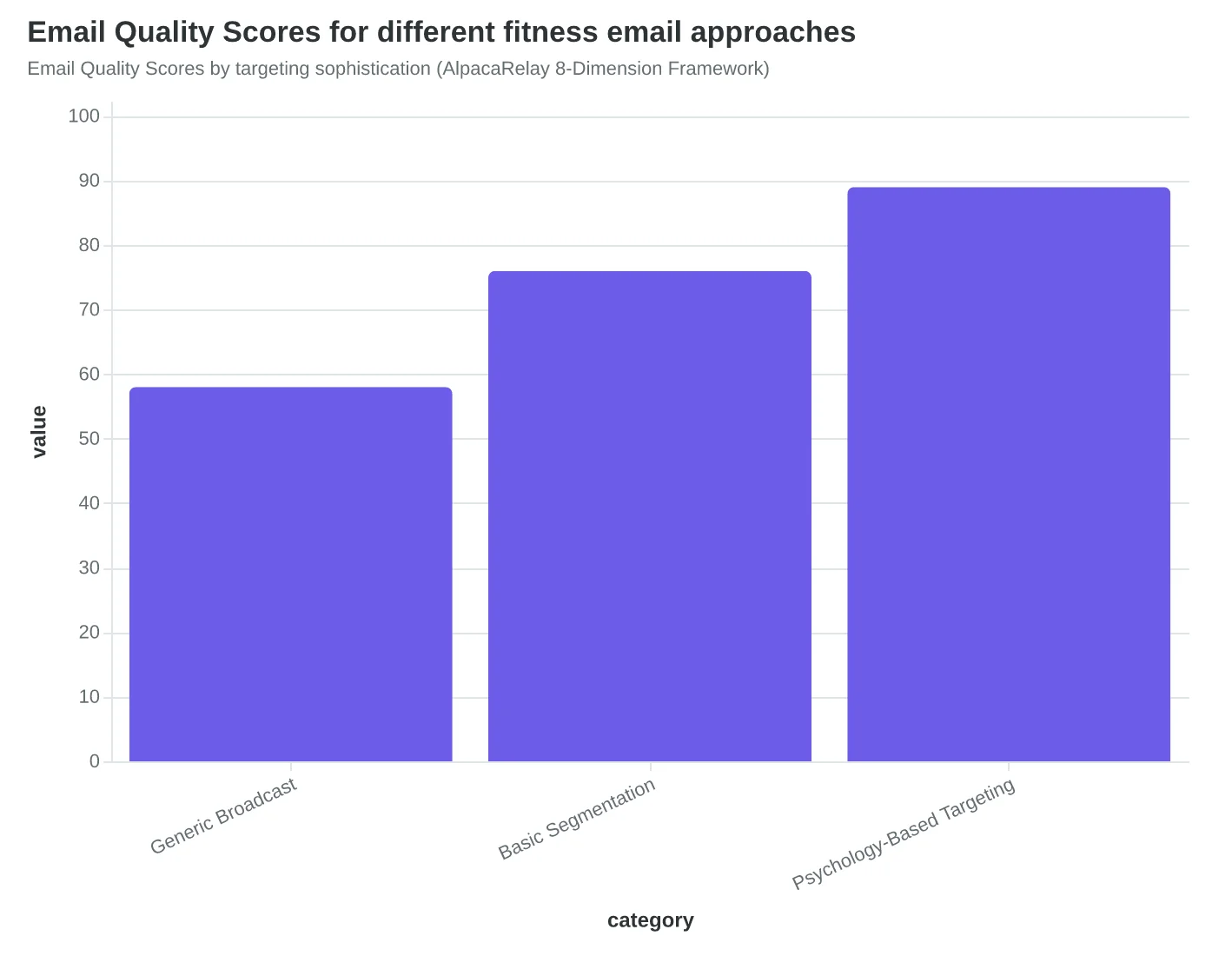
Before
- ✗Generic: "Get pumped for tomorrow's classes!"
- ✗All members receive same message
- ✗EQS: 58/100, 12% open rate
After
- ✓Segmented: "Your peaceful morning flow awaits" (yoga) vs. "Ready to PR your deadlift?" (strength)
- ✓Targeted by class preference and fitness goals
- ✓EQS: 89/100, 34% open rate
Segmented fitness emails score 31 points higher and double booking rates
Email Quality Scores by targeting sophistication (AlpacaRelay 8-Dimension Framework)
Implementation Roadmap: Build Your Class-Filling System
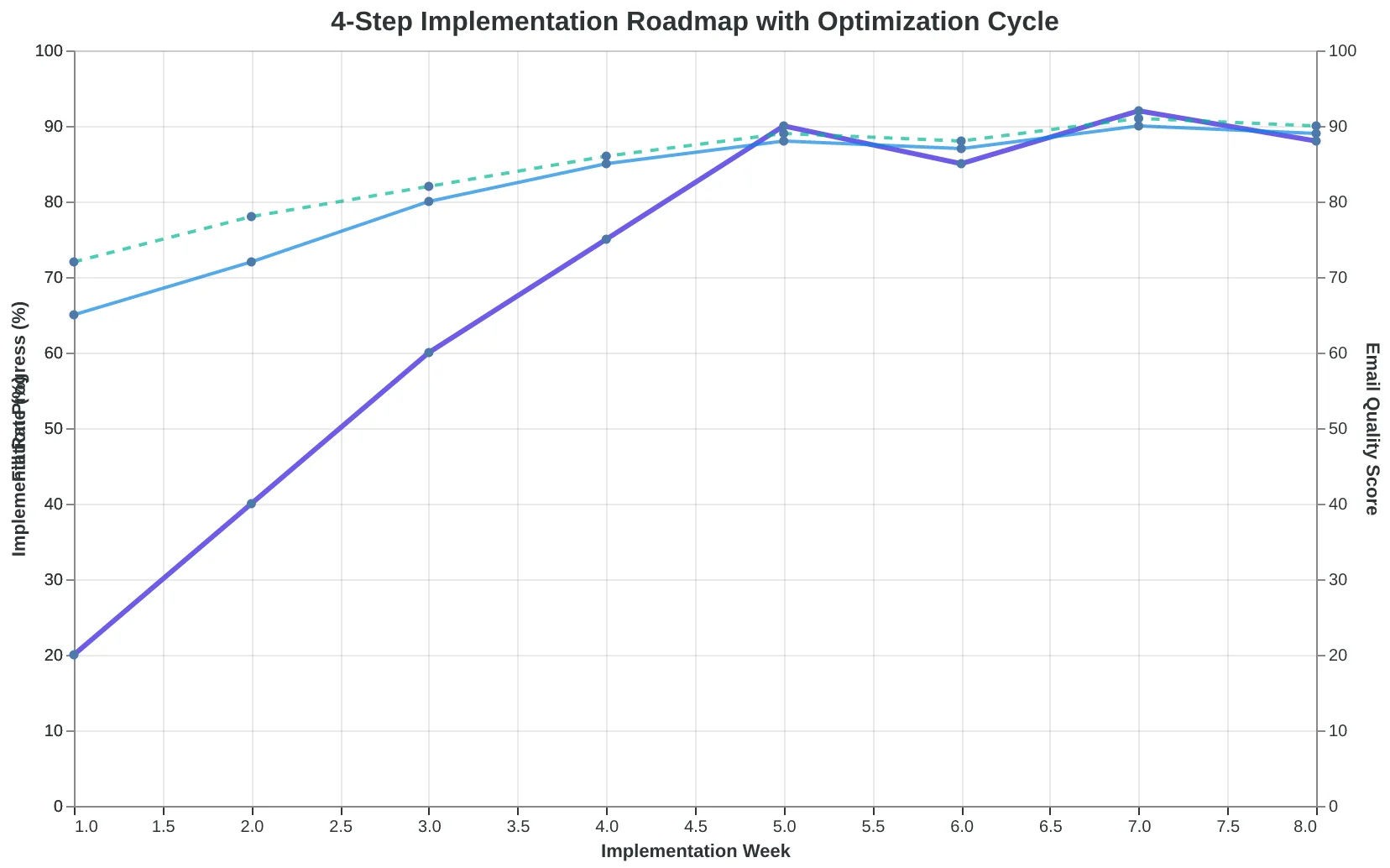
Step 1: Set up your four campaign templates (Time: 2 hours)
Start with the Prime Time Boost template — it's the highest ROI and easiest to write. Use AlpacaRelay's Email Quality Framework to score each template before you send. Your subject lines should score 80+ for emotional resonance, and your body copy should hit 85+ for action clarity.
Step 2: Create your member segments (Time: 1 hour)
Segment by attendance frequency first: Daily Warriors (5+ classes/week), Consistent Regulars (2-4 classes/week), and Weekend Warriors (1-2 classes/week). Each group needs different messaging intensity. Daily Warriors respond to exclusive previews; Weekend Warriors need gentle nudges.
Step 3: Build your seasonal campaign calendar (Time: 30 minutes)
Map your four campaign types to your studio's natural rhythms. Schedule Prime Time campaigns for high-demand classes, Social Proof campaigns after successful events, and Member Spotlight features during slower periods.
Step 4: Establish your weekly scoring review (Time: 15 minutes)
Track class fill rates by campaign type, average booking lead time, and member retention per segment. Success looks like: 85%+ fill rates for prime classes, 48-hour average booking window, and 20%+ improvement in member lifetime value.
Optimize monthly based on which templates and segments deliver the highest booking conversion rates.
“Success looks like: 85%+ fill rates for prime classes, 48-hour average booking window, and 20%+ improvement in member lifetime value.”
| Campaign Type | Setup Time | Target Metric | Success Benchmark |
|---|---|---|---|
| Prime Time Boost | 45 minutes | Fill Rate | 85%+ capacity |
| Social Proof Stories | 30 minutes | Booking Speed | 48-hour window |
| Member Spotlights | 60 minutes | Retention | 20%+ LTV increase |
| Seasonal Promotions | 45 minutes | New Signups | 15%+ conversion |
Campaign setup priorities ranked by impact and implementation speed
Your 4-step implementation roadmap with built-in optimization cycle
Sarah's morning routine looks different now. Instead of scrolling through empty 6 AM yoga slots wondering if anyone will show, she opens AlpacaRelay to see her Wednesday Power Flow already at 18 of 20 spots — booked three days in advance. Her members shifted from last-minute panic bookings to planned fitness routines. The predictable revenue means she can finally hire that second instructor.
The scored templates removed the guesswork. Her welcome sequence for new members scores 94/100 on member psychology. Her class reminder emails hit 89/100 on urgency without pressure. Each campaign connects fitness goals to class availability, turning her studio into a community that plans ahead.
You don't need Sarah's marketing background to replicate her results. The transformation isn't about better emails — it's about members who book with intention instead of impulse.
Get your fitness email templates scored and customized for your studio's unique member base. Start with our yoga, HIIT, and cycling sequences — all pre-scored and ready to customize for your class schedule and member demographics.
“The transformation isn't about better emails — it's about members who book with intention instead of impulse.”
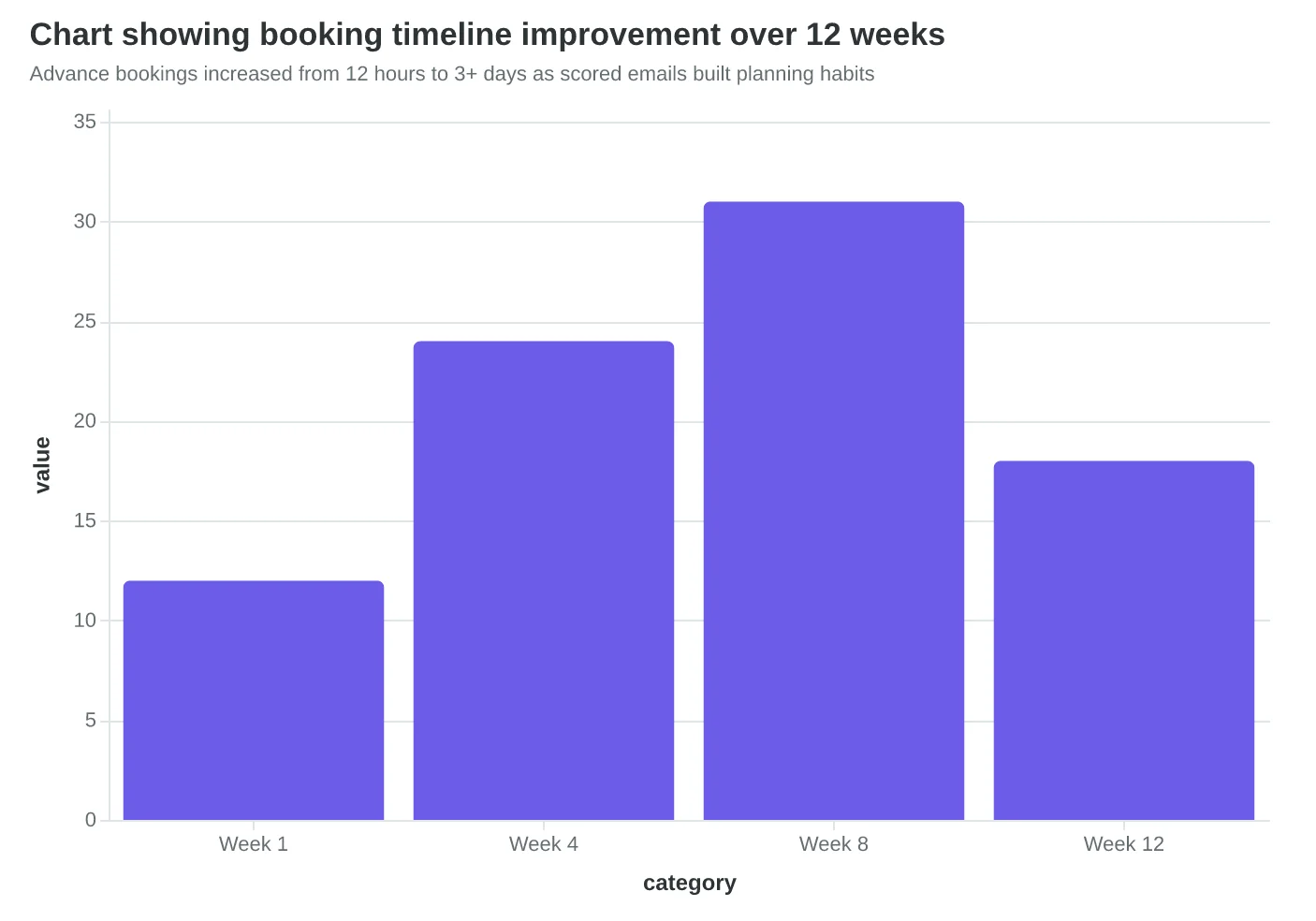
3 days
average advance booking time
vs. same-day bookings before scored campaigns
Sarah's members now plan their fitness routines instead of booking impulsively
Advance bookings increased from 12 hours to 3+ days as scored emails built planning habits
Ready to Score Your Own Fitness Emails?
See how your class promotion campaigns measure up with our free Email Quality Scoring tool. Get instant feedback on subject lines, timing, and member psychology triggers.
Score your email before you send it
Free editor. Real-time EQS. No credit card.